Police Power to Seize Property under Section 102 CrPC and Attachment under Section 18A PC Act are Not Mutually Exclusive: Supreme Court
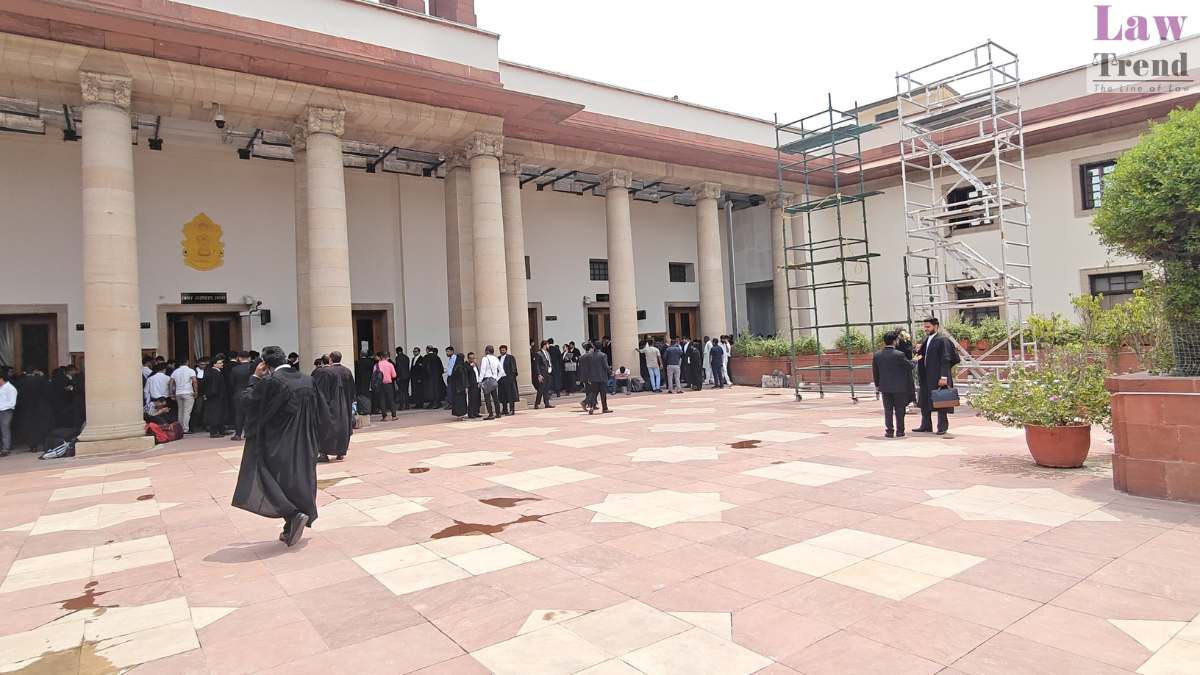

The Supreme Court has held that the power of police to seize property under Section 102 of the Code of Criminal Procedure (CrPC) and the provisions for attachment under Section 18A of the Prevention of Corruption Act, 1988 (PC Act) are not mutually exclusive.

In a judgment delivered on December 10, 2025, a bench of Justice Sanjay Karol and Justice Prashant Kumar Mishra set aside an order of the Calcutta High Court which had directed the de-freezing of bank accounts on the ground that the PC Act is a complete code and seizure could only be effected under Section 18A.

The core legal question before the Supreme Court was: “Whether, when proceedings initiated against a person are only under the provisions of the Prevention of Corruption Act 1988, would it be open for the investigating authorities (police) to freeze the accounts of the accused persons under Section 102 of the Code of Criminal Procedure 1973? In other words, are the powers under Section 18A of the PC Act… and the power under Section 102 Cr.P.C… co-existent or mutually exclusive.”

Background of the Case

The case arose from an investigation against Prabir Kumar Dey Sarkar, a Sub-Inspector of Police, for allegedly amassing assets disproportionate to his known sources of income. A preliminary enquiry revealed that the accused had acquired properties and funds in his name and in the names of his relatives, including his father, Anil Kumar Dey (the Respondent).

During the investigation into FIR No. 09/19, the police frozen certain fixed deposits held by the Respondent. The Respondent filed an application before the City Sessions Court, Calcutta, seeking de-freezing of the accounts, citing his age (93 years) and medical ailments.

The Trial Court, by an order dated March 28, 2023, rejected the prayer, noting that the investigation revealed the accused son had acquired huge disproportionate property, potentially kept in the name of the father.

READ ALSO  Supreme Court Issues Notice to Chhota Rajan on CBI's Challenge to Bail in 2001 Murder Case

The Respondent challenged this before the Calcutta High Court. On October 4, 2024, the High Court set aside the freezing order. Relying on the Supreme Court’s decision in Ratan Babulal Lath v. State of Karnataka (2022), the High Court held that since the PC Act is a special statute, the freezing of accounts could only be done under Section 18A of the Act and not Section 102 of the CrPC.

The State of West Bengal filed an appeal before the Supreme Court challenging this decision.

Arguments

The State argued that the High Court’s reliance on Ratan Babulal Lath was misplaced as it did not lay down any authoritative position of law binding under Article 141 of the Constitution. It was submitted that Section 18A of the PC Act and Section 102 CrPC operate in distinct spheres. The State contended that Section 102 is a power exercised by police to secure evidence/property during investigation without prior judicial approval, whereas Section 18A (applying the Criminal Law Amendment Ordinance, 1944) involves a deliberative judicial process for attachment.

The Respondent contended that Ratan Babulal Lath constitutes a binding precedent, having been relied upon by other courts. It was argued that the freezing of accounts by police under Section 102 CrPC did not serve any investigative purpose as details had already been supplied by banks. The Respondent asserted that the PC Act is a complete code, and the procedure under Section 18A, introduced by the 2018 amendment, must be followed for attachment.

Court’s Observations and Analysis

The Supreme Court undertook a detailed analysis of the definitions of “seizure” and “attachment” and the procedural requirements under the respective statutes.

READ ALSO  सुप्रीम कोर्ट का पटाखों पर देशव्यापी प्रतिबंध लगाने से इनकार

Distinction between Seizure and Attachment

The Court observed that Section 102 CrPC uses the word ‘seizure’, while the Ordinance applied via Section 18A PC Act uses ‘confiscation’ and ‘attachment’.

Analyzing the procedure under the Criminal Law Amendment Ordinance, 1944 (as applied by Section 18A PC Act), the Court noted it involves sequential steps: application to the District Judge, ad-interim attachment, notice to show cause, and making the order absolute. This was contrasted with Section 102 CrPC.

The Court observed: “As evidenced by the procedure given in the Ordinance, it is sequential and has to be compliant with principles of natural justice, for it to survive scrutiny. It is necessarily time consuming and deliberative. The difference between the two processes is, therefore, clearly exhibited. In essence, we hold that the power of seizure and attachment are separate and distinct, even if, to the naked eye it may so appear, that the effect is same/similar which is, that the property is taken into custody of, by the authority, either investigative or judicial.”

Consequently, the Court held: “Consequentially, the conclusion to be drawn is that the powers under Section 18A of the PC Act and Section 102, CrP.C. are not mutually exclusive.”

On the Precedent of Ratan Babulal Lath

The Bench addressed the precedential value of Ratan Babulal Lath v. State of Karnataka, which the High Court had relied upon. The Supreme Court held that the said judgment does not constitute a binding precedent.

Justice Karol wrote: “In our considered view, Ratan Babulal Lath (supra) does not constitute binding precedent for want of… (ii) statements of the principles of law applicable to the legal problems disclosed by the facts; and (iii) judgment based on the combined effect of (i) and (ii) above… since it does not discuss the facts of the matter.”

The Court emphasized that for a judgment to be binding under Article 141, it must contain a discussion of facts and principles, and courts should not follow orders where the facts and legal reasoning are not properly disclosed.

READ ALSO  SC Says Criminal Proceedings cannot be converted into Recovery Proceedings

Decision

The Supreme Court allowed the appeal and set aside the High Court’s judgment.

However, noting that the investigation was complete and a chargesheet had been filed on May 13, 2024, the Court observed that the continued freezing of the accounts might or might not be required.

Addressing the interim period where the High Court order was stayed, the Court directed: “This may result into two situations, viz., (a) where the amount stands released; and (b) is yet to be released. If the situation is the former, then the respondent herein would either re-deposit the amount or furnish tangible security / bank guarantee of the like amount. This shall be done positively within three weeks from today.”

The Court left the rights of the parties for follow-up action to be adjudicated in appropriate proceedings before the appropriate court.

Case Details:

  • Case Title: The State of West Bengal vs. Anil Kumar Dey
  • Case No: Criminal Appeal No. 5373 of 2025 (Arising out of SLP(Crl.) No. 1003/2025)
  • Coram: Justice Sanjay Karol and Justice Prashant Kumar Mishra
  • Citation: 2025 INSC 1413

Law Trend
Law Trendhttps://lawtrend.in/
Legal News Website Providing Latest Judgments of Supreme Court and High Court

Related Articles

Latest Articles