

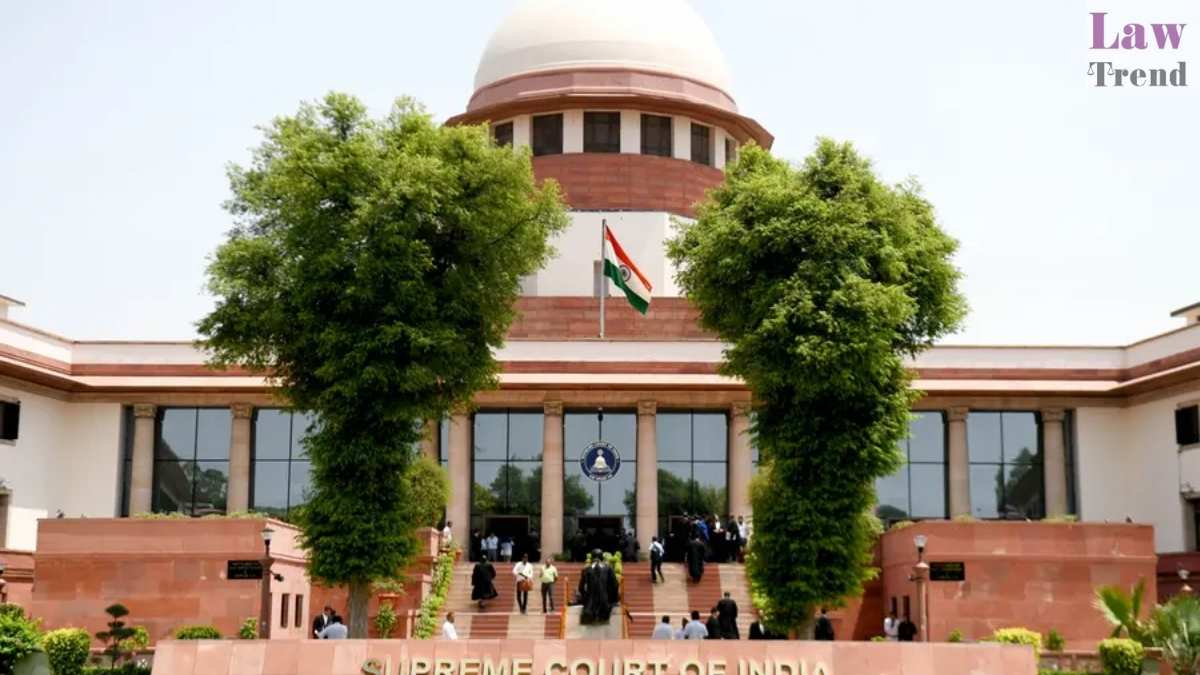
The Supreme Court of India has ruled that the process for granting Permanent Commission (PC) to Short Service Commission Officers (SSCOs) must be governed by principles of fairness and transparency. A three-judge Bench comprising Chief Justice Surya Kant, Justice Ujjal Bhuyan, and Justice Nongmeikapam Kotiswar Singh held that the Navy’s failure to disclose evaluation criteria prior to Selection Boards “vitiates” the assessment and violates basic norms of natural justice.
The Court directed the grant of PC to eligible serving officers and provided deemed pensionary benefits to those released from service, observing that a fresh Selection Board would be unable to provide an equitable result due to “materially distorted” service records.
Background of the Case
The appeals were instituted by a group of approximately 25 SSCOs, primarily women, seeking Permanent Commission in the Indian Navy. Following the landmark judgment in Union of India v. Annie Nagaraja (2020), which opened PC to women across various branches, the Navy convened Selection Boards in December 2020 and September 2022.
The Appellants challenged their non-selection before the Armed Forces Tribunal (AFT). While the AFT initially directed a fresh Selection Board with full disclosure of criteria, the Appellants approached the Supreme Court, contending that they had already faced over fifteen years of career uncertainty and multiple rounds of litigation. They argued that their Annual Confidential Reports (ACRs) were flawed because they were written during a period when they were legally ineligible for PC.
Arguments of the Parties
The Appellants argued that the Navy’s selection process was opaque. They claimed that because they were ineligible for PC for most of their careers, their ACRs were “casually graded” and routinely marked as “Not Recommended for PC” by default. They relied on Lt. Col. Nitisha v. Union of India to argue that assessing officers naturally prioritized those with prospects of career progression, creating a systemic disadvantage for SSCOs.
The Union of India, represented by Additional Solicitor General Ms. Aishwarya Bhati, maintained that the evaluation was neutral and objective. The Respondents argued that the “Dynamic Vacancy Model” was necessary to maintain the Navy’s pyramidal structure and operational agility. They contended that non-selection was solely attributable to “low inter se merit” and that all relevant details had been supplied to the AFT in a sealed cover.
The Court’s Analysis
The Supreme Court focused on the procedural integrity of the Selection Boards and the substantive fairness of the appraisal system.
I. Non-Disclosure and Transparency
The Court took serious exception to the Navy’s failure to place the evaluation framework in the public domain. It noted that while the Army and Air Force promulgated clear instructions, the Navy kept its criteria internal.
“In these circumstances, the failure to disclose the evaluation criteria, vacancy computation methodology, and allied policy considerations prior to the conduct of the Selection Boards in 2020 and 2022 must be held to have violated basic norms of fairness and transparency.”
II. Distortion of ACRs
The Bench observed that the appraisal process was affected at its inception because officers were graded under the assumption they had no future in the service.
“We are of the considered opinion that… since the Appellants were graded in an environment where their suitability for PC was never meaningfully evaluated, the assessment of inter se merit is held to have been materially distorted.”
III. The Litigation Ordeal
The Court noted that this was the third round of litigation for the Appellants. It observed that relegating them to a fourth round via a fresh Selection Board would be inequitable, especially since the skewed ACRs would still not yield a “non-discriminatory result.”
The Decision
The Supreme Court allowed the appeals and modified the AFT’s directions to provide direct relief:
- Grant of PC: Serving SSCWOs inducted prior to January 2009, those in non-technical branches inducted after 2009, and male SSCOs previously barred from PC are entitled to the grant of PC, subject to medical and disciplinary clearance.
- Pensionary Benefits: Officers released during the pendency of proceedings who meet the criteria are “deemed to have completed substantive qualifying service of 20 years” and are entitled to pension and consequential benefits from January 1, 2025.
- Mandatory Disclosure for Future Boards: The Court directed that for all future Selection Boards, the Respondents must issue General Instructions prior to the board, detailing available vacancies and the apportionment of marks for evaluation.
- No Disturbance to Existing PC: The grant of PC to officers already selected in 2020 and 2022 remains undisturbed.
Case Details Block
- Case Title: Yogendra Kumar Singh v. Union of India and others (and connected matters)
- Case Number: Civil Appeal No. 14681 / 2024
- Bench: Chief Justice Surya Kant, Justice Ujjal Bhuyan, and Justice Nongmeikapam Kotiswar Singh
- Date: March 24, 2026




