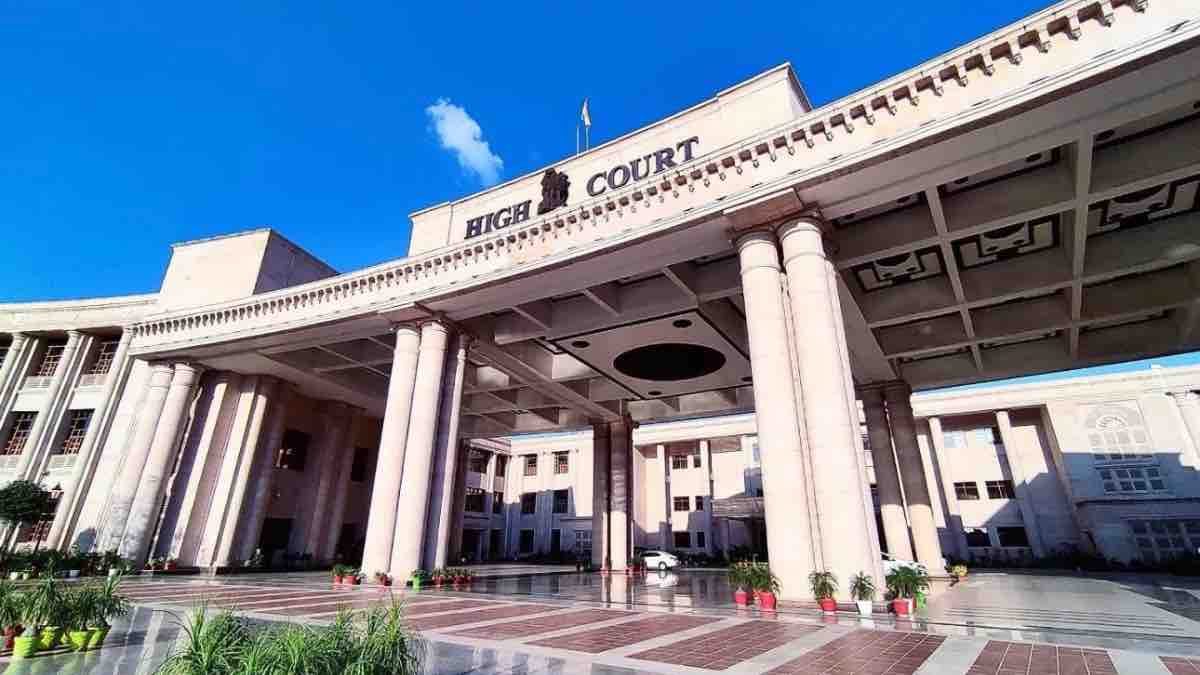
The Allahabad High Court (Lucknow Bench) has ruled that compensation under the ‘Uttar Pradesh Rani Lakshmi Bai Mahila Samman Kosh Rules, 2015’ cannot be denied to a victim of penetrative sexual assault under the POCSO Act solely because the medical report does not show evidence of “penetrating injury.”
The Division Bench comprising Justice Shekhar B. Saraf and Justice Manjive Shukla, while allowing a writ petition filed by a minor victim, directed the State authorities to release the compensation of Rs. 3,00,000 to the petitioner within 10 days. The Court held that the scheme is a beneficial legislation intended to ameliorate the trauma of victims, and the absence of physical injury is not a valid ground for refusal.
Background of the Case
The writ petition was filed by the victim (through her mother) under Article 226 of the Constitution of India. The petitioner was aggrieved by the inaction of the respondent authorities in providing compensation under the State Government’s scheme, the ‘Uttar Pradesh Rani Lakshmi Bai Mahila Samman Kosh Rules, 2015’.
According to the petition, the victim was sexually assaulted on March 7, 2025. An FIR was registered as Case Crime No. 048 of 2025 at Police Station Katra Bazar, District Gonda, under Section 4 of the Protection of Children from Sexual Offences Act, 2012 (POCSO Act). The police subsequently filed a charge sheet on June 25, 2025.
The petitioner claimed entitlement to an aggregate compensation of Rs. 3 lacs as per Serial No. 6 of Annexure No. 1 of the Scheme, which governs victims covered under Section 4 of the POCSO Act. The claim was rejected/kept in abeyance by the District Steering Committee, Gonda, in a meeting held on December 24, 2025. The Committee reasoned that despite the medical examination occurring just one day after the incident, the medico-legal and pathology reports showed no evidence of “Penetrating Sexual Assault.” Consequently, the Committee decided to dismiss the claim with the condition that it could be revived if the accused was convicted by the court in the future.
Arguments of the Parties
Counsel for the Petitioner, Ms. Anjum Ara, argued that the charge sheet clearly indicated a case of penetrative sexual assault under Section 4 of the POCSO Act. She submitted that “till date not a single naya paisa has been paid to the petitioner” despite the filing of the charge sheet, which entitles the victim to the full compensation amount (Rs. 1 lac upon FIR and Rs. 2 lacs upon charge sheet).
Counsel for the State, Shri Shailesh Chandra Tiwari, defended the decision of the Steering Committee. He submitted that the injury report dated March 8, 2025, categorically indicated no evidence of ‘penetrating injury’ upon internal examination. He argued that a “pre requisite for grant of compensation under the present scheme is that there should be injury found in the injury report,” which was absent in this case. Therefore, he contended the Steering Committee correctly held the scheme inapplicable at this stage.
Court’s Analysis and Observations
The Court analyzed Sections 3 and 4 of the POCSO Act, observing that the definition of “penetrative sexual assault” under Section 3 includes acts such as penetration to any extent or manipulation of the body, which do not necessarily result in visible physical injury.
The Bench observed:
“From a bare perusal of Section 3 read with Section 4 of the POCSO Act, we are of the view that the very actions as provided in Section 3(a), 3(b) 3(c) and 3(d) would amount to penetrative sexual assault and it is clear that for the penetrative sexual assault to be proven, it is not necessary that there be an injury that conclusively proves the said penetrative sexual assault.”
The Court relied on recent Supreme Court judgments to substantiate this position:
- Dalip Kumar @ Dalli v. State Of Uttaranchal (Criminal Appeal No. 1005 of 2013, decided on January 16, 2025): The Apex Court observed that “bodily injuries are not necessary to prove sexual assault” and that victims respond to trauma in varied ways.
- Lok Mal @ Loku v. The State Of Uttar Pradesh (Criminal Appeal No. 325 of 2011, decided on March 7, 2025): The Supreme Court reiterated that “absence of injuries on the private parts of the victim is not always fatal to the case of the prosecution” as it depends on the specific facts, such as whether the victim was overpowered or gagged.
Regarding the specific requirements of the UP Scheme, the High Court rejected the State’s interpretation that the injury report must definitely indicate a penetrative injury. The Court clarified:
“Our reading of the said provision of the Scheme is that for granting benefit to the victim, the three documents, that is, the FIR, the injury report and the charge sheet should be present.”
The Bench emphasized that the Steering Committee cannot assume the role of a trial court. As long as the FIR and charge sheet indicate an offence under Section 4 of the POCSO Act, “no further investigation is required to be carried out by the steering committee.”
The Court further observed that the Scheme is a beneficial legislation:
“Under the Scheme, compensation is to be paid to the victim of penetrative sexual assault not because the victim has sustained injuries during the penetrative sexual assault, but due to the very fact of having suffered the penetrative sexual assault.”
Decision
The High Court concluded that the finding of the Steering Committee was “without any basis in law and contrary to the Scheme.”
The Court directed as follows:
“In light of the same, since charge sheet has already been filed in the present case, we direct the compensation of Rs.3 lacs to be paid to the victim immediately within a period of 10 days from date.”
The writ petition was disposed of with these directions.
Case Details:
- Case Title: Victim X vs. State of U.P. Thru. Prin. Secy. Deptt. Social Welfare Lko. and 2 others
- Case Number: WRIT-C No. 12085 of 2025
- Coram: Justice Shekhar B. Saraf and Justice Manjive Shukla
- Counsel for Petitioner: Anjum Ara
- Counsel for Respondent: C.S.C.