

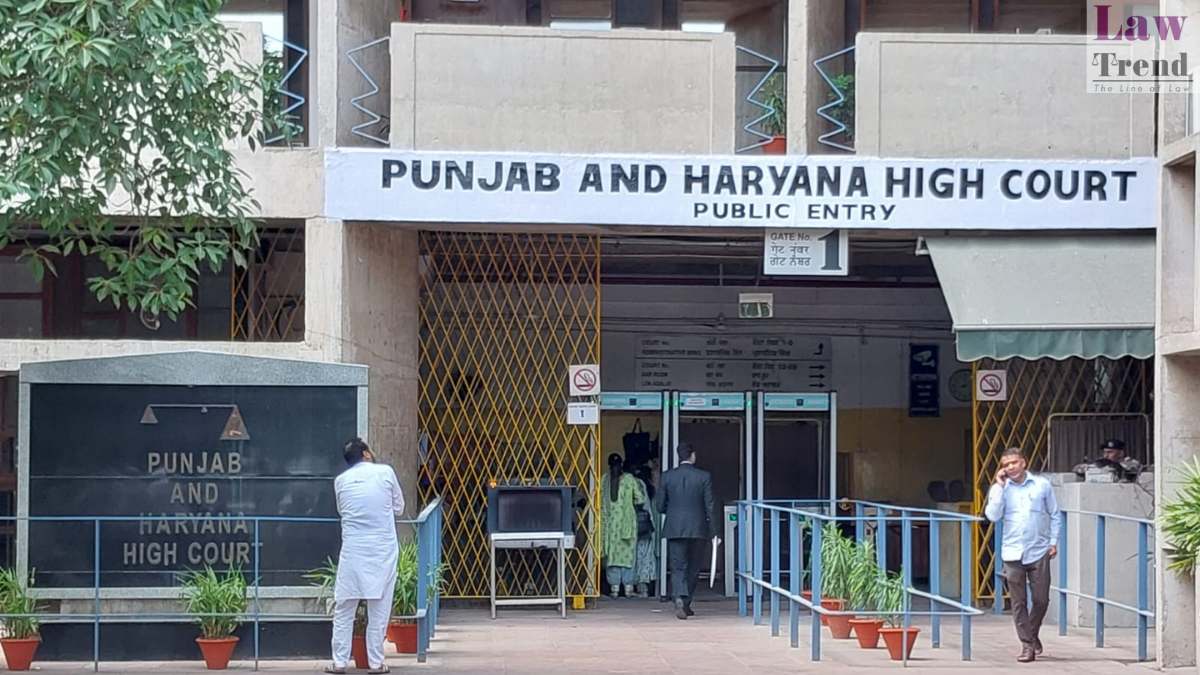
The Punjab and Haryana High Court has dismissed a father’s petition seeking custody of his minor daughter, ruling that neither biological fatherhood nor a prior private settlement automatically entitles a parent to custodial rights.
Presiding over a habeas corpus petition, Justice Manish Batra declined to disturb the child’s current living arrangements with her mother and maternal relatives. The court held that determining custody requires an assessment of the child’s overall welfare and best interests, which cannot be resolved through summary proceedings when matrimonial issues remain contested. The court did, however, grant the father fortnightly visitation rights in view of the child’s young age.
Background Of The Dispute
The couple married in January 2022, and their daughter was born later that year. Marital friction soon led to their separation.
In January 2023, the two parties entered into a compromise agreement. Under the terms of the settlement, the father was to retain custody of the child, pay his wife a lump-sum lifetime alimony of Rs 10 lakh, and jointly pursue a divorce by mutual consent under the Hindu Marriage Act.
The settlement broke down after the wife withdrew her consent for the divorce, stating that no mutual understanding had been reached. She returned an initial instalment of Rs 5 lakh to her husband. Consequently, the family court dismissed the joint divorce plea in November 2023.
Allegations Of Unlawful Detainment
The father subsequently approached the High Court through a habeas corpus plea, alleging that his estranged wife had breached the settlement, taken the child, and unlawfully detained her.
Representing the father, advocate Radhika submitted that the petitioner earned Rs 50,000 per month and possessed the financial capacity to provide for the child’s medical and living expenses. The petition further alleged that the mother had moved abroad, leaving the girl in the care of her maternal grandmother, and claimed the child was being deprived of adequate food, clothing, and basic necessities.
Defense Cites Lawful Custody And Welfare
Opposing the petition, the mother’s counsel, Saurav Bhatia, argued that the child remained in the lawful custody of her biological mother and that no competent court had ever awarded custody to the petitioner.
Bhatia stated that the child, who is under five years old, had lived continuously with her mother and maternal relatives. He submitted that the child was enrolled in school and was receiving proper nutrition, education, and medical attention. The defense also pointed out that the family court had formally recorded the child’s custody with the mother while directing the husband to pay interim maintenance and litigation expenses.
High Court Findings
Justice Batra ruled that paternity and the compromise signed in January 2023 were insufficient grounds to transfer custody, particularly while matrimonial and custodial issues remained actively disputed.
The court observed that allegations regarding the mother’s relocation abroad and the maternal grandmother’s alleged inability to care for the child constituted disputed questions of fact. The judge concluded that such matters cannot be adjudicated within the limited scope of a habeas corpus petition and must instead be addressed through appropriate legal proceedings focused on the child’s welfare.




