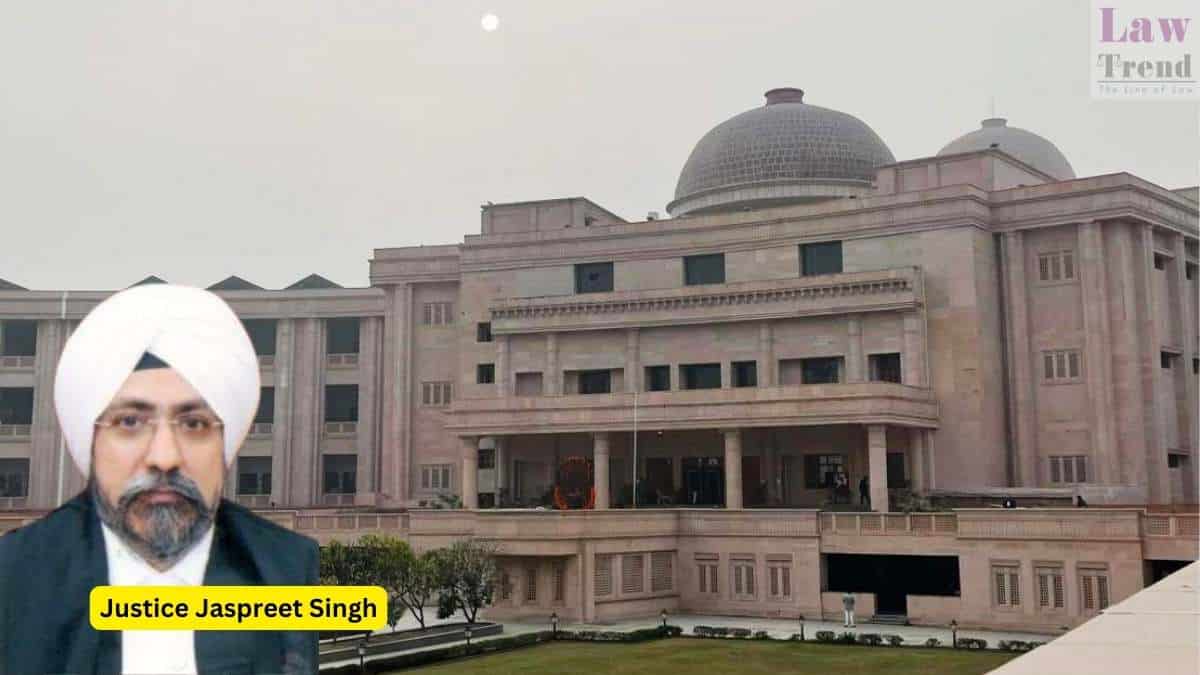
The Allahabad High Court (Lucknow Bench) has dismissed a civil revision petition challenging the refusal of a trial court to reject a plaint under Order VII Rule 11 of the Code of Civil Procedure (CPC). The Court held that when a plaintiff pleads a supplementary agreement that modifies the original timeline for performance, the issue of whether the suit is barred by limitation cannot be decided summarily at the initial stage but requires evidence at trial.
Case Background
The matter arose from Regular Suit No. 2066 of 2021 filed by M/S Eifel Recreation Club (P) Ltd. (Respondent/Plaintiff) against Devendra Srivastava and others (Revisionists/Defendants) seeking specific performance of a contract and perpetual injunction. The defendants filed an application under Order VII Rule 11 CPC before the Civil Judge (Senior Division), Lucknow, seeking rejection of the plaint on the ground that the suit was barred by the law of limitation.
The trial court rejected the application by an order dated May 6, 2022, holding that the issue of limitation was a mixed question of law and fact. Aggrieved by this decision, the defendants preferred the instant Civil Revision under Section 115 CPC before the High Court.
Arguments of the Parties
Counsel for the Revisionists, Senior Advocate Pritish Kumar assisted by Advocate Amal Rastogi, argued that the suit was “patently barred by law of limitation.” They submitted that the parties had entered into an agreement to sell on December 12, 2012, which specifically provided that the sale deed would be executed within one year. It was argued that the limitation period of three years, under the first part of Article 54 of the Limitation Act, 1963, commenced in December 2013 and expired in December 2016. Since the suit was filed in 2021, five years after the expiry of the limitation, it was a “dead case which was sought to be given artificial respiration.”
The Revisionists relied on judgments including Dahiben v. Arvindbhai Kalyanji Bhanusali (2020) and Raghwendra Saran Singh v. Ram Prasanna Singh (2019), asserting that the court should nip such vexatious litigation in the bud.
Conversely, Senior Advocate Gaurav Mehrotra, appearing for the Respondent, argued that the plaint must be read as a whole. He submitted that while the 2012 agreement was admitted, the parties subsequently entered into a supplementary agreement on September 6, 2013. Under this new arrangement, the plaintiff paid an additional Rs. 24,00,000 and the parties agreed that the sale deed would be executed “as and when the plaintiff would require.”
The Respondent contended that the defendants refused to execute the deed for the first time via a notice dated September 17, 2021. Therefore, the suit was covered by the second part of Article 54 of the Limitation Act, where limitation begins from the date of refusal, making the 2021 suit timely.
Court’s Analysis
Justice Jaspreet Singh, delivering the judgment, reiterated the settled principles regarding Order VII Rule 11 CPC. The Court observed:
“(i) while dealing with the application under Order VII Rule 11 CPC, a Court is bound only to consider the averments made in the plaint in suit and the documents filed in support of the plaint; (ii) No part of the defence or documents filed by the defendant can be looked into… (iv) the Court is required to undertake a meaningful reading of the plaint, in contradistinction to a formal reading.”
The Court examined Article 54 of the Limitation Act, which prescribes a three-year limitation for specific performance suits. The Court noted that Article 54 has two parts:
- First Part: Where a date is fixed for performance, limitation runs from that date.
- Second Part: Where no such date is fixed, limitation runs from when the plaintiff has notice that performance is refused.
Justice Singh observed that while the original agreement had a fixed date, the plaintiff explicitly pleaded the execution of a supplementary agreement in September 2013, which allegedly diluted the original timeline.
The Court held:
“Whether the supplementary agreement was actually executed between the parties, whether it had the capability of extending the period of limitation… whether the defendants had assured the execution of the deed at a later date… are all contentious issues which can only be ascertained after the parties lead evidence.”
The Bench emphasized that at the stage of Order VII Rule 11, the Court must take the pleas in the plaint as true. Since the plaintiff had pleaded a change in the terms of the contract and a specific date of refusal in 2021, the determination of the starting point of limitation required a trial.
Decision
The High Court dismissed the Civil Revision, affirming the trial court’s order. The Court concluded:
“…the trial court after appreciating the facts has rightly come to the conclusion that the issue which is sought to be raised as to whether the plaint could be rejected… can only be considered and decided at trial.”
The Court clarified that its observations were limited to the prima facie satisfaction required for Order VII Rule 11 CPC and directed the trial court to decide the matter on merits based on evidence.
Case Details:
- Case Title: Devendra Srivastava And Ors. Versus M/S Eifel Recreation Club (P) Ltd.
- Case No.: Civil Revision No. 18 of 2022
- Bench: Justice Jaspreet Singh
- Counsel for Revisionists: Pritish Kumar, Amal Rastogi, Surya Prakash
- Counsel for Opposite Party: Gaurav Mehrotra, Brijesh Kumar, Ishita Yadu, Rakshit Raj Singh, Utkarsh Srivastava
- Neutral Citation: 2025:AHC-LKO:84195