Omission of Name in FIR “Completely Impeaches Credibility” of Prosecution Case: Supreme Court Acquits Murder Convict
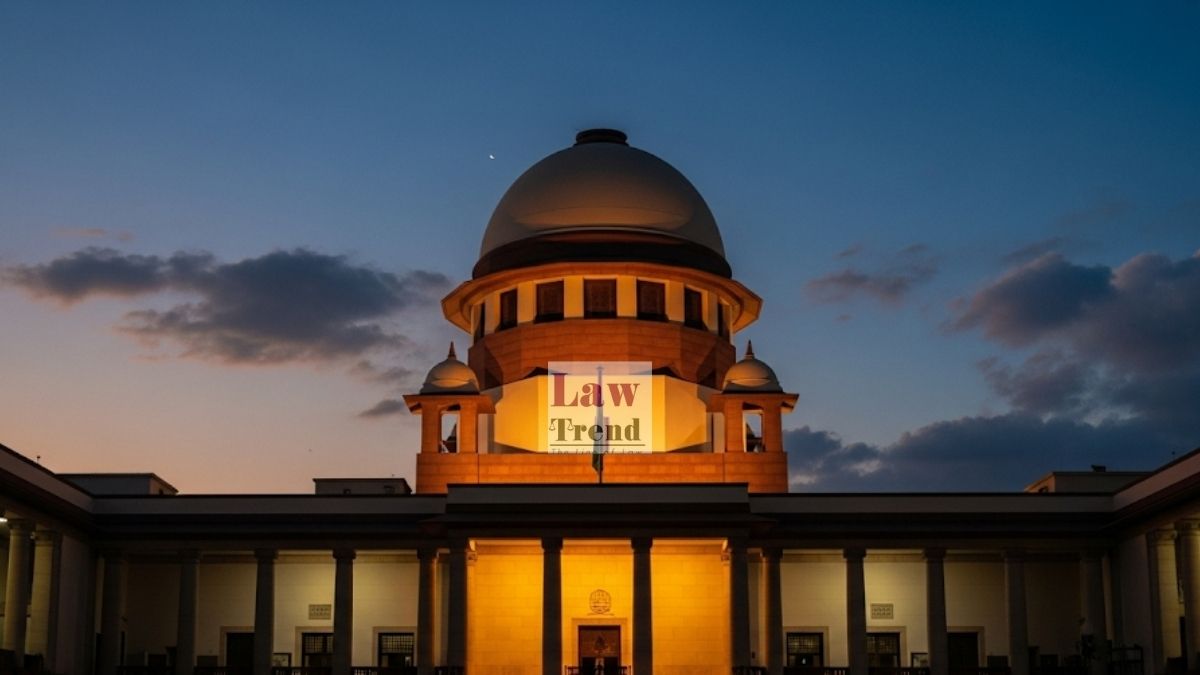

The Supreme Court has acquitted an appellant convicted of murder, setting aside the concurrent findings of the Trial Court and the High Court of Chhattisgarh. The Bench, comprising Justice Vikram Nath and Justice Sandeep Mehta, held that the omission of the accused’s name in the First Information Report (FIR), despite the eyewitness allegedly knowing his identity, struck at the “very root of the matter” and impeached the credibility of the prosecution’s case.

The Supreme Court allowed the appeal filed by Govind Mandavi, who had been convicted under Sections 302/34 (murder/common intention) and 460 of the Indian Penal Code (IPC). While the High Court of Chhattisgarh had acquitted two co-accused, Narender Nag and Mansingh Nureti, it had upheld the conviction of Mandavi. The Apex Court concluded that the eyewitness testimony was unreliable due to significant improvements and contradictions, particularly regarding the identification of the accused.

Background of the Case

The prosecution’s case originated from an incident on the night of April 17, 2021. The informant, Heeralal Hidko (PW-1), lodged a report stating that his daughter-in-law, Smt. Sukmai Hidko (PW-2), informed him that “two unknown masked persons” had entered their farm hut, abducted her husband Bivan Hidko, and assaulted him. Based on this information, an FIR was registered against unknown assailants.

Four days later, on April 21, 2021, the police recorded the statement of the deceased’s wife, Smt. Sukmai Hidko, under Section 161 of the Code of Criminal Procedure (CrPC). In this statement, she alleged for the first time that during the assault, the mask of one assailant had come off, allowing her to identify him as the appellant, Govind Mandavi.

READ ALSO  Order XXVI Rule 9 | It Is Impossible for a Commission To Decide Possession of a Particular Party To Dispute Over the Suit Property Only on the Basis of a Cursory Examination: Allahabad HC

The prosecution also relied on the recovery of blood-stained articles, including an axe and shoes, pursuant to the disclosure statement of the appellant. The Trial Court convicted Mandavi, and the High Court affirmed this decision, citing the motive of prior enmity between the parties stemming from the deceased’s second marriage to the appellant’s sister, Binda Bai.

Arguments of the Parties

Counsel for the appellant argued that the accused was not named in the FIR, even though the report was lodged solely based on information provided by the purported eyewitness, Smt. Sukmai Hidko. It was submitted that if the witness had indeed identified the appellant at the time of the incident, his name would have appeared in the initial report. The defence contended that the story of the “mask falling off” was a material improvement introduced after an unexplained delay to falsely implicate the appellant due to admitted animosity.

READ ALSO  Post Mortem Report Not Conclusive, Must Be Corroborated With Other Evidence, Reversing Acquittal Requires Higher Threshold: Supreme Court

Opposing the plea, the State of Chhattisgarh argued that the witness was in a state of shock and ill health immediately after the incident, explaining the delay in disclosure. The State relied on the Test Identification Parade (TIP) and the recovery of blood-stained items to support the conviction.

Court’s Analysis and Observations

The Supreme Court meticulously analyzed the evidence, particularly the testimonies of Heeralal Hidko (PW-1) and Smt. Sukmai Hidko (PW-2). The Court observed that the FIR contained no assertion that the mask of any assailant fell off or that the witness was unable to speak due to illness.

Justice Mehta, writing for the Bench, noted:

“It is therefore completely unbelievable that she would have omitted to mention the name of the accused to her father-in-law on the ground that she was unwell. This omission strikes at the very foundation of the prosecution’s case.”

The Court found that the two star witnesses attempted to “modulate and improve their versions while deposing on oath.” The Bench highlighted that conducting a TIP for the appellant was unjustified if the witness already knew him, as he was the brother of the deceased’s second wife.

READ ALSO  Right To Travel Abroad Is Valuable Fundamental Right: Delhi Court Allows Businessman To Attend Graduation Ceremony Of His Son

Referring to the omission in the FIR, the Court cited the precedent in Ram Kumar Pandey v. State of M.P. (1975), reiterating that the omission of important facts affecting the probabilities of the case is relevant in judging veracity.

Regarding the forensic evidence, the Court observed:

“None of the recovered articles tested positive for any particular blood group, and hence, the same cannot be connected with the crime.”

Decision

The Supreme Court held that the “belated introduction of the accused-appellant’s name” appeared to be a manipulation devised to implicate him owing to prior enmity. Consequently, the Court ruled that the Trial Court and the High Court had committed grave errors in law and fact.

The Bench ordered:

“The impugned judgments do not stand to scrutiny and are hereby set aside. The accused-appellant is acquitted of the charges. He shall be released forthwith from custody, if not required in any other case.”

Case Details:

  • Case Title: Govind Mandavi v. State of Chhattisgarh
  • Citation: 2025 INSC 1399
  • Coram: Justice Vikram Nath and Justice Sandeep Mehta

Law Trend
Law Trendhttps://lawtrend.in/
Legal News Website Providing Latest Judgments of Supreme Court and High Court

Related Articles

Latest Articles