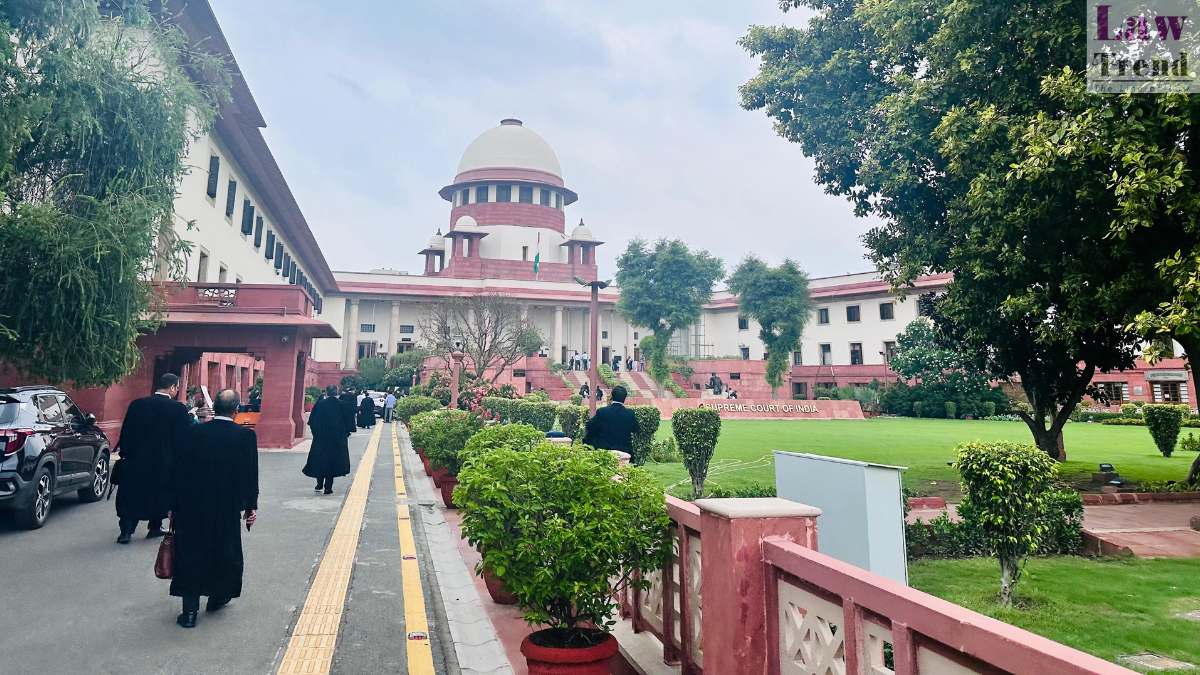
The Supreme Court of India has dismissed an appeal filed by a pharmaceutical firm seeking to quash criminal proceedings against them under the Drugs and Cosmetics Act, 1940. The bench, comprising Justice Prashant Kumar Mishra and Justice Vipul M. Pancholi, clarified that serious manipulation and non-maintenance of manufacturing records for habit-forming drugs attract the stringent penalties of Section 27(d) of the Act. Consequently, the Court ruled that the three-year limitation period applies and upheld the committal of the case to the Court of Sessions for trial.
The core legal issues centered around whether the non-maintenance of records prescribed under Schedule M and U of the Drugs and Cosmetics Rules, 1945, constitutes an offence strictly under Section 18-B (punishable with a maximum of one year under Section 28-A) or if it attracts Section 18(a)(vi) (punishable with up to two years under Section 27(d)). This distinction was crucial to determining if the prosecution was barred by limitation under Section 468 of the Code of Criminal Procedure (Cr.P.C.). Additionally, the Court examined whether offences punishable by less than three years must be tried summarily by a Magistrate under Section 36-A or committed to a Sessions Court under Section 32(2).
The Supreme Court ruled in favor of the State of Himachal Pradesh, holding that the allegations warranted Section 27(d), making the complaint well within the three-year limitation period. The Court also affirmed that offences under Chapter IV of the Act must be tried by a Court not inferior to a Court of Sessions, validating the committal order.
Background of the Case
M/s SBS Biotech, a partnership firm engaged in manufacturing pharmaceutical preparations in Kala Amb, District Sirmaur, Himachal Pradesh, along with its Production Head Sanjeev Kumar Santoshi and alleged managing partner Avinash Banga, were subjected to an inspection by a Drug Inspector on July 22, 2014.
During the inspection, authorities observed that the firm failed to maintain requisite records as mandated by Schedule-M and Schedule-U of the Rules, specifically concerning the drug Pseudoephedrine B. No. 503413. A re-inspection on August 5, 2014, revealed “huge discrepancies” in manufacturing, testing, and distribution records, alongside allegations of tampering, misleading entries, and corrections made with fluid. Consequently, 24.990 Kg of Pseudoephedrine Hydrochloride and related documents were seized.
After securing prosecution sanction from the State Drug Controller on September 15, 2016, a criminal complaint was filed on February 27, 2017. The Judicial Magistrate First Class (JMFC), Nahan, took cognizance on April 6, 2017, and later committed the case to the Special Judge-I, Sirmaur, on October 5, 2017. The Appellants challenged these orders before the High Court of Himachal Pradesh, which dismissed their petition on July 29, 2024.
Arguments of the Parties
Appellants’ Arguments: The counsel for the appellants argued that Section 18(a)(vi) read with Section 27(d) strictly relates to the prohibition of manufacture and sale of certain drugs, not the maintenance of records. They contended that the non-maintenance of records falls exclusively under Section 18-B, which is punishable under Section 28-A with a maximum imprisonment of one year. Based on this, they asserted that the complaint, filed two and a half years after the inspection, was barred by the one-year limitation under Section 468 of the Cr.P.C.
They further argued that under the saving clause of Section 32(2) read with Section 36-A, offences punishable with imprisonment of less than three years should be tried by a Magistrate, making the committal to the Special Court illegal. The appellants relied upon the Supreme Court decisions in Miteshbhai J. Patel Vs. Drug Inspector (2025) and Cheminova (India) Ltd. Vs. State of Punjab (2021) to support their limitation plea, and contested the High Court’s reliance on Union of India Vs. Ashok Kumar Sharma.
Respondent’s Arguments: The Deputy Advocate General (DAG) for the State contended that serious irregularities were discovered, including total non-maintenance of raw material registers and the absence of entries for most batches, indicating “clear misuse and lack of accountability.” The DAG argued this constituted a violation of Section 18(a)(vi) read with Rule 74, punishable under Section 27(d). Because Section 27(d) carries a punishment of up to two years, the limitation period is three years, rendering the complaint timely. The State also defended the committal order, stating the offence is exclusively triable by a Special Judge.
The Court’s Analysis
The Supreme Court closely examined the complaint, the committal orders, and the statutory framework. Addressing the appellant’s claim that the Magistrate failed to mention Section 27(d) in the cognizance order, the Court observed that the title of both the complaint and the cognizance order specifically referred to Section 27(d). The Court concluded that “while writing the hand written order, the learned JMFC has missed to mention Section 27 (d)” as a mere clerical omission.
Delving into the nature of the offence, the Court noted the grave allegations in the complaint: “…the firm has done the grievous manipulation and violations at the time of manufacturing and testing of the said drugs and committed blunder in manufacturing the drugs as per the record as seized by the firm.” The Court highlighted the observation that “heavy misuse has been done by the firm for the said habit forming drug and the firm could not produce the record for the illegal sale done by the said firm.”
The Court determined that these allegations pertain to the commission of an offence under Section 18(a)(vi), punishable under Section 27(d). “In view of the aforesaid, when Section 27 (d) of the Act provides for imprisonment for a term not less than one year but may extend to two years, as per Section 468 of Cr.P.C. complaint can be filed within a period of 03 years. In the present case, the complaint has been filed within a period of 03 years (two years and six months),” the judgment read, effectively rejecting the limitation defense. The Court differentiated the cited cases (Miteshbhai J. Patel and Cheminova), noting that in those instances, the complaints were filed significantly beyond the three-year threshold.
On the jurisdictional issue, the Court analyzed the interplay between Section 32(2) and Section 36-A. Section 32(2) stipulates that no court inferior to a Court of Session shall try an offence punishable under Chapter IV. While Section 36-A allows summary trials by Magistrates for offences not exceeding three years, it explicitly excludes offences triable by a Special Court or Court of Session under the Act.
The Court observed: “We are, therefore, of the view that when Section 32(2) specifically provides for offence to be tried by the Courts not inferior to the Court of Sessions, Section 36-A would not be applicable to the facts of the present case.”
Decision
The Supreme Court found no error or illegality in the committal proceedings or the High Court’s refusal to quash the criminal complaint.
“In view of the aforesaid discussion, we are of the view that the High Court has not committed any error while dismissing the petition filed by the present appellants under Section 482 of the Cr.P.C. for quashing of the complaint. Hence, no interference is required,” the Court concluded. The appeal was accordingly dismissed.