

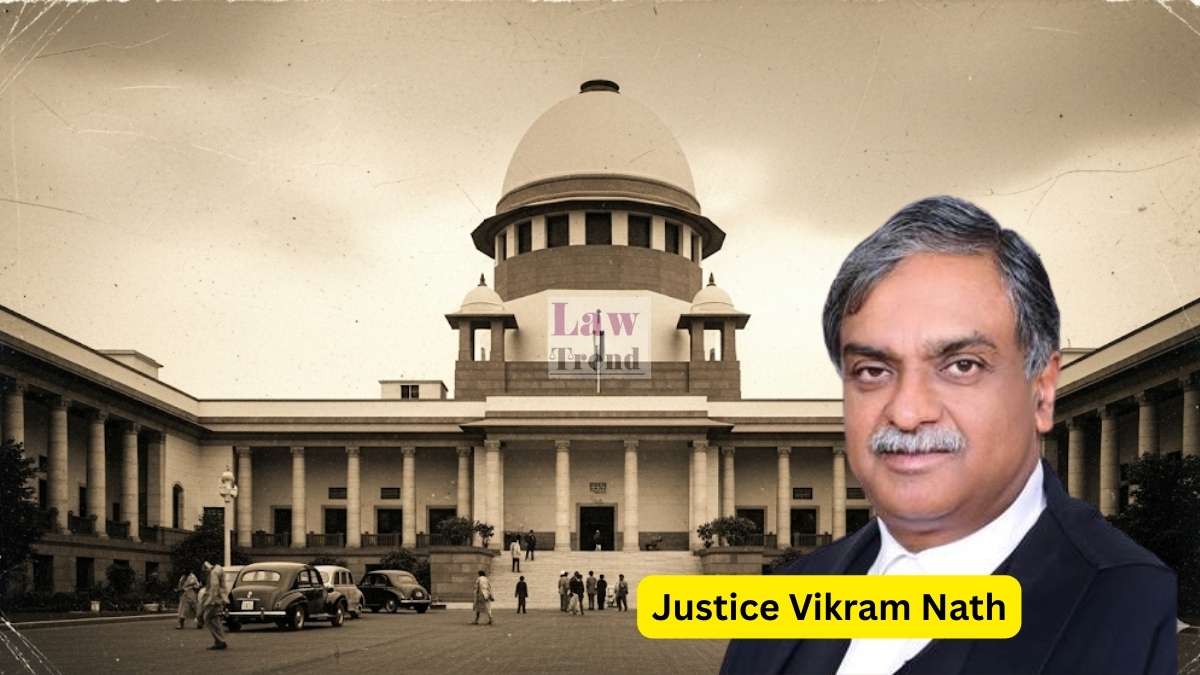
In an interesting turn of events at the Supreme Court on Wednesday, the rigid formalities of the courtroom gave way to a moment of grace when a litigant inadvertently addressed the Bench as “You Guys.”
The incident occurred before a three-judge bench headed by Justice Vikram Nath, which was hearing a batch of petitions regarding the serious issue of stray dogs in India. As animal lovers, victims, and experts presented their views, a woman appearing in the matter sought to express her gratitude to the judges for their intervention and attention to the cause.
In her flow of speech, she thanked the Bench, addressing them as “You Guys”—a stark departure from the traditional and mandatory honorifics like ‘My Lord,’ ‘Your Lordship,’ or ‘Your Honor’ used in the apex court.
The Courtroom Reaction
The informal address momentarily stunned the lawyers present in the courtroom, given the Supreme Court’s strict adherence to protocol and decorum. Several advocates immediately whispered to the woman, alerting her to the breach of protocol and informing her that judges are not to be addressed in such a casual manner.
Realizing her mistake, the woman immediately apologized to the Bench, clarifying that she was unaware of the specific courtroom rules regarding the address.
“It is Okay”: Bench’s Gracious Response
However, instead of taking offense at the breach of decorum, Justice Vikram Nath handled the situation with remarkable composure and benevolence. Putting the woman at ease, Justice Nath simply remarked, “No problem, it is okay,” effectively waiving the formality to focus on the substance of her submission.
Without getting entangled in the technicalities of the address, the Bench allowed the proceedings to continue smoothly.
The incident has drawn appreciation from the legal community and the public alike. While the Supreme Court is known for its discipline and strict adherence to traditions, Justice Vikram Nath’s gesture highlighted that the process of justice prioritizes the voice of the common citizen over archaic formalities. The gracious handling of the situation reinforced the idea that the court remains accessible and attentive to litigants, even those unfamiliar with the intricate protocols of legal practice.




