

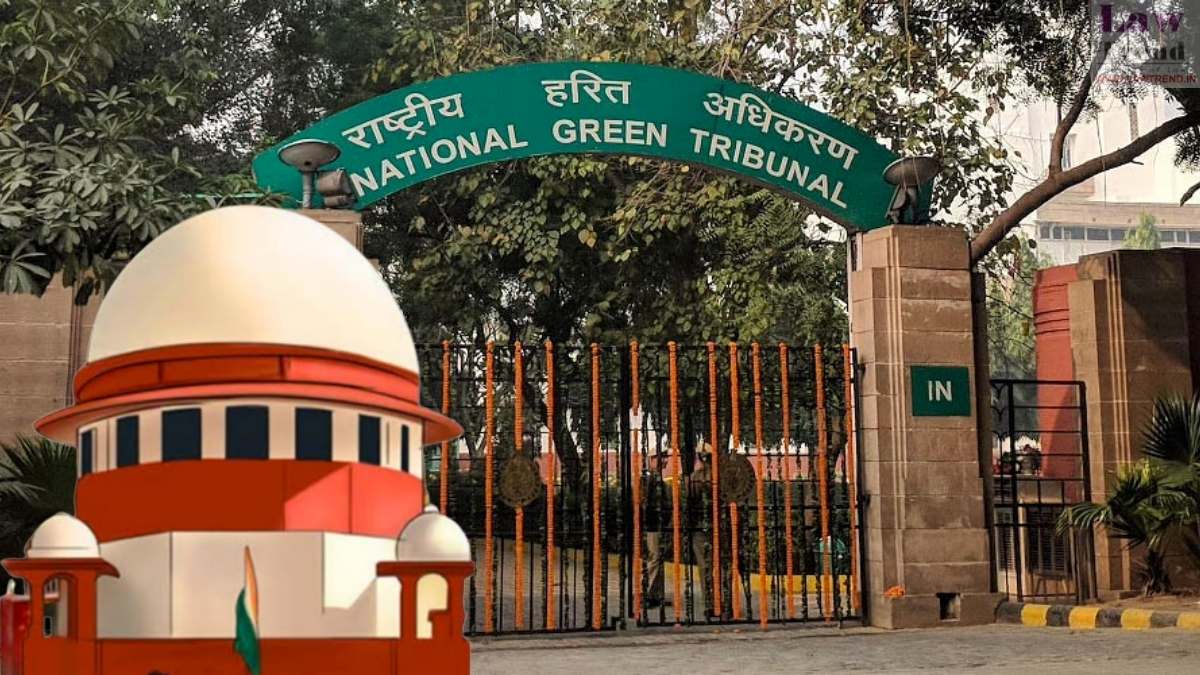
The Supreme Court set aside the National Green Tribunal’s direction to demolish a self-help group (SHG) building in a village in Odisha’s Puri district, holding that there was no justification to treat the structure as an illegal construction on a waterbody and that rural women’s livelihood initiatives deserve constitutional protection.
A Bench of Chief Justice Surya Kant and Justices Joymalya Bagchi and Vipul M. Pancholi allowed an appeal filed by the Gopinathpur Gram Panchayat Samiti against the July 2022 order of the Orissa High Court, which had declined to interfere with the NGT’s demolition direction and instead asked authorities to take remedial action.
During the hearing, the Chief Justice questioned how the NGT could order demolition of a government building constructed under the State’s flagship Mission Shakti scheme aimed at empowering women through SHGs. The Court observed that providing basic infrastructure in rural areas is itself a challenge and such development work should not be stalled through belated litigation.
The Bench noted that the structure had been raised as part of a government initiative to promote self-employment among rural women.
The State Pollution Control Board submitted that the site involved a water stream. The Court, however, found that the stream had been incorrectly described as a “waterbody” in the proceedings before the Tribunal. It also observed that in environmental matters of this nature, the NGT ought to have taken assistance from an expert body before directing demolition.
Emphasising the social purpose of the building, the Court held that enabling rural women to achieve self-sufficiency is a constitutional objective which must be protected, including by judicial forums. It clarified that coercive action such as demolition could be justified only in cases of a “brazen violation of law”.
The Bench recorded that the petitioner before the NGT was a resident of the same locality and had raised the dispute only after the building was constructed. There was nothing on record to show that the structure obstructed the flow of the stream at any point.
Holding that the Tribunal ought not to have entertained the plea post-construction in the absence of demonstrable environmental harm, the Court set aside both the NGT’s demolition order and the High Court’s direction to that extent.
While protecting the building from demolition, the Court directed all stakeholders, including the State Pollution Control Board, to ensure that if there is a running stream, its flow is not obstructed. It asked authorities to devise an appropriate mechanism in consultation with experts.
The SHG building, the Court clarified, will remain intact.




