

MoU Signed by Both Parties Cannot be Treated as ‘Bond’ for Stamp Duty: Supreme Court
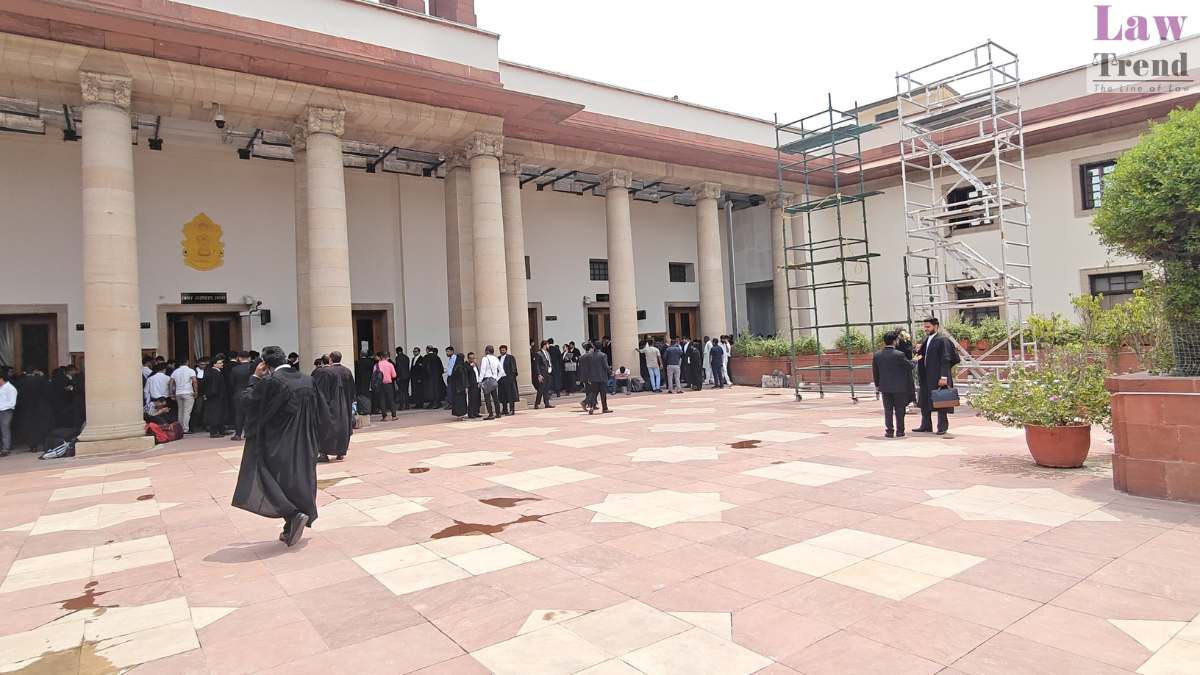
The Supreme Court of India has upheld a High Court decision ruling that a Memorandum of Understanding (MoU) signed by both parties does not constitute a “Bond” for the purpose of stamp duty. The Bench comprising Justice Prashant Kumar Mishra and Justice Prasanna B. Varale dismissed the appeal filed by M/s Sri Lakshmi Balaji Enterprises, holding that the document in question was a simple agreement admissible in evidence.

Background of the Case

The matter arose from a civil suit filed by the respondent-plaintiffs, M/s Angeethis Restaurant, seeking the recovery of Rs. 69,61,547/-. During the trial, the plaintiffs sought to tender evidence and exhibit a Memorandum of Understanding (MoU) dated August 1, 2015.

The appellants-defendants objected to the exhibition of this document, contending that the subject document was not properly stamped as applicable to a “Bond”. The Trial Court sustained this objection. Aggrieved by the Trial Court’s decision, the respondents preferred a Revision Petition under Article 227 of the Constitution of India before the High Court. The High Court allowed the petition, setting aside the Trial Court’s order and holding that the document was “not a Bond and it is a simple MoU which is admissible in evidence.”

The appellants subsequently approached the Supreme Court challenging the High Court’s impugned order.

Arguments of the Parties

The counsel for the appellants relied on the judgment of the Supreme Court in State of Kerala and others vs. McDowell & Co. Ltd [1994 Supp (2) SCC 605]. They submitted that “the nomenclature of title used in the document is not final in deciding the nature of the document and it is the contents of the documents which will decide its nature.”

READ ALSO  सुप्रीम कोर्ट पहली बार अपना स्थापना दिवस मनाने के लिए तैयार

The appellants argued that since the payment of an amount was referred to in the MoU, it should be treated as a Bond and charged with the proper stamp duty applicable to a Bond. They contended that “such stamp duty having not been paid, the document is not admissible in evidence.”

Per contra, the learned counsel for the respondents submitted that the MoU was executed in addition to an earlier lease deed between the parties. They argued that “there are no trappings of Bond in the subject MoU which is signed by both the parties.”

Court’s Analysis and Observations

The Supreme Court, having heard the counsel for both parties, expressed the view that the High Court had taken the correct position. The Bench observed that the subject MoU could not be treated as a Bond because “it is signed by both the parties and not by one of the parties binding himself to pay the amount and making the said payment subject to fulfillment of some conditions.”

The Court affirmed the High Court’s finding that the contents of the document did not attract clauses (a) to (c) of Section 2(5) of the Indian Stamp Act. The Bench noted that “the obligation to pay the money is not dependent on any condition and that the document is signed by both the parties making it an agreement.”

READ ALSO  Supreme Court Stresses Mutual Respect Among Constitution's Three Wings

Referring to the precedent in McDowell & Co. Ltd, the Court observed that a bond is an instrument by which a person puts himself under an obligation to pay a sum of money to another on the condition that the obligation shall be void if a specific act is performed or not performed. The Court posed the relevant question derived from that judgment:

“Has the executant of the instrument put himself under an obligation, or bound himself, to pay a sum of money to another, the obligation to be void under specified circumstances? If the executant can be sued for that sum of money only upon the strength of the instrument, the instrument is a bond.”

Distinguishing the present case from McDowell, the Court stated:

“In the present case, it is not the executor alone who has signed the document but both the parties have signed the document. Therefore, while the law laid down in McDowell & Co. Ltd (supra) is settled, it does not apply to the facts of the present case considering the nature, content and recital in the documents signed by both the parties.”

Decision

The Supreme Court concluded that the document in question is not a Bond. Accordingly, the Appeal was dismissed, and the High Court’s order permitting the admission of the MoU in evidence stands.

Case Details

  • Case Title: M/S Sri Lakshmi Balaji Enterprises & Anr. v. M/S Angeethis Restaurant & Anr.
  • Case Number: Civil Appeal arising out of S.L.P. (Civil) No. 5070/2024
  • Coram: Justice Prashant Kumar Mishra and Justice Prasanna B. Varale

READ ALSO  Child Sexual Abuse Cases Should be Handled With Utmost Care and Caution-Acquittal Set Aside
Ad 20- WhatsApp Banner

Law Trend
Law Trendhttps://lawtrend.in/
Legal News Website Providing Latest Judgments of Supreme Court and High Court

Related Articles

Latest Articles


