

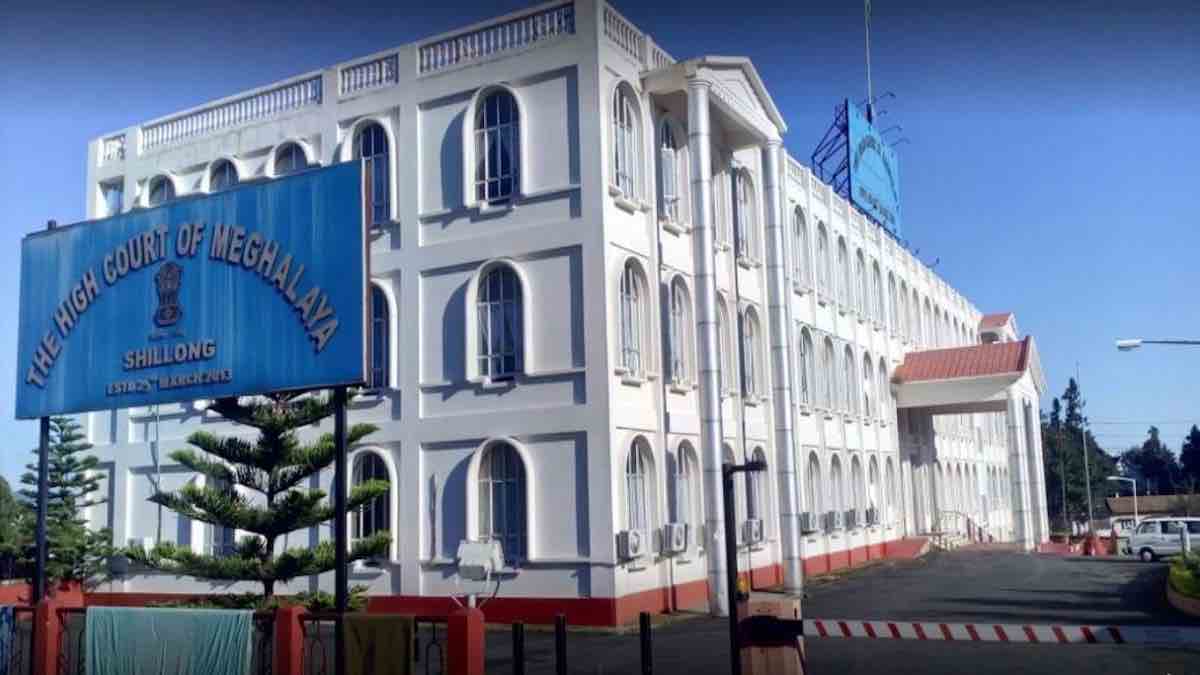
The Meghalaya High Court has held that district administrations have no legal authority to act as church tribunals or resolve internal ecclesiastical conflicts, partially granting relief to the Mawkhar Presbyterian Church against executive intervention.
In a ruling addressing administrative overreach, Justice H S Thangkhiew quashed several prohibitory orders issued by the East Khasi Hills deputy commissioner that had halted religious functions and pastoral services on the church premises. The bench underscored that the presence of friction between opposing factions does not provide executive officers with unchecked power to manage or regulate the internal matters of a religious group.
Limits On Administrative Authority
The judgment nullified a show-cause notice dated 13 May alongside two subsequent orders issued on 19 June that had barred the Khasi Jaintia Presbyterian (KJP) Synod Mihngi from administering sacraments and offering pastoral care at the church. The district magistrate had relied in part on constitutional interpretations and clarifications from the Presbyterian Church of India to delineate jurisdiction.
Justice Thangkhiew determined that evaluating ecclesiastical jurisdiction through the lens of internal church constitutions falls entirely outside the purview of the executive branch. The court additionally dismantled portions of earlier directives from 12 March and 8 May that had imposed open-ended or blanket prohibitions on the church’s day-to-day operations, assemblies, and facilities.
Genesis Of The Leadership Feud
Tensions within the Mawkhar congregation originated in 2019 following the detection of an unexplained financial shortage amounting to approximately Rs 2.86 crore. The controversy escalated after an audit uncovered alleged financial misappropriation reaching roughly Rs 4.65 crore, followed by a formal police complaint on 3 August 2019 regarding an alleged fraud of Rs 3.26 crore.
The financial fallout subsequently triggered governance disagreements, centering on the suspension and eventual dismissal of pastor Reverend M Pyngrope and the church’s formal ties with the KJP Synod Sepngi. Matters came to a head on 1 February 2026, when the local congregation passed a resolution seeking to cut ties with the Synod Sepngi.
The split led to conflicting leadership claims between rival factions, sparking cross-complaints, police investigations, and repeated administrative curbs on gatherings at church halls, educational institutions, and related properties.
Preservation Of Law Enforcement Powers
While setting aside the overreaching administrative curbs, the High Court stressed that it was not determining the underlying church controversy. The bench clarified that it offered no ruling on the legitimacy of the 1 February disaffiliation resolution, the tenure or dismissal of pastors and church executives, the competing claims over physical property, or the ecclesiastical boundaries between Synod Sepngi and Synod Mihngi.
The court observed that both factions remain entitled to seek resolution before competent civil courts, statutory authorities, or ecclesiastical bodies.
Furthermore, the ruling affirmed that district authorities retain full statutory powers to take lawful preventive measures whenever confronted with genuine or imminent threats of violence, breach of peace, trespassing, property damage, or intimidation.




