

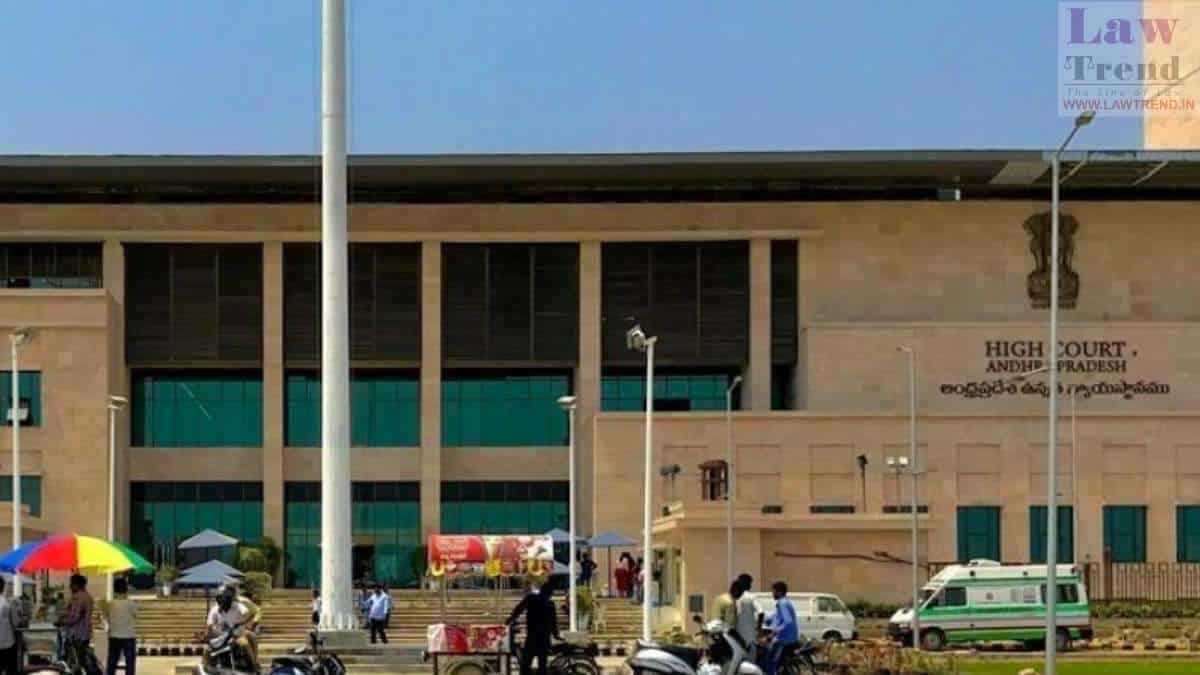
The Andhra Pradesh High Court has reaffirmed that maintenance to an estranged wife is a legal right and not an act of charity, holding that its enforcement is essential to uphold equity, justice and good conscience.
Justice Y. Lakshmana Rao dismissed a criminal revision petition filed by a husband challenging a Family Court order that directed him to pay ₹7,500 per month to his estranged wife, Chinnam Kiranmayi Smily, and ₹5,000 per month to their minor son.
The Family Court had passed the maintenance order on March 3, 2018. The husband, Chinnan Kishore Kumar, approached the High Court contending that the order suffered from perversity and material irregularity. He argued that:
- The maintenance granted was excessive and arbitrary
- His wife had initiated multiple proceedings
- The order violated principles of natural justice
He sought setting aside of the maintenance award as unsustainable in law.
Rejecting the challenge, the High Court held that maintenance jurisprudence in India reflects the judiciary’s commitment to ensure that wives, children and dependent parents are not left in financial distress due to neglect by those legally bound to support them.
The Court observed:
“Courts have consistently reiterated that maintenance is not charity but a right, and its enforcement is essential to uphold equity, justice, and good conscience.”
Justice Rao described maintenance as a “dynamic instrument of constitutional empathy” falling within the protective ambit of Articles 15 and 39 of the Constitution, aimed at safeguarding women and children from economic deprivation.
The Court emphasised that:
- The obligation to maintain is continuous and enforceable
- It flows from the marital or familial relationship, not from property ownership
- The right to maintenance is recurring and ambulatory, accruing afresh with every breach of the duty to maintain
- It is not defeated by the pendency of other matrimonial proceedings
The judge held that the Family Court’s grant of maintenance was a judicious exercise of discretion grounded in principles of social justice.
Finding no illegality or perversity in the Family Court’s order, the High Court upheld the award of ₹7,500 per month to the wife and ₹5,000 per month to the minor son, reiterating that maintenance is a statutory and constitutional safeguard for economically vulnerable family members.




