

Madras High Court Dismisses Actor Vijay’s Plea Against ₹1.5 Crore Income Tax Penalty, Allows Liberty to Approach ITAT
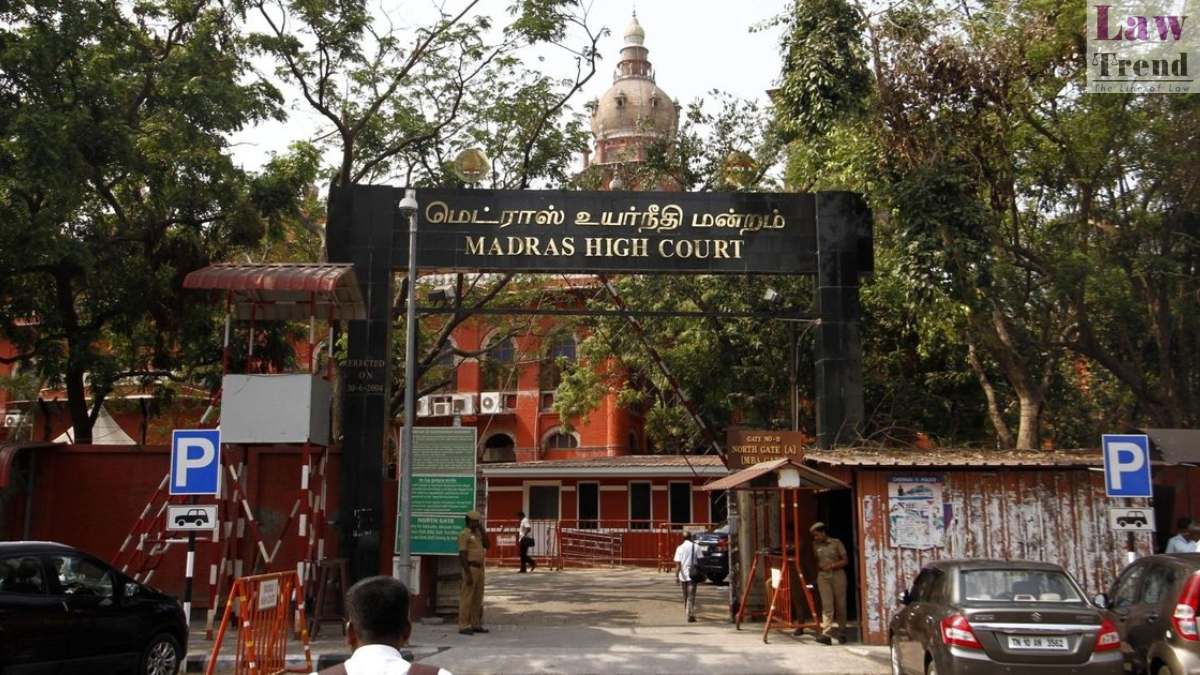

The Madras High Court on Friday dismissed a writ petition filed by actor and Tamilaga Vettri Kazhagam (TVK) president C. Joseph Vijay challenging the imposition of a ₹1.5 crore penalty by the Income Tax Department for alleged non-disclosure of ₹15 crore income during the financial year 2015–16.

Justice Senthilkumar Ramamoorthy upheld the issuance of the penalty revision notice under Section 263 of the Income Tax Act, 1961, observing that it was issued “within the two-year limitation period.” The Court declined to examine the merits of the penalty proceedings and found “no legal infirmity” in the notice.

However, the bench granted Vijay liberty to approach the Income Tax Appellate Tribunal (ITAT) on other permissible grounds.

In September 2015, the Income Tax Department had conducted a search at Vijay’s residence under Section 132 of the Income Tax Act and claimed to have unearthed undisclosed income. Subsequently, Vijay voluntarily disclosed ₹15 crore as additional income for the assessment year 2016–17 and paid the tax on it.

In December 2017, the department passed an assessment order computing Vijay’s taxable income at ₹38.25 crore, after disallowing certain claims including those related to depreciation and expenses attributed to his fan association, the “Rasigar Mandram.”

READ ALSO  Nearly 60 Lakh Cases Pending in HCs, Over 69,000 in SC: Govt

In December 2018, penalty proceedings were initiated under Section 271AAB(1), which pertains to undisclosed income found during searches. Meanwhile, Vijay challenged the assessment before the Commissioner of Income Tax (Appeals), which partly ruled in his favour. The Department approached the ITAT, which also partly allowed the department’s appeal by disallowing certain deductions.

Separately, the department sought to revise the original assessment under Section 263, arguing that the penalty proceedings were not properly initiated. A show cause notice for revision was issued in July 2019.

Vijay challenged the Section 263 revision before the ITAT, which in May 2022 set it aside, stating that the revision served no purpose since the penalty proceedings under Section 271AAB were already underway.

Subsequently, Vijay filed a writ petition before the High Court challenging the Section 263 notice and penalty on the grounds of limitation and legal infirmity. He argued that the notice was issued after the permissible period had lapsed and that the ITAT’s earlier ruling made further proceedings unwarranted.

READ ALSO  मद्रास हाई कोर्ट ने तमिलनाडु फुटबॉल एसोसिएशन के मामलों को संभालने के लिए समिति का गठन किया

The Income Tax Department, however, maintained that the notice was well within the statutory period and lawfully issued.

Justice Ramamoorthy dismissed Vijay’s argument on limitation, stating that the show cause notice was validly issued under Section 263 within the stipulated two-year period. “I do not find any legal infirmity in the issuance of the notice,” the judge held.

He clarified that the merits of the penalty could still be adjudicated before the appropriate forum and granted Vijay the liberty to pursue remedies before the ITAT “on grounds other than limitation.”

  • Section 132: Empowers the Income Tax Department to conduct search and seizure operations.
  • Section 263: Allows revision of assessment orders deemed “erroneous and prejudicial to the interests of the revenue.”
  • Section 271AAB(1): Deals with penalty provisions for undisclosed income unearthed during search operations.
READ ALSO  सनातन धर्म पर टिप्पणी को लेकर अमित मालवीय के खिलाफ दर्ज FIR मद्रास हाईकोर्ट से खारिज

The High Court’s order effectively closes Vijay’s writ remedy but leaves open his appellate options under tax law.

Law Trend
Law Trendhttps://lawtrend.in/
Legal News Website Providing Latest Judgments of Supreme Court and High Court

Related Articles

Latest Articles

