

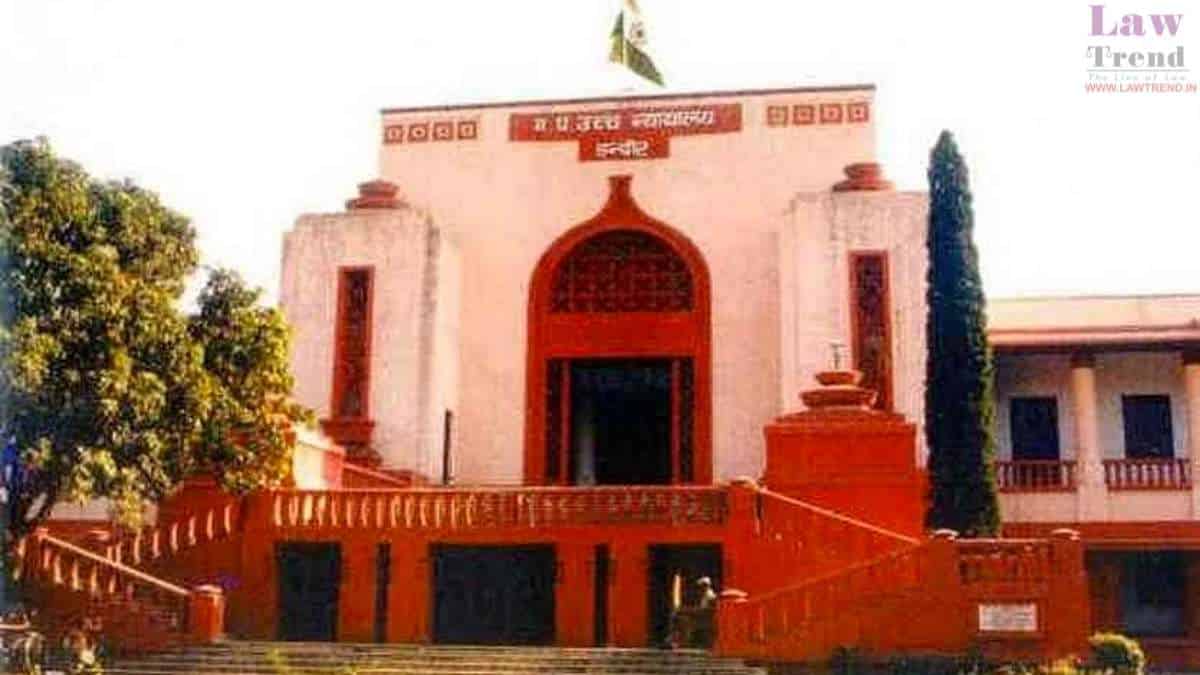
The Indore bench of the Madhya Pradesh High Court has announced that it will commence regular, sequential hearings from April 6 to determine the religious character of the Bhojshala temple-Kamal Maula mosque complex in Dhar.
A division bench comprising Justice Vijay Kumar Shukla and Justice Alok Awasthi issued the direction on Thursday after perusing a recent Supreme Court order and hearing submissions from the contesting parties. The court indicated it would hear arguments from all petitioners, respondents, and intervenors in a structured manner to resolve the long-standing dispute over the 11th-century monument.
The legal battle centers on whether the Archaeological Survey of India (ASI)-protected site is a temple dedicated to Goddess Saraswati, as maintained by the Hindu community, or the Kamal Maula Mosque, as claimed by the Muslim side.
Two years ago, acting on High Court directions, the ASI conducted an extensive scientific survey of the premises. The resulting 2,000-page report suggested that a massive structure from the Parmar dynasty predated the mosque and that the current edifice was constructed using repurposed temple components. Based on this, the Hindu side argues that recovered artifacts—including coins, sculptures, and inscriptions—conclusively prove the site’s original religious character as a temple.
During Thursday’s proceedings, Senior Advocate Salman Khurshid, representing the Maulana Kamaluddin Welfare Society, raised concerns regarding the transparency of the evidence. He informed the court that despite the survey’s completion, the videography and color photographs captured by the ASI had not yet been shared with the Muslim side.
Khurshid requested the High Court to grant access to these materials after the bench’s own perusal, noting that the nature of their forthcoming objections would depend heavily on the contents of the visual evidence. The Muslim side has previously questioned the integrity of the ASI survey, alleging that earlier objections were ignored and that certain “backdoor” objects were included in the report.
The High Court’s decision to proceed with regular hearings follows a Wednesday order from the Supreme Court, which declined to interfere with the High Court proceedings at this stage.
The apex court, while disposing of an appeal by the Maulana Kamaluddin Welfare Society, observed: “It, thus, seems that according to the appellant… there are some objections which arise from what is duly recorded in the course of videography. We have no doubt that the learned High Court, after seeing such videography, shall consider those objections too, along with other objections made by the parties, in accordance with the principles of natural justice.”
The Supreme Court further directed the High Court to take an “appropriate decision” on all objections, including those stemming from the survey’s videography.
With the High Court now set to hear four petitions and one writ appeal simultaneously, the April 6 start date marks a significant shift toward a final judicial determination. The court has committed to a sequential hearing process to ensure all parties are heard in full compliance with the principles of natural justice.




