

Landowners Not Jointly Liable With Developer For Delay In Flat Delivery Under Joint Development Agreement: Supreme Court
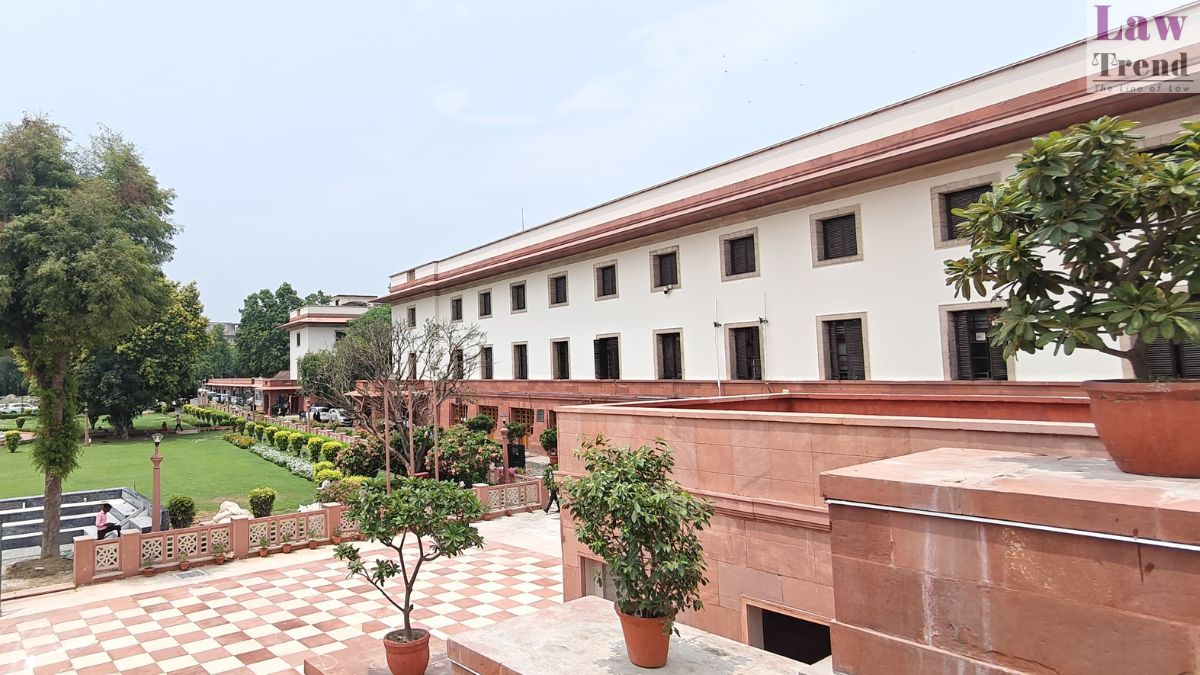

The Supreme Court of India has dismissed civil appeals filed by flat buyers, ruling that landowners cannot be held jointly and severally liable with a developer for paying compensation due to delayed possession of flats. The Court, comprising Justice Pamidighantam Sri Narasimha and Justice Alok Aradhe, concluded that under the Joint Development Agreement (JDA), the liability for construction and delivery vested entirely with the developer, and the landowners could not be penalized for deficiency in service.

Background of the Case

The dispute arose from a housing project where landowners entered into a Joint Development Agreement (JDA) with M/s Unishire Homes LLP (the developer) on February 24, 2012, and executed a General Power of Attorney (GPA) in the developer’s favor. Following the sanction of plans in February 2013, the developer executed Memoranda of Sale Agreements with flat buyers, promising possession within 36 months.

When the initial 36-month period and an additional six-month grace period expired on February 24, 2017, the project remained incomplete. The appellants (flat buyers) approached the National Consumer Disputes Redressal Commission (NCDRC) in August 2017, alleging deficiency in service.

On October 19, 2023, the NCDRC found a deficiency in service due to a delay of over six years. The NCDRC directed the developer to complete the construction, hand over possession, and pay interest at 6% per annum on the deposits made by the buyers. Crucially, the NCDRC held that the landowners were not liable for the delay.

READ ALSO  Neutral Substances Must Be Considered Alongside Narcotics to Determine Quantity Classification: Chhattisgarh High Court

Following a complex procedural history involving review petitions and an earlier remand by the Supreme Court, the NCDRC ultimately ruled on July 30, 2024, that the landowners could not be held jointly and severally liable for the deficiency in service, but directed both the landowners and the developer to transfer the title and execute the sale deed in favor of the appellants. The appellants challenged this order before the Supreme Court under Section 67 of the Consumer Protection Act, 2019, seeking to hold the landowners jointly and severally liable for the delay compensation.

Arguments of the Parties

The counsel for the appellants argued that the execution of the GPA by the landowners in favor of the developer created a principal and agent relationship, making the principal liable for the deficient acts of the agent. Relying on various clauses of the Sale Agreement and citing previous decisions of the Supreme Court, the appellants contended that both parties were jointly and severally responsible for the deficiency in service.

In response, the counsel for the landowners submitted that under the JDA, the responsibility for construction and delivery rested entirely with the developer. They highlighted that the landowners were fully indemnified by the developer against any liability, were not signatories to the Sale Agreements, and did not cause the delay through any acts or omissions.

READ ALSO  Wife doubting husband for coming home late frequently is not cruelty: Chhattisgarh High Court

The counsel for the developer supported the orders passed by the NCDRC.

Court’s Analysis

Authored by Justice Alok Aradhe, the judgment meticulously analyzed the clauses of the JDA and the GPA. The Court noted that Clause 7.4 of the JDA explicitly provided for mutual indemnities, stating that in the event of any breach between the developer and the purchasers, “the FIRST PARTY/OWNERS shall not be liable for any consequences thereof suffered by the SECOND PARTY/DEVELOPER shall always indemnify and keep indemnified the FIRST PARTY/OWNERS.”

Reading the JDA and GPA conjointly, the Court observed that the developer had the exclusive right to enter into sale agreements, undertake construction, receive consideration, and transfer possession for the flats falling under their share.

The Court observed: “It is not the case of the appellants that there was a delay in construction on account of any act or omission on the part of the landowners. The liability to pay the delay compensation is sought to be fastened only on the ground that there is a relationship of principal and agent.”

Rejecting the appellants’ arguments, the Court stated, “For the lapse on the part of the developer, the landowners, who are in no way concerned with the construction, cannot be held liable for deficiency in service, particularly when the developer has indemnified them against acts of commission or omission in construction.”

The Court also examined the precedents cited by the appellants, specifically noting that the reliance on Akshay & Anr. v. Aditya & Ors. was misplaced. The Court pointed out that in Akshay & Anr., it was upheld that the developer alone was liable for the payment of delay compensation, which factually supported the landowners’ case rather than the appellants. The Court further noted that the issue of joint and several liability “has to be decided in the facts of each case.”

Decision

READ ALSO  Rejecting Applications Over a Disorganized File is a 'Classic Instance of Abdication of Judicial Duty': MP High Court

The Supreme Court found no merit in the appeals and dismissed them. The Court upheld the NCDRC’s decision, affirming that the NCDRC “has rightly fastened the liability for delay compensation on the developer as it was responsible for the delay in construction.” The Court concluded that the appellants’ interests were fully protected since both the landowners and the developer had been appropriately directed to transfer the title.

Case Details

  • Case Title: Sriganesh Chandrasekaran & Others v. M/s Unishire Homes LLP & Others
  • Case Number: Civil Appeal Nos. 10527-10528 of 2024
  • Coram: Justice Pamidighantam Sri Narasimha and Justice Alok Aradhe

Law Trend
Law Trendhttps://lawtrend.in/
Legal News Website Providing Latest Judgments of Supreme Court and High Court

Related Articles

Latest Articles

