

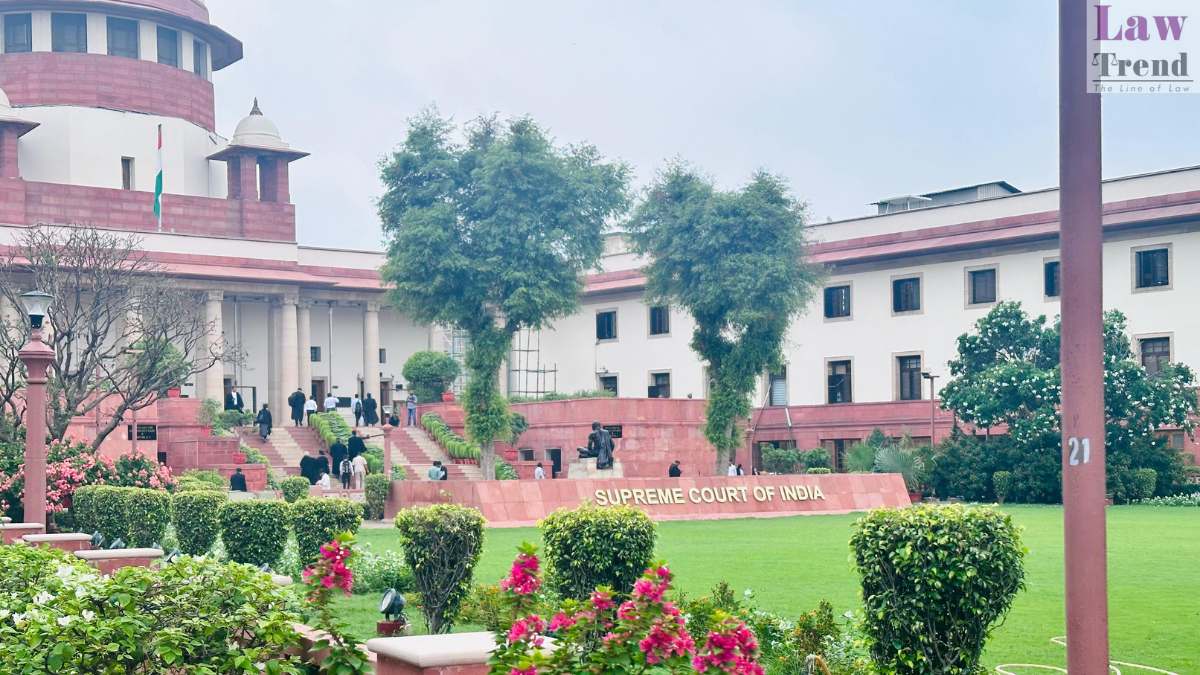
The Supreme Court on Wednesday commenced final hearing of a plea challenging the Union Government’s October 6, 2023 notification making a fresh reference under the Inter-State River Water Disputes Act in relation to the Krishna river water-sharing dispute between Telangana and Andhra Pradesh. The petitioner contends that the notification is unconstitutional and bypasses the mechanism laid down under the Andhra Pradesh Reorganisation Act, 2014.
A bench comprising Chief Justice Surya Kant and Justices Joymalya Bagchi and Vipul M. Pancholi heard preliminary submissions and posted the matter for further hearing next Wednesday.
Senior counsel appearing for the petitioner argued that the division of Krishna waters between the two successor states is already governed by Section 89 of the Andhra Pradesh Reorganisation Act (APRA), 2014, which provides a specific statutory framework for allocation.
It was submitted that the undivided State of Andhra Pradesh had been allocated 811 TMC (thousand million cubic feet) of water by the first Krishna Water Disputes Tribunal (KWDT-I) based on 75% dependable flow, and the Reorganisation Act created a mechanism for apportioning this quantity between Telangana and Andhra Pradesh.
According to the petitioner, proceedings under the APRA framework were nearing conclusion when the Centre issued the 2023 notification making a “further reference” under the general Inter-State River Water Disputes Act. This, it was argued, undermines the special statutory scheme contained in the Reorganisation Act.
The counsel submitted that the present dispute concerns only the inter se division between Telangana and Andhra Pradesh, and that Maharashtra and Karnataka stand excluded, an issue which has already attained finality.
It was further contended that an executive notification cannot override or sidestep a mechanism created by Parliament through a specific statute.
The Krishna water dispute has a long history of adjudication. KWDT-I determined allocations based on 75% dependable flows, while a subsequent tribunal, KWDT-II, reassessed the flows. However, the KWDT-II award remains unnotified and is the subject of pending proceedings before the Supreme Court.
The present challenge raises questions on the interplay between a special statutory mechanism under the APRA, 2014 and the Centre’s power to make a fresh reference under the Inter-State River Water Disputes Act.
The bench recorded the preliminary submissions and listed the matter for continued final hearing next Wednesday.




