Kerala HC: Borrowers Cannot Invalidate Recovery Proceedings Citing Time-Bar Under Rule 68B
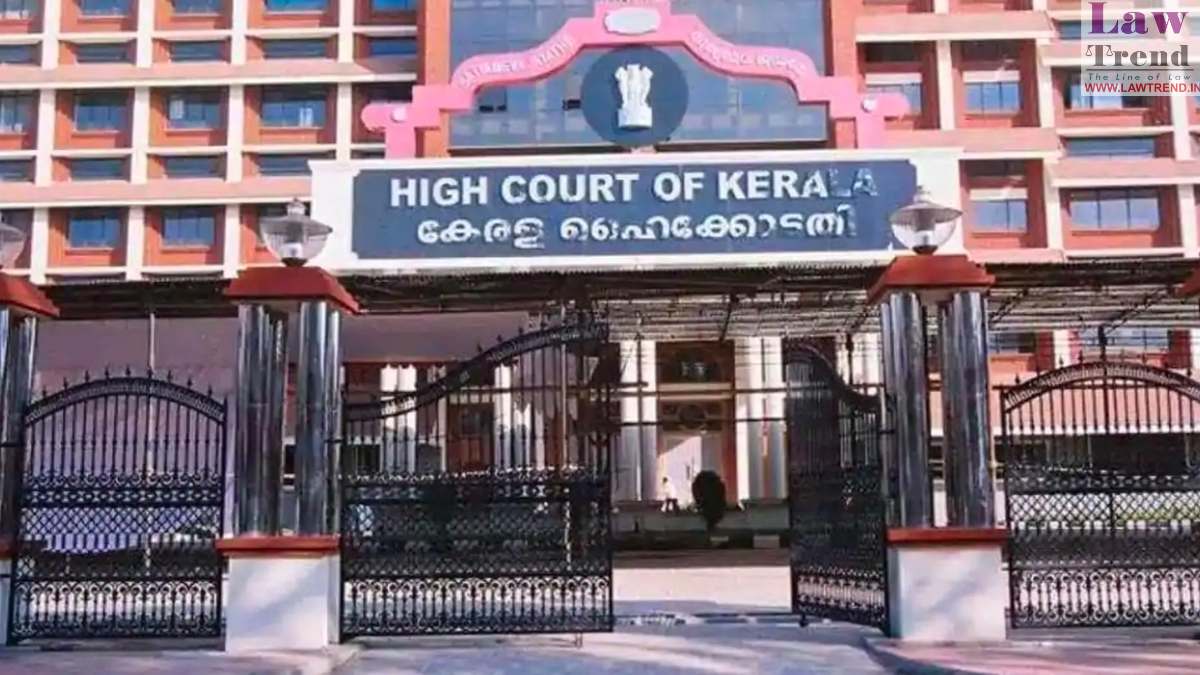
The Kerala High Court has dismissed a writ appeal challenging a 2016 auction sale conducted by the Federal Bank, ruling that the time limit prescribed under Rule 68B of the Second Schedule to the Income Tax Act, 1961, does not apply to recovery proceedings under the Recovery of Debts Due to Banks and Financial Institutions Act, 1993 (RDDB Act).

The Division Bench, comprising Justice Anil K. Narendran and Justice Muralee Krishna S., held that the limitation for recovery proceedings is governed by Article 136 of the Limitation Act, 1963. Furthermore, the Court ruled that a party cannot raise new grounds in subsequent litigation that could have been raised earlier, citing the principle of constructive res judicata.

The primary legal issue was whether the auction was conducted in breach of Rule 68B of the Second Schedule to the Income Tax Act, which mandates that no sale of immovable property shall be made after the expiry of three years (later amended) from the end of the financial year in which the demand became conclusive. This rule is made applicable to RDDB Act proceedings via Section 29.

The Court dismissed the appeal, affirming the Single Judge’s decision that the auction was valid and the appellants were barred from raising this plea due to constructive res judicata.

Background of the Case

The 1st appellant availed a loan of ₹5,00,000 from the Federal Bank in April 2003, which was later enhanced to ₹20,00,000. The loan fell into arrears by January 2005, and by January 2006, the liability had risen to ₹28,34,318.

READ ALSO  असंतोषजनक कार्य के लिये संविदा कर्मचारियों को बिना नोटिस दिए नौकरी से नहीं निकाला जा सकता: हाईकोर्ट

The Bank filed O.A. No. 31 of 2006 before the Debt Recovery Tribunal (DRT), Ernakulam. A Recovery Certificate was issued on January 11, 2012, for the recovery of ₹76,90,252.22. Subsequently, the Recovery Officer issued a proclamation of sale on May 24, 2016. An e-auction was conducted on July 25, 2016, where the 3rd and 4th respondents purchased the properties for ₹75.6 lakhs and ₹30.2 lakhs, respectively.

The appellants approached the High Court arguing that the auction was a nullity because it violated the time limit under Rule 68B of the Income Tax Act.

Arguments of the Parties

The Appellants’ Submissions: The appellants contended that the auction was non est (non-existent) in the eyes of law. They relied heavily on the Supreme Court judgment in C.N. Paramasivam v. Sunrise Plaza [(2013) 9 SCC 460], arguing that Section 29 of the RDDB Act incorporates the rules of the Income Tax Act. They argued that since Rule 68B prohibits sales after the expiry of the specified period, the 2016 auction (based on a 2012 certificate) was void.

They further relied on Rajasthan State Industrial Development and Investment Corporation v. Subhash Sindhi Cooperative Housing Society, Jaipur [(2013) 5 SCC 427], arguing that a void proceeding cannot be revalidated.

The Respondents’ Submissions: The Federal Bank (1st Respondent) argued that C.N. Paramasivam did not consider Rule 68B and was therefore inapplicable. They pointed out the extensive history of litigation initiated by the appellants since 2006, none of which raised this specific ground.

READ ALSO  Kerala High Court Bars Use of ‘Bouncer’-Clad Security Personnel at Temples; Says Decoroum, Sanctity Must Be Maintained

The 3rd Respondent (Auction Purchaser) submitted that they had invested substantial amounts in the property after the purchase. They argued the petition was barred by delay, laches, and constructive res judicata, citing the Supreme Court’s recent decision in Celir LLP v. Sumati Prasad Bafna [2024 KHC 6706].

The 4th Respondent added that the Recovery Certificate has the effect of a charge decree, and the limitations under the Income Tax Act do not apply strictly.

Court’s Analysis and Observations

On the Applicability of Rule 68B: The Court distinguished the present case from C.N. Paramasivam, noting that the Apex Court in that case considered Rules 57 and 58 of the Income Tax Act, but “did not consider Rule 68B.”

The Bench observed:

“The question of law considered in C.N.Paramasivam and the principles laid down… do not pertain to Rule 68B of the second schedule to the Income Tax Act, 1961, and hence the principles laid down in C.N.Paramasivam are not at all applicable to the facts of the present case.”

Citing the Madras High Court decision in J.N. Krishnan v. Branch Manager, Canara Bank, the Court noted that the RDDB Act adopts the Income Tax Act rules only “as far as possible.” The Court held that Rule 68B imposes a duty on the Recovery Officer but does not confer a corresponding right on the debtor to claim the proceedings are void due to delay.

The Court concluded:

READ ALSO  फोन पर पुलिस को गाली देना आईपीसी की धारा 294 के तहत अपराध नहीं: हाईकोर्ट

“The time limit of three years… is merely directory and not mandatory… The limitation applicable to the recovery proceedings under Section 19 of the RDDB Act would, therefore, be governed by Article 136 of the Limitation Act, 1963.”

On Constructive Res Judicata: The Court heavily scrutinized the appellants’ litigation history, noting multiple prior proceedings before the DRT, DRAT, and the High Court where the validity of the sale proclamation could have been challenged but was not.

Referencing the “Henderson Principle” explained in Celir LLP, the Court stated:

“The appellants who raised the contention that Ext.P2 is void in the present writ petition did not raise that contention in the previous rounds of litigation. Therefore, they are barred by the principles of constructive res judicata, i.e., might and ought principles, from raising the said contention in the present writ petition.”

The Court further clarified that the auction could not be termed “void” to escape the bar of res judicata because the time limit in Rule 68B is not applicable to RDDB Act certificates.

Decision

Finding no perversity or illegality in the Single Judge’s judgment, the Division Bench dismissed the writ appeal.

Case Details:

  • Case Title: Binu Vincent & Anr. v. The Federal Bank Ltd. & Ors.
  • Case No: WA No. 2684 of 2025
  • Coram: Justice Anil K. Narendran and Justice Muralee Krishna S.
  • Citation: 2025:KER:92195

Law Trend
Law Trendhttps://lawtrend.in/
Legal News Website Providing Latest Judgments of Supreme Court and High Court

Related Articles

Latest Articles