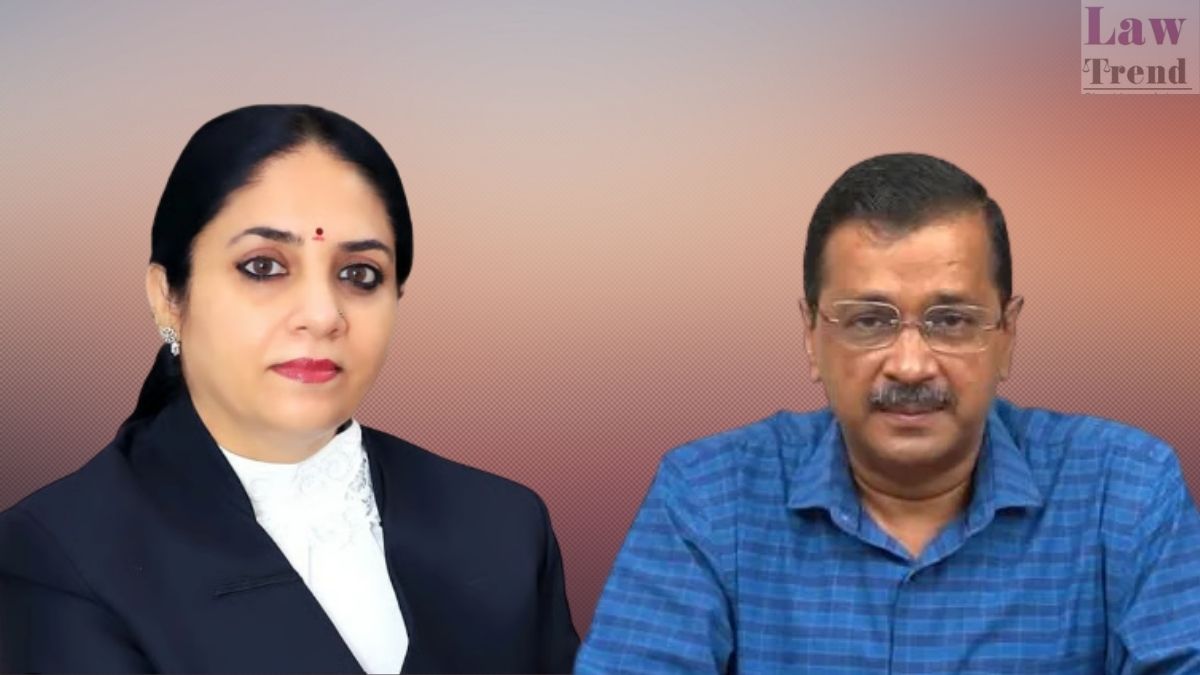
Aam Aadmi Party (AAP) convenor Arvind Kejriwal and senior party leader Manish Sisodia have approached the Supreme Court after the Chief Justice of the Delhi High Court declined their request to transfer the Central Bureau of Investigation’s plea challenging their discharge in the Delhi excise policy case to another judge.
According to party sources, the two leaders challenged the decision of Delhi High Court Chief Justice D.K. Upadhyaya, who rejected their representation seeking to move the matter away from Justice Swarana Kanta Sharma, before whom the CBI’s revision petition is currently listed.
Chief Justice Upadhyaya, while refusing the request, observed that Justice Sharma was hearing the CBI’s petition strictly in accordance with the roster and that there was no administrative basis to transfer the case to another bench.
The Chief Justice also clarified that any request for recusal must be considered by the judge concerned and cannot be decided administratively.
The CBI’s plea against the trial court’s order discharging Kejriwal, Sisodia and other accused in the excise policy case is scheduled to be heard by Justice Sharma on Monday.
On March 11, Kejriwal, Sisodia and other accused in the case submitted a representation to the Chief Justice of the Delhi High Court seeking transfer of the CBI’s revision petition to what they described as an “impartial” judge.
In his representation, Kejriwal stated that he had a “grave, bona fide, and reasonable apprehension” that the matter may not receive a neutral and impartial hearing before the present bench.
The development follows a significant order passed by the trial court on February 27, which discharged Kejriwal, Sisodia and 21 other accused in the excise policy case.
The trial court had strongly criticised the CBI investigation, stating that the agency’s case “was wholly unable to survive judicial scrutiny and stood discredited in its entirety.”
Subsequently, on March 9, Justice Swarana Kanta Sharma stayed the trial court’s recommendation for initiating departmental action against the CBI’s investigating officer in the case.
While issuing notice to all 23 accused on the CBI’s challenge to their discharge, the High Court observed that certain findings and observations of the trial court at the stage of framing of charges prima facie appeared erroneous and required examination.
In the representation seeking transfer of the case, Kejriwal alleged that his apprehension arose from the judge’s earlier conduct in the proceedings.
He claimed that on the very first day of hearing the CBI’s revision petition, the bench recorded a prima facie view that the trial court’s order was “erroneous” even before hearing the accused.
The representation also questioned the stay on the trial court’s directions against the CBI officer, stating that the order did not identify any “specific perversity” in the lower court’s findings.
Kejriwal further pointed out that Justice Sharma had previously dealt with several cases arising from the same CBI FIR. These included:
- Kejriwal’s petition challenging his arrest
- Bail applications filed by Manish Sisodia and AAP leader Sanjay Singh
- A plea by Telangana Jagruti president K. Kavitha
According to the representation, the judge had not granted relief to any of the accused in these proceedings.
The document also stated that the bench had made “elaborate prima facie observations accepting the prosecution theory on critical questions” in earlier matters.
Kejriwal informed the Chief Justice that three of those judgments were later set aside by the Supreme Court, while another has been referred to a larger bench.
In his submission, Kejriwal described the case against him as politically motivated and maintained that the request for transfer was not aimed at any individual judge.
He stated that the plea was based on “the objective test of reasonable apprehension in the mind of a fair-minded and informed litigant seeking justice.”
Following the Chief Justice’s refusal to transfer the matter, Kejriwal and Sisodia have now approached the Supreme Court challenging that decision.