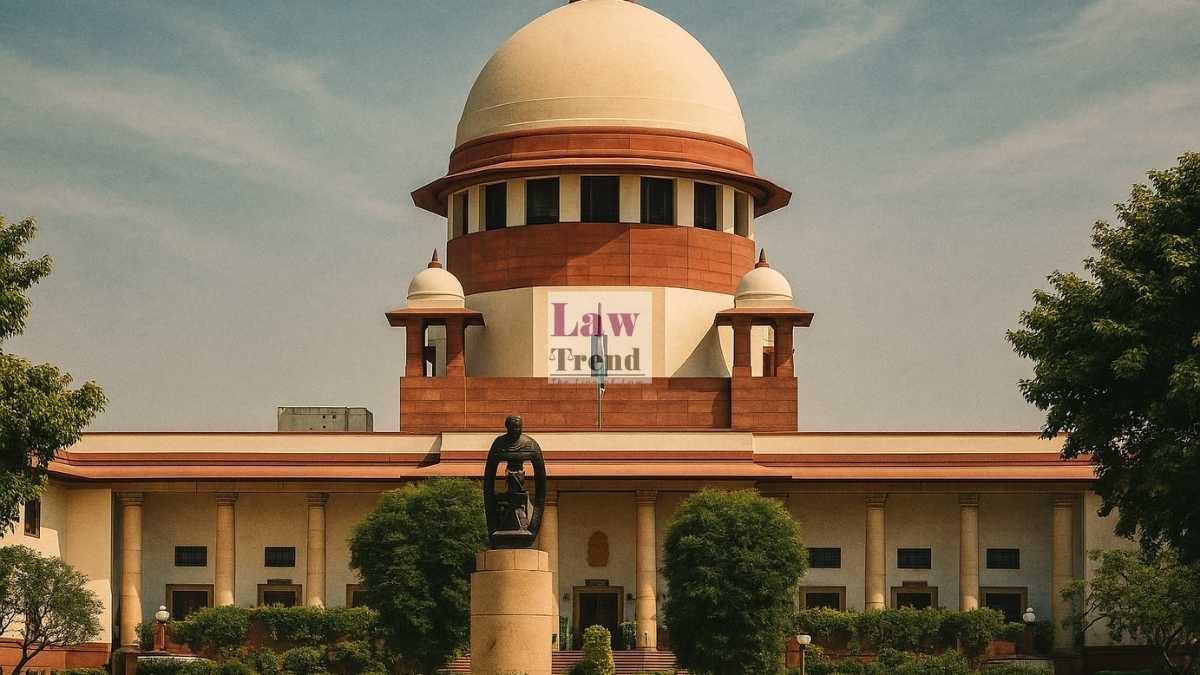
The Supreme Court of India has set aside an order passed by the Kerala High Court that directed a Will to be sent to a handwriting expert for an opinion on the authenticity of the testator’s signatures. The Bench, comprising Justice Sanjay Kumar and Justice K. Vinod Chandran, observed that since the signatures were not in dispute, such an expert opinion was unnecessary for the adjudication of the case.
The primary legal issue before the Apex Court was whether a Will must be sent for forensic handwriting examination when the appellant does not dispute the authenticity of the signatures but challenges the document on the grounds of lack of “free will and consent.”
Background of the Case
The matter arose from a challenge to a judgment and order dated June 30, 2023, passed by the High Court of Kerala at Ernakulam in O.P. (C) No. 1676/2022. The High Court had set aside a trial court order and directed that the Will in question be sent to a handwriting expert to verify the signatures of the testator, Late E.J. Thomas.
The underlying litigation, O.S. No. 258/2020, involved a dispute over a document registered as No. 89/3/2008 at the S.R.O., Maradu.
Arguments of the Parties
During the proceedings, the learned counsel for the appellant, Annie Thomas, informed the Court that she does not dispute the fact that the Will bears the signatures of her father, Late E.J. Thomas.
The Court’s attention was drawn to paragraph 4 of the plaint filed by the appellant in the original suit, which stated:
“The plaintiff’s father E.J. Thomas did not execute or create any such document as one bearing No. 89/3/2008 on the file of the S.R.O., Maradu with his free will and consent.”
The respondents, represented by Senior Advocate V. Chitambaresh and others, participated in the hearing where the Court evaluated whether the High Court’s direction for an expert opinion remained relevant in light of these admissions.
Court’s Analysis
The Supreme Court analyzed the averments in the plaint and the submissions made by the appellant’s counsel. The Bench noted that the core of the dispute was not the physical act of signing, but the mental state and voluntariness of the testator at the time of execution.
The Court observed:
“In the light of the aforestated averment in the plaint to the effect that only the testator’s free will and consent were in issue and not his signature(s), as such; now buttressed by the submission of the learned counsel for the appellant, we find that the signature(s) of the appellant’s father are not in dispute in the aforestated Will…”
However, the Court clarified that while the signatures were admitted, the document must still satisfy the statutory requirements for proving a Will. The Bench noted that the Will “still requires to be proved, in terms of Section 68 of the Evidence Act, 1872 and Section 63(c) of the Indian Succession Act, 1925.”
Decision
The Supreme Court allowed the appeal and set aside the impugned judgment of the Kerala High Court. The Court directed that the parties remain free to agitate all other issues, specifically those regarding the execution and validity of the Will, before the trial court.
The Court concluded:
“The impugned order/judgment passed by the High Court is, accordingly, set aside and the appeal is allowed, leaving it open to the parties to agitate all other issues before the trial court.”
Case Details
- Case Title: Annie Thomas v. Rani Thomas & Ors.
- Case Number: Civil Appeal No. /2026 (@SLP (C) No. 4361/2024)
- Bench: Justice Sanjay Kumar and Justice K. Vinod Chandran