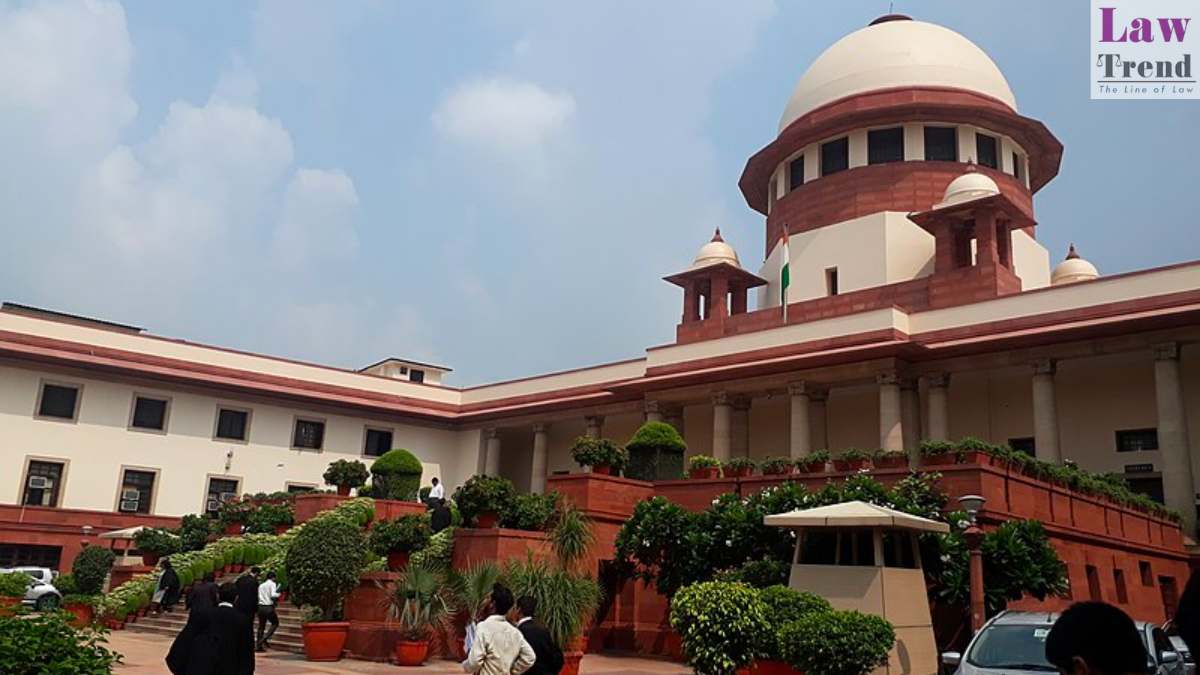
The Supreme Court of India on Tuesday (January 13) held that the implementation of Section 12(1)(c) of the Right of Children to Free and Compulsory Education Act, 2009 (RTE Act), which reserves 25% of seats in neighbourhood schools for children from weaker and disadvantaged sections, cannot be left to mere guidelines or Standard Operating Procedures (SOPs).
The Bench, comprising Justice Pamidighantam Sri Narasimha and Justice Atul S. Chandurkar, directed the appropriate authorities to formulate subordinate legislation by issuing necessary rules and regulations under Section 38 of the Act to ensure effective implementation.
The Court was hearing a Special Leave Petition filed by a parent, Dinesh Biwaji Ashtikar, whose children were denied admission under the 25% quota in 2016 despite vacant seats. While the relief for the petitioner had become infructuous due to the passage of time, the Court examined the systemic failures in the admission process. The Court concluded that without enforceable rules, the objective of Article 21A and Section 12(1)(c) would remain a “dead letter.” Consequently, the Court directed the framing of statutory rules and impleaded the National Commission for Protection of Child Rights (NCPCR) to monitor compliance.
Background
The petitioner approached the Supreme Court challenging a High Court order that rejected his plea for admission. In 2016, the petitioner sought admission for his children in a neighbourhood school under the free education quota. Despite Right to Information (RTI) data showing 648 vacant seats and a letter from the primary education officer supporting his claim, the school did not respond.
The High Court dismissed his writ petition on the ground that “the petitioner had failed to take up appropriate steps to admit his kids in the free education quota,” specifically referring to the failure to apply via the online procedure.
The Supreme Court noted that while the specific case had become infructuous, it was necessary to “take up the case for precedent making” to examine the efficiency of procedures complying with Section 12.
Submissions and Issues Highlighted The Court appointed Senior Advocate Shri Senthil Jagadeesan as Amicus Curiae. The Amicus highlighted several barriers making the 25% quota inaccessible:
- Digital Illiteracy: The exclusive reliance on online applications ignores the digital divide.
- Language Barrier: Lack of information in local languages.
- Lack of Support: Absence of help-desks for parents.
- Opacity: Lack of transparency regarding seat availability and grievance redressal.
The Amicus and the learned Additional Solicitor General (ASG) submitted joint suggestions, emphasizing the need for a centralized online portal, help-desks, and a defect clearance window for applications.
Court’s Observations and Analysis Justice Narasimha, writing for the Bench, emphasized the transformative nature of the RTE Act. The Court observed:
“The obligation of a ‘neighbourhood school’ to admit children belonging to weaker and disadvantaged sections of our society… has the extraordinary capacity to transform the social structure of our society. Earnest implementation can truly be transformative.”
The Duty Bearers The judgment identified five key “duty bearers” responsible for the Act’s implementation:
- The Appropriate Government: To establish schools.
- The Local Authority: To ensure availability of schools and monitor admission.
- The Neighbourhood School: To provide free and compulsory education.
- The Parents/Guardians: To provide opportunities for education (Article 51A(k)).
- The Elementary School Teachers: Vital for nation-building.
Constitutional Philosophy of Fraternity The Court linked Section 12 to the constitutional value of fraternity, stating that the 25% inclusion is a vehicle to realize the “development of the child.”
“It makes it possible, normatively and structurally, for the child of a multi-millionaire or even of a Judge of the Supreme Court of India to sit in the same classroom and at the same bench as the child of an autorickshaw driver or a street vendor.”
On the Insufficiency of Guidelines The Court reviewed the Standard Operating Procedure (SOP) issued by the NCPCR. While acknowledging the SOP’s detailed stages—Preparatory, Processing, and Post-Admission—the Bench held that these guidelines lack legal enforceability.
“These guidelines do not partake the character of enforceable rules, violation of which would render the duty bearers answerable to the reviewing or controlling authority… We are of the opinion that it is necessary and compelling to formulate subordinate legislation by issuing necessary rules and regulations, prescribing the method and manner by which children of weaker and disadvantaged sections are to be admitted in neighbourhood schools.”
Decision and Directions The Supreme Court issued the following directions:
- Frame Rules: Appropriate authorities must issue necessary rules and regulations under Section 38 of the Act for implementing Section 12(1)(c), in consultation with the NCPCR, State Commissions for Protection of Child Rights (SCPCRs), and Advisory Councils.
- NCPCR Impleaded: The NCPCR was impleaded as a party respondent to monitor compliance.
- Affidavit Required: The NCPCR must collate information regarding the issuance of these rules by States and Union Territories and file an affidavit by March 31, 2026.
- Next Hearing: The matter is listed for further hearing on April 6, 2026.
Case Details:
- Case Title: Dinesh Biwaji Ashtikar v. State of Maharashtra & Ors.
- Case Number: Special Leave Petition (Civil) No. 10105 of 2017
- Coram: Justice Pamidighantam Sri Narasimha and Justice Atul S. Chandurkar