“Go Away and Die” Uttered During Quarrel Does Not Constitute Instigation: Kerala HC Discharges Accused in Abetment of Suicide Case
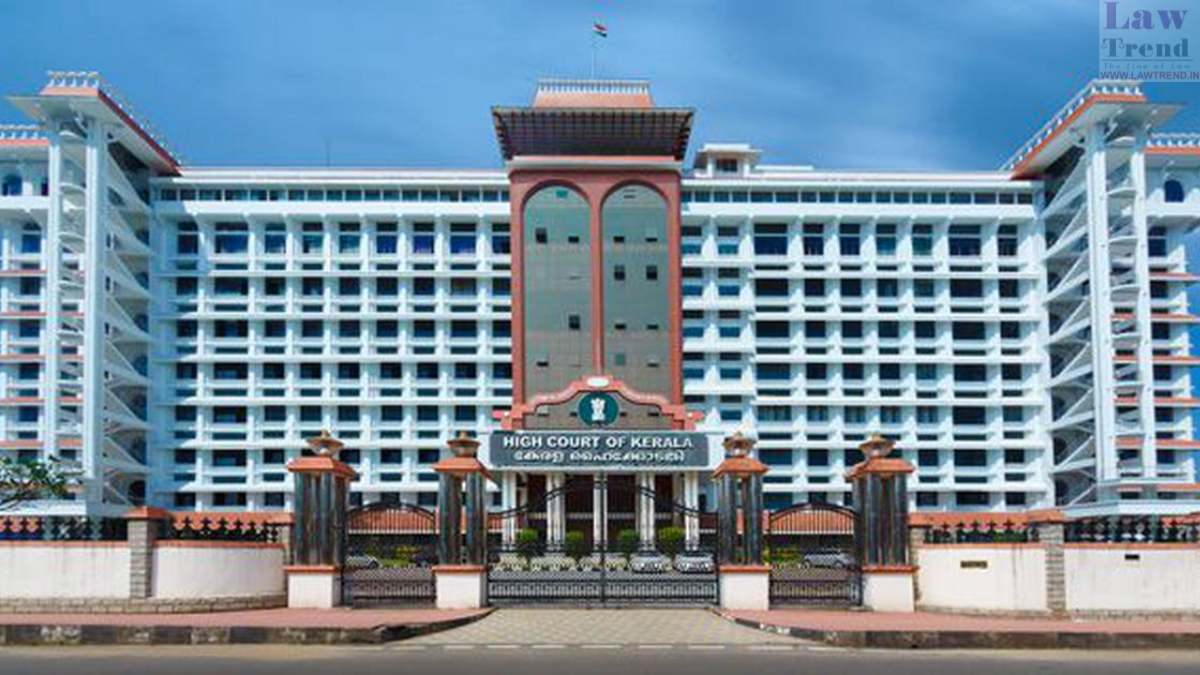

The Kerala High Court has set aside an order of the Additional Sessions Judge-I, Kasaragod, and discharged an accused in an abetment of suicide case, ruling that words uttered in a heat of passion during a quarrel do not amount to instigation under the Indian Penal Code (IPC).

Justice C. Pratheep Kumar allowed the criminal revision petition, holding that the alleged statement “go away and die” made by the petitioner lacked the necessary mens rea (criminal intent) required to attract the offence punishable under Section 306 of the IPC.

Background of the Case

The case arose from Crime No. 577/2023 of Melparamba Police Station, which was subsequently numbered as S.C. No. 427/2024 before the Additional Sessions Court-I, Kasaragod. The prosecution alleged that the petitioner (Accused No. 1) had an extra-marital relationship with the deceased (Accused No. 2), who was already married to another person.

According to the prosecution, the conflict arose when the deceased discovered that the petitioner was planning to marry another woman. Upon inquiring about this decision, a wordy altercation ensued. The prosecution alleged that, enraged by the deceased’s query, the petitioner scolded her, stating “go away and die”.

Following this incident, on September 15, 2023, between 5:10 a.m. and 6:00 a.m., the deceased, allegedly mentally disturbed by the petitioner’s conduct, jumped into a well along with her daughter, aged five and a half years, and committed suicide.

READ ALSO  Whether on the Basis of Compromise, Offence U/S 376 I.P.C. and POCSO Act Be Quashed? Allahabad HC Answers

The Additional Sessions Judge had previously rejected the petitioner’s application for discharge via an order dated July 8, 2025 (Annexure-A4), deciding to frame charges under Sections 306 (Abetment of suicide) and 204 (Destruction of document or electronic record to prevent its production as evidence) of the IPC. The petitioner challenged this order before the High Court under Sections 438 and 442 of the Bharatiya Nagarik Suraksha Sanhita (BNSS).

Arguments

The counsel for the revision petitioner argued that even if the entire allegations levelled against the petitioner were accepted as true, they would not constitute the offences punishable under Sections 306 and 204 of the IPC. The counsel contended that the comment was made in a heat of passion and did not demonstrate an intention to abet the suicide.

The Public Prosecutor opposed the petition, maintaining that the petitioner’s conduct led to the deceased’s death.

Court’s Analysis

Justice C. Pratheep Kumar analyzed the definition of abetment under Section 107 of the IPC, noting that it involves instigating, conspiring, or intentionally aiding a person to commit an offence.

The Court referred to the Supreme Court’s decision in Sanju Alias Sanjay Singh Sengar v. State of M.P. (2002), observing:

“….Even if we accept the prosecution story that the appellant did tell the deceased ‘to go and die’, that itself does not constitute the ingredient of ‘instigation’. The word ‘instigate’ denotes incitement or urging to do some drastic or unadvisable action or to stimulate or incite. Presence of mens rea, therefore, is the necessary concomitant of instigation. It is common knowledge that the words uttered in a quarrel or in a spur of the moment cannot be taken to be uttered with mens rea.”

The Court also relied on Swamy Prahaladdas v. State of M.P. (1995), which held that casual words employed in the heat of the moment between quarreling people do not amount to abetment of suicide.

Further, the bench cited the Kerala High Court’s own ruling in Cyriac v. S.I. of Police (2005), which emphasized that the accused’s intention is paramount. The Court quoted:

READ ALSO  Sikkim High Court Acquits Man in POCSO Case, Says 3-Year-Old Child Unlikely to Comprehend Sexual Assault

“It is not what the deceased ‘felt’, but what the accused ‘intended’ by his act which is more important in this context. Of course, the deceased’s frail psychology which forced him to the suicide also may become relevant, but it is only after establishing the requisite intention of accused.”

Applying these legal principles to the facts at hand, the Court observed:

“In the instant case also, the words, ‘go away and die’ made by the petitioner was in the midst of a wordy quarrel between the petitioner and the deceased, in a heat of passion without having any intention to instigate the deceased to commit suicide and as such, the offence under Section 306 IPC is not made out.”

The Court further noted that since the allegations did not constitute the offence under Section 306 IPC, the offence under Section 204 IPC would also not be attracted.

READ ALSO  Failing to Produce Evidence for 5 Years Sufficient to Stay Proceedings Under Section 258 CrPC: Chhattisgarh HC

Decision

The High Court allowed the Criminal Revision Petition and set aside the order of the Sessions Judge. The Court discharged the petitioner of the offences punishable under Sections 306 and 204 of the IPC, exercising its powers under Sections 438 and 442 of the BNSS.

Case Details:

  • Case Title: Safwan Adhur v. State of Kerala
  • Case Number: Crl.Rev.Pet No. 1224 of 2025
  • Coram: Justice C. Pratheep Kumar
  • Counsel for Petitioner: Sri. R. Anas Muhammed Shamnad, Sri. C.C. Anoop, Shri. Saleek C.A., Shri. Thareek T.S., Shri. Hamdan Mansoor K.
  • Counsel for Respondent: Sr. Public Prosecutor Sri. A. Vipin Narayan

Law Trend
Law Trendhttps://lawtrend.in/
Legal News Website Providing Latest Judgments of Supreme Court and High Court

Related Articles

Latest Articles