

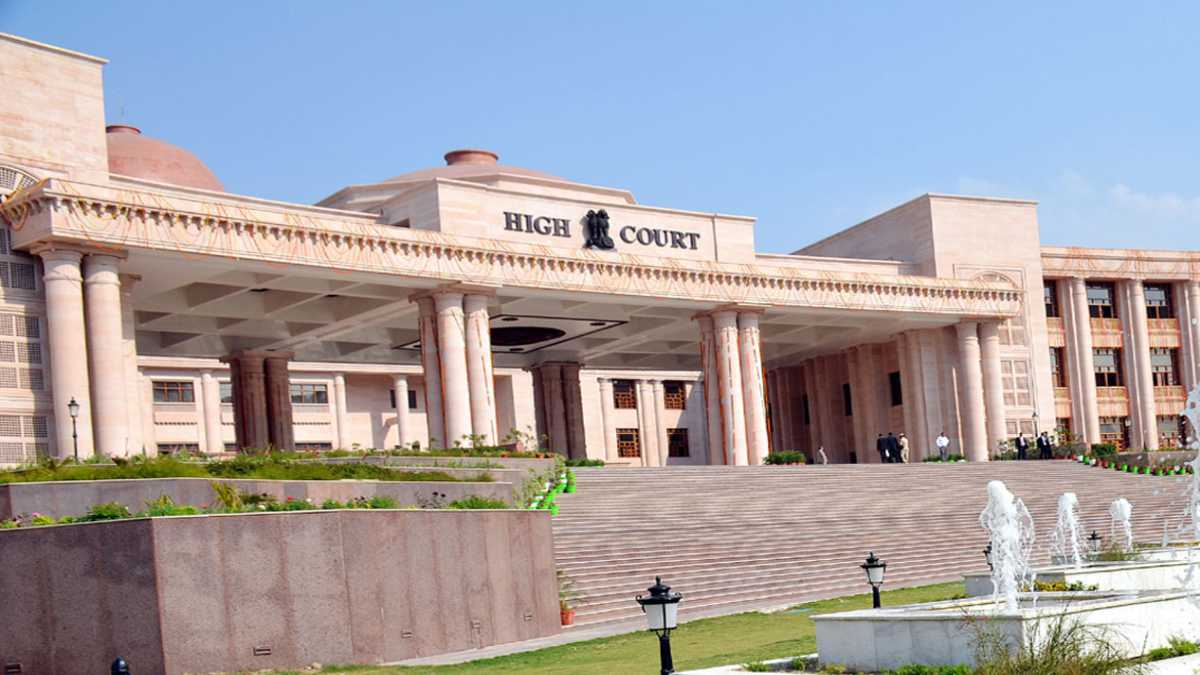
The High Court of Judicature at Allahabad, Lucknow Bench, has set aside an order passed by the Special Chief Judicial Magistrate (Customs), Lucknow, which had framed charges against an accused in a fraud case. The High Court held that the trial court failed to comply with the mandatory statutory provisions of the Bharatiya Nagarik Suraksha Sanhita (BNSS), 2023, regarding the right of an accused to prefer an application for discharge.
The ruling was delivered by Justice Ram Manohar Narayan Mishra in a criminal revision filed by Kallayya Pattadamath (alias Akshay Pattadamath), challenging the framing of charges under Sections 336(3), 338, 340(2), and 61(2) of the Bharatiya Nyaya Sanhita (BNS) and Section 66D of the I.T. Act.
Case Background
The case arose from an FIR lodged on June 30, 2025, at Police Station Gosaiganj, District Lucknow. The informant alleged he had received messages on Facebook and WhatsApp from an unknown person offering the sale of banana plants. After being shown a “DBT certificate” to gain his trust, the informant transferred a total of ₹29,25,000/- into various bank accounts provided by the fraudster.
During the investigation, it was alleged that the revisionist was in contact with the main accused and three bank account holders. It was further alleged that the revisionist introduced the main accused to the account holders whose accounts were used for the transaction.
Arguments of the Parties
Counsel for the revisionist, Abhineet Jaiswal and Devvrat Pratap Singh, submitted that the revisionist was neither a beneficiary of the alleged amount nor was any part of the money received in his account. They argued that the trial court framed charges in violation of Sections 261, 262(2), 263, and 341 of the BNSS.
The defense emphasized that the revisionist, who was in custody, was not provided an opportunity to file a discharge application despite the statutory requirement. They further contended that no legal aid counsel was provided at the stage of framing of charge as required under Section 341 BNSS. The revisionist relied on the Supreme Court judgment in State of U.P. Vs. Singhara Singh and others (1964), which held that “where a power is given to do a certain thing in a certain way, the thing must be done in that way or not at all.”
The learned A.G.A. appeared for the State and the Court perused the record.
Court’s Analysis
The High Court examined Section 262 of the BNSS, noting that while it corresponds to Section 239 of the Cr.P.C., it contains specific additions. The statute provides that an accused may prefer an application for discharge within 60 days from the date of supply of documents.
The Court observed:
“the statute gives an opportunity to the accused to move an application for discharge within 60 days of supply of copies of documents and the court has also been prescribed a time limit of 60 days for framing of charge, which commences from the date of the first hearing on charge.”
The Court found that in the present case, the revisionist was in judicial custody and no opportunity was provided to him to move a discharge application. It noted:
“In such circumstances, the court was under an obligation to provide legal aid counsel to the accused so as to enable him to file an application for discharge, as is provided under Section 262(1) of the BNSS, 2023…”
Highlighting the gravity of the procedure, the Court cited State of Tamil Nadu Vs. R. Soundirarasu (2023), stating:
“The order for the framing of the charge is also not an empty or routine formality. It is of a far-reaching nature, and it amounts to a decision that the accused is not entitled to discharge under Section 239 [now Section 262 BNSS]…”
The High Court noted that the order sheet dated January 3, 2026, did not reflect that any hearing was afforded to the revisionist before the charges were framed.
Decision
The High Court concluded that the framing of charge stood vitiated due to non-compliance with the statutory provisions of the BNSS. The Court observed:
“It is quite obvious that no opportunity of hearing was provided to the revisionist on the question of framing of charge, the Section 262 and 263 Cr.P.C as well as earlier provision of Sections 239 Cr.P.C, in this regard makes it mandatory to provide such an opportunity before framing of charge.”
The Court set aside the impugned order dated January 3, 2026, and remanded the matter to the trial court to proceed afresh. The trial court has been directed to:
- Provide the revisionist an opportunity to move an application for discharge within two weeks.
- Decide the application by passing a reasoned and speaking order after hearing both the prosecution and the revisionist.
- Proceed to frame charges only if it finds that charges are made out in accordance with law.
Case Details Block:
- Case Title: Kallayya Pattadamath @ Akshay Pattadamath vs. State Of U.P. Thru. Prin. Secy. Deptt. Home Lko. And Another
- Case Number: Criminal Revision No. 252 of 2026
- Bench: Justice Ram Manohar Narayan Mishra
- Date: March 11, 2026




