

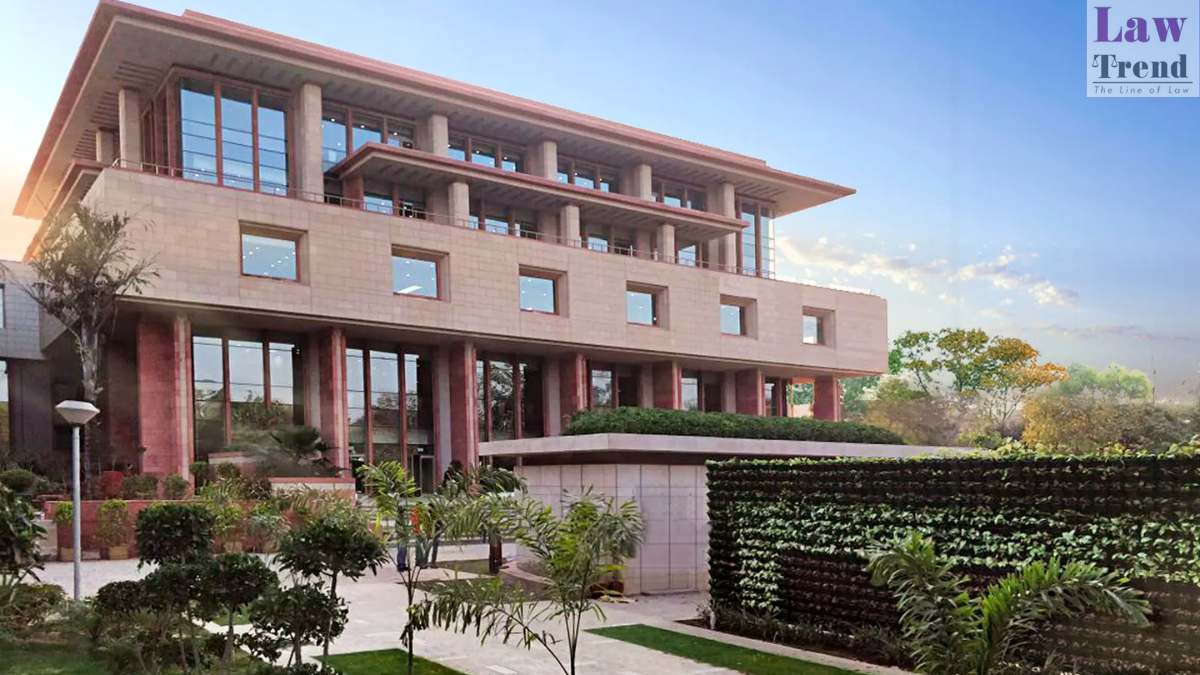
In a significant relief to several prominent eateries in Delhi’s iconic Khan Market, the Delhi High Court has ruled that restaurants cannot be denied the right to operate solely for lacking a fire No Objection Certificate (NOC), provided they maintain a guest occupancy of fewer than 50 people. The court took judicial notice of the “structural constraints” inherent in the heritage market’s design, which limit the feasibility of standard fire safety installations required for larger assembly buildings.
The court was hearing a batch of petitions filed by several well-known establishments in Khan Market, including Khan Chacha, Anglow, Starbucks Coffee, and Sly Granny. The petitioners approached the High Court seeking the renewal of their health licenses and other essential administrative approvals.
The primary grievance of the restaurants was that the municipal and fire authorities were insisting on a fire NOC as a mandatory pre-condition for the renewal of these licenses. The petitioners argued that such a demand was practically impossible to meet due to the unique architectural layout of Khan Market, which has remained largely unchanged since its inception.
The petitioners contended that their respective seating capacities were capped at 48 guests. They relied upon the Unified Building Bye Laws for Delhi, 2016, which stipulate that fire clearance is not a mandatory requirement for buildings or units with a seating capacity of less than 50 persons, as they do not fall under the category of “assembly buildings.”
The restaurants assured the court that they would strictly adhere to all safety protocols applicable to “non-assembly buildings” and would ensure that at no point would the guest count exceed the 50-person threshold.
Justice Purushaindra Kumar Kaurav, presiding over the matter, described Khan Market as the “shaan (pride) of Delhi.” The court emphasized the market’s status as a “prestigious and historically significant commercial area” and a “heritage market.”
Regarding the physical limitations of the site, the court observed:
“This iconic and unique architecture, character and culture is well-established. Because of structural constraint, the entire market has only one feasible entry and exit point for the first and second floor where the restaurants are located. This feature remains in existence since its inception.”
The court noted that these structural realities make it difficult for outlets to comply with modern fire safety norms designed for contemporary constructions. Justice Kaurav remarked that the court did not wish to see these establishments shut down due to “extraneous” situations when the law itself provides for exemptions based on occupancy.
The High Court held that the petitioners should not be disallowed from running their outlets solely on account of structural constraints, provided they stay within the legal limit for non-assembly buildings.
The court ordered:
“The petitioners shall not be denied operation of restaurant only on account of lack of fire NOC so long as the petitioners maintain an occupancy of less than 50 at a given point of time.”
Furthermore, to protect the businesses from immediate coercive action, the court clarified that if authorities contemplate any action for a lack of fire safety measures, such action cannot be implemented without serving a 30-day prior notice to the concerned restaurant. The court concluded that there was no reason to disbelieve the petitioners’ assurance regarding the maintenance of reduced occupancy.




