Filing Chargesheets Without ‘Strong Suspicion’ Clogs Judicial System and Diverts Resources from Serious Cases: Supreme Court
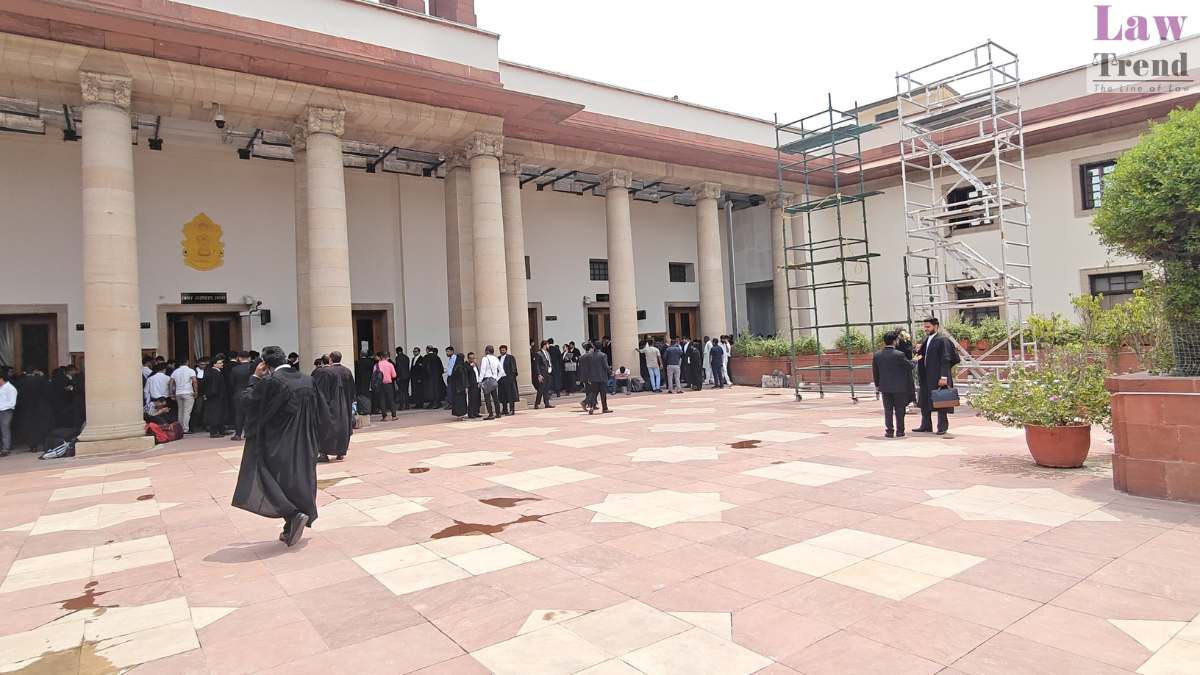

The Supreme Court has discharged an accused in a criminal case involving allegations of voyeurism, wrongful restraint, and criminal intimidation, observing that the tendency of filing chargesheets in matters where no “strong suspicion” is made out clogs the judicial system.

The Bench of Justice Nongmeikapam Kotiswar Singh and Justice Manmohan allowed the appeal filed by Tuhin Kumar Biswas @ Bumba, setting aside the judgment of the Calcutta High Court which had upheld the dismissal of his discharge application.

Case Background

The case originated from an FIR lodged on March 19, 2020, with Police Station Bidhannagar North. The complainant, Ms. Mamta Agarwal, claiming to be a tenant of Mr. Amalendu Biswas (one of the co-owners of the property located at CF-231, Sector I, Salt Lake, Kolkata), alleged that on March 18, 2020, the appellant restrained her from entering the property. She further alleged that the appellant intimidated her by clicking her pictures and making videos without her consent, thereby intruding upon her privacy and outraging her modesty.

A chargesheet was filed on August 16, 2020, for offences punishable under Sections 341 (wrongful restraint), 354C (voyeurism), and 506 (criminal intimidation) of the Indian Penal Code (IPC). The chargesheet noted that the complainant had expressed her unwillingness to make a judicial statement.

The appellant’s application seeking discharge was dismissed by the Trial Court on August 29, 2023. Subsequently, the Calcutta High Court dismissed the revision petition against the Trial Court’s order on January 30, 2024, leading to the present appeal before the Supreme Court.

Arguments of the Parties

Counsel for the appellant argued that the property was subject to a civil dispute between two brothers, Mr. Bimalendu Biswas (appellant’s father) and Mr. Amalendu Biswas. It was submitted that a Civil Judge had passed an injunction order on November 29, 2018, in Title Suit No. 20 of 2018, directing the parties to maintain joint possession and restraining them from creating third-party interests.

READ ALSO  Hard to Believe a Highly Qualified Woman Remained in a 16-Year Relationship Without Protest Under False Promise of Marriage: Supreme Court

The counsel contended that the FIR was registered at the behest of Mr. Amalendu Biswas to dispossess the appellant and his father in violation of the injunction. It was further argued that the allegations did not disclose an offence under Section 354C IPC as no photographs were placed on record, and the complainant was not a tenant but a habitual offender.

Per contra, the counsel for the Respondent-State argued that the complainant was a “prospective tenant” who had come to see the ground floor. The State contended that there was sufficient material to make out a prima facie case under Sections 341 and 506 IPC and relied on the High Court’s finding that truthfulness of allegations is a matter for trial.

Court’s Analysis

The Supreme Court examined the legal principles regarding discharge, citing its recent decision in Ram Prakash Chadha v. State of UP (2024) and earlier precedents like Union of India v. Prafulla Kumar Samal (1979). The Court reiterated that while a strong suspicion suffices at the stage of discharge, it “must be found on some material which can be translated into evidence at the stage of trial.”

On Section 354C IPC (Voyeurism) The Bench observed that the FIR and chargesheet did not disclose an offence under Section 354C IPC. The Court noted that the provision defines voyeurism as watching or capturing a woman engaging in a “private act.” The Court stated:

READ ALSO  Police Officer Remaining Absent from Duty is Gravest Misconduct: P&H HC

“Upon a perusal of the FIR and chargesheet on record, this Court is unable to conclude the same disclose an offence under Section 354C of the IPC since there is no allegation in the FIR and chargesheet that the complainant was watched or captured by the Appellant-accused while she was engaging in a ‘private act’.”

On Section 506 IPC (Criminal Intimidation) Regarding the charge of criminal intimidation, the Court noted that the FIR was silent on the specific words used or the manner in which the complainant was threatened. The Court observed:

“Except for the bald allegation that the Appellant-accused intimidated the complainant by clicking her photographs, the FIR and chargesheet are completely silent about the manner in which the complainant was threatened with any injury to her person or her property.”

On Section 341 IPC (Wrongful Restraint) The Court analyzed Section 341 IPC, noting that wrongful restraint involves obstructing a person from proceeding in a direction they have a “right to proceed.” The Court found that the complainant, being only a “prospective tenant” as per the co-owner’s statement, had no right to enter the property, especially in light of the subsisting injunction order against creating third-party interests.

“Therefore, the material on record indicates that on the date of the alleged offence, the complainant had no right to enter the property. In fact, the induction of the complainant as tenant in the property would have been in violation of the injunction passed by the Trial Court.”

READ ALSO  SC disposes of plea of slain gangster's wife challenging Allahabad HC order

The Bench opined that the appellant was merely enforcing what he bona fide believed to be his lawful right under the injunction order.

Observations on Frivolous Prosecutions

The Court made significant observations regarding the filing of chargesheets in cases lacking strong suspicion.

“The tendency of filing chargesheets in matters where no strong suspicion is made out clogs the judicial system. It forces Judges, court staff, and prosecutors to spend time on trials that are likely to result in an acquittal. This diverts limited judicial resources from handling stronger, more serious cases, contributing to massive case backlogs.”

The Court added:

“Undoubtedly, there can be no analysis at the charge framing stage as to whether the case would end in conviction or acquittal, but the fundamental principle is that the State should not prosecute citizens without a reasonable prospect of conviction, as it compromises the right to a fair process.”

Decision

The Supreme Court allowed Criminal Appeal No. 5146 of 2025. The judgment stated:

“The present Appeal is allowed and the impugned Judgment and Order is set aside as well as the Appellant-accused is discharged from G.R. Case No. 223 of 2020 (arising out of Bidhannagar North Police Station FIR No. 50 of 2020).”

Case Details:

  • Case Title: Tuhin Kumar Biswas @ Bumba v. The State of West Bengal
  • Case No: Criminal Appeal No. 5146 of 2025 (Arising out of SLP (Crl.) No. 3002/2024)
  • Bench: Justice Nongmeikapam Kotiswar Singh and Justice Manmohan

Law Trend
Law Trendhttps://lawtrend.in/
Legal News Website Providing Latest Judgments of Supreme Court and High Court

Related Articles

Latest Articles