

Fatal Blow Identity Irrelevant for Section 149 IPC Liability: Supreme Court Restores Life Sentence
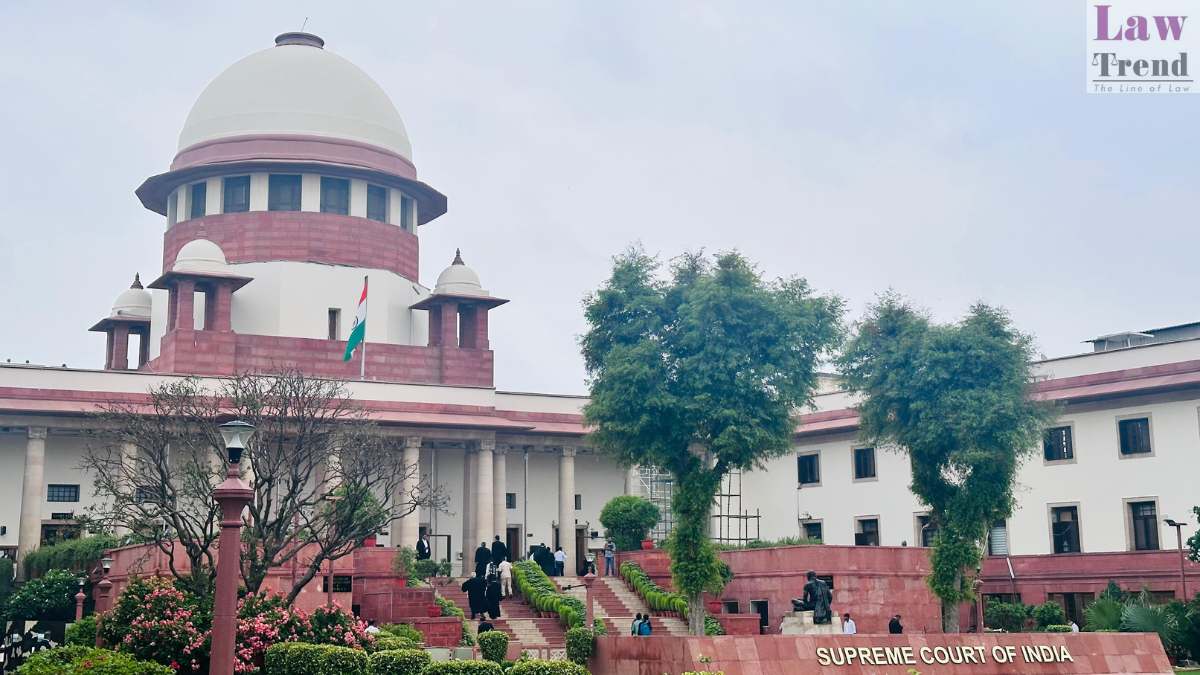

The Supreme Court of India, in the case of Sitaram Kuchhbedia v. Vimal Rana and Others (Criminal Appeal Nos. 1837-38 of 2011), has set aside a High Court judgment that had diluted the conviction of 19 accused persons from murder to culpable homicide not amounting to murder. The Bench, comprising Justice Sanjay Karol and Justice Sandeep Mehta, restored the trial court’s sentence of life imprisonment, emphasizing that once vicarious liability under Section 149 of the Indian Penal Code (IPC) is established, the inability to identify the specific assailant who dealt the fatal blow is “inconsequential.”

Background of the Case

The incident dates back to July 11, 2003. According to the prosecution, the deceased, Bhaggu @ Bhag Chand, was returning from Bhatera Ghat in a mini-bus when he found the road obstructed by tube-well pipes placed across the passage near village Khairi. He was surrounded and concertedly assaulted with lathis by a group of persons belonging to the Gujar community.

The assault was allegedly retaliatory, stemming from an incident earlier that day where Bhaggu had intervened when the sons of one of the accused, Vimal Rana, were beating another individual. Bhaggu succumbed to 29 injuries, including four bone-deep lacerations to the head. Five other individuals were also injured in the attack, which involved a total of 63 injuries inflicted by the unlawful assembly.

In April 2006, the Special Judge (Atrocities), Narsinghpur, convicted 19 accused persons under Sections 148, 323/149, 325/149, and 302/149 IPC, sentencing them to life imprisonment. However, on appeal in 2010, the High Court of Madhya Pradesh altered the conviction to Section 304 Part II IPC (Culpable Homicide not amounting to murder), reducing the sentence to six years of rigorous imprisonment. The High Court reasoned that since death was caused by a single fatal head injury and the specific assailant could not be identified, the common object to murder could not be inferred.

Arguments of the Parties

For the Appellants (Informant and State): The appellants contended that the High Court erred in “toning down” the offence. They argued that the assault was premeditated and deliberate, evidenced by the obstruction of the road and the multiplicity of injuries (29 on the deceased alone). Citing Chunni Bai v. State of Chhattisgarh and Mahadeo Sahni v. State of Bihar, they argued that a common object to cause death must be inferred where multiple grievous injuries are inflicted by an unlawful assembly. They further asserted that under Section 149 IPC, individual attribution is irrelevant.

READ ALSO  Man who applied for postal job in 1995 gets appointment order after SC intervention

For the Accused-Respondents: The respondents supported the High Court’s view, arguing that the weapons used (lathis) were not per se deadly and that the common object was merely to “chastise” the deceased. They emphasized that 28 of the 29 injuries were simple and only one was fatal. They also challenged the medical evidence, noting that the doctor who conducted the post-mortem was not examined in court.

Court’s Analysis and Observations

The Supreme Court undertook a structured three-stage inquiry to distinguish between “murder” and “culpable homicide,” referring to the locus classicus in Virsa Singh v. State of Punjab and the guidelines in Daya Nand v. State of Haryana.

1. On Intention and Common Object: The Court rejected the High Court’s finding that the common object was not murder. It noted that the accused were “lying in wait,” had deliberately blocked the road, and targeted vital parts of the body.

“The situs, depth, and multiplicity of the head injuries clearly establish that multiple blows were directed at a vital region with considerable force… it cannot be said that the assailants lacked the intention to inflict such bodily injury as was sufficient in the ordinary course of nature to cause death.”

2. On Section 149 IPC and Vicarious Liability: The Bench found the High Court’s reasoning “self-contradictory” and “perverse.” It held that while the High Court affirmed the existence of an unlawful assembly, it erroneously gave the benefit of doubt because the individual who struck the fatal blow was unknown.

“Once it is established that an unlawful assembly existed and the accused-respondents intended to commit murder… the individual attribution of the fatal injury fades into insignificance… Section 149 IPC embodies the principle of vicarious liability and renders every member of an unlawful assembly guilty of the offence committed in prosecution of the common object.”

The Court cited Nitya Nand v. State of U.P. and Vinubhai Ranchhodbhai Patel v. Rajivbhai Dudabhai Patel to reiterate that the mere presence in an unlawful assembly is sufficient to render a member vicariously liable for the murder.

3. On the Admission of Post-Mortem Report: Regarding the non-examination of the medical jurist, the Court noted that the defense had explicitly admitted the post-mortem report ($Exh. P/8$) during the trial. Referring to Akhtar v. State of Uttaranchal, the Court ruled that under Section 294 CrPC, an admitted document is substantive evidence and the doctor’s oral testimony is not mandatory to prove its contents.

READ ALSO  Can Reserved Category Candidates be Appointed in General Category? SC Judgment

The Decision

The Supreme Court allowed the appeals and set aside the High Court’s 2010 judgment.

“The reasoning of the High Court is self-contradictory. While affirming the invocation of Section 149 IPC, it went on to record that the prosecution could not prove the identity of the assailant… This approach runs contrary to the very principle of vicarious liability.”

The Court restored the conviction under Section 302/149 IPC and the sentence of life imprisonment for all accused-respondents. The respondents have been ordered to surrender within eight weeks to serve the remainder of their sentences.

  • Case Title: Sitaram Kuchhbedia v. Vimal Rana and Others (with connected appeal)
  • Case No: Criminal Appeal No(S). 1837-38 of 2011

READ ALSO  Supreme Court Issues Notice to BJP MLA Yatnal Over Derogatory Remarks Against Rahul Gandhi
Ad 20- WhatsApp Banner

Law Trend
Law Trendhttps://lawtrend.in/
Legal News Website Providing Latest Judgments of Supreme Court and High Court

Related Articles

Latest Articles

