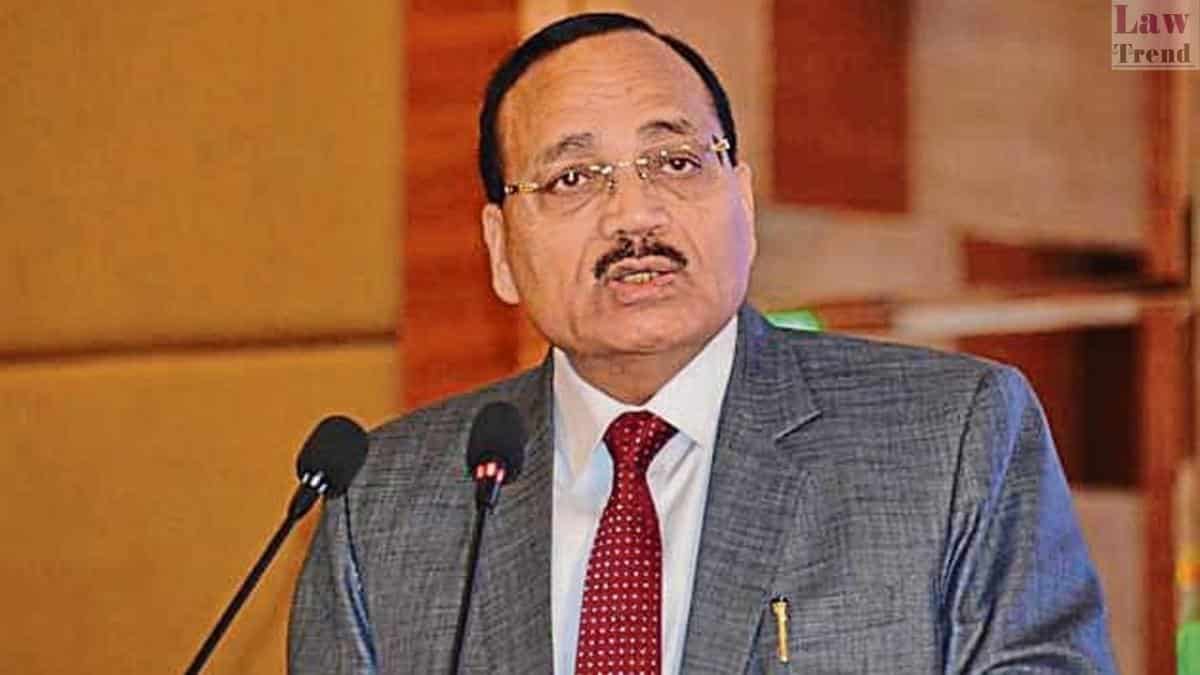
Chief Justice of India Surya Kant on Monday called for a major rethink in how family courts function, suggesting that traditional court practices such as wearing black robes may create “psycho fear” in children and should be reconsidered to make the system more humane and child-friendly.
Speaking at the foundation stone laying ceremony for a new family court complex in Rohini, the CJI emphasized the need to transform family courts into spaces that reduce anxiety and promote emotional comfort, especially for children who are often deeply affected by family disputes.
Rethinking Courtroom Culture for Children
Raising concerns about the impact of formal courtroom attire, CJI Surya Kant questioned whether the presence of judges and lawyers in black robes might intimidate young minds.
“Should the family courts have these black robes? Is it not going to create a psycho fear in the mind of a child?” he asked, while proposing that both judges and lawyers in family courts could consider appearing without traditional uniforms.
He went further to suggest that even police personnel should avoid appearing in uniform in such settings, noting that the overall environment of authority can heighten fear among children, who are often the most vulnerable participants in family disputes.
Call for a More Familiar, Less Intimidating Atmosphere
The Chief Justice stressed that family courts must move away from rigid formalities and instead create a “familiar atmosphere” that encourages openness and emotional ease. He underlined that the objective of these courts is not merely adjudication, but also healing.
Family courts, he noted, deal with disputes that arise within close relationships—between individuals who may continue to share responsibilities as parents or caregivers. As a result, these cases carry emotional, social, and financial consequences that extend far beyond legal questions.
Suggestion to Rename Family Courts
In a broader push for reform, the CJI also floated the idea of renaming family courts as “family resolution centres,” reflecting their role in repairing relationships rather than simply resolving disputes.
“It is meant to refurbish, reason, repair the human relationship,” he said, highlighting that not everyone feels comfortable approaching courts, especially in sensitive personal matters.
Infrastructure and Challenges in Judiciary
During the same event, Justice Manmohan of the Supreme Court pointed to persistent challenges faced by the district judiciary in Delhi, identifying budget constraints, shortage of staff, and lack of adequate space—including courtrooms and residential accommodation—as key concerns.
The event was also attended by Delhi Chief Minister Rekha Gupta and Delhi High Court Chief Justice D.K. Upadhyaya, who addressed the gathering on the importance of strengthening judicial infrastructure in growing urban areas like Rohini.
CJI Surya Kant noted that Rohini, as a major residential hub in the national capital, requires expanded judicial facilities to meet increasing demands.
A Shift Towards Human-Centric Justice
The suggestions made by the Chief Justice signal a shift towards a more empathetic and human-centric approach in family justice. By focusing on reducing fear and fostering a supportive environment, the proposed changes aim to make family courts more accessible and effective for those navigating deeply personal disputes.