

The Supreme Court of India has held that while a creditor’s counterclaim against a corporate debtor stands extinguished if it is not included in an approved Resolution Plan, the creditor may still raise the plea of “set-off” as a defensive measure in pending arbitral proceedings.
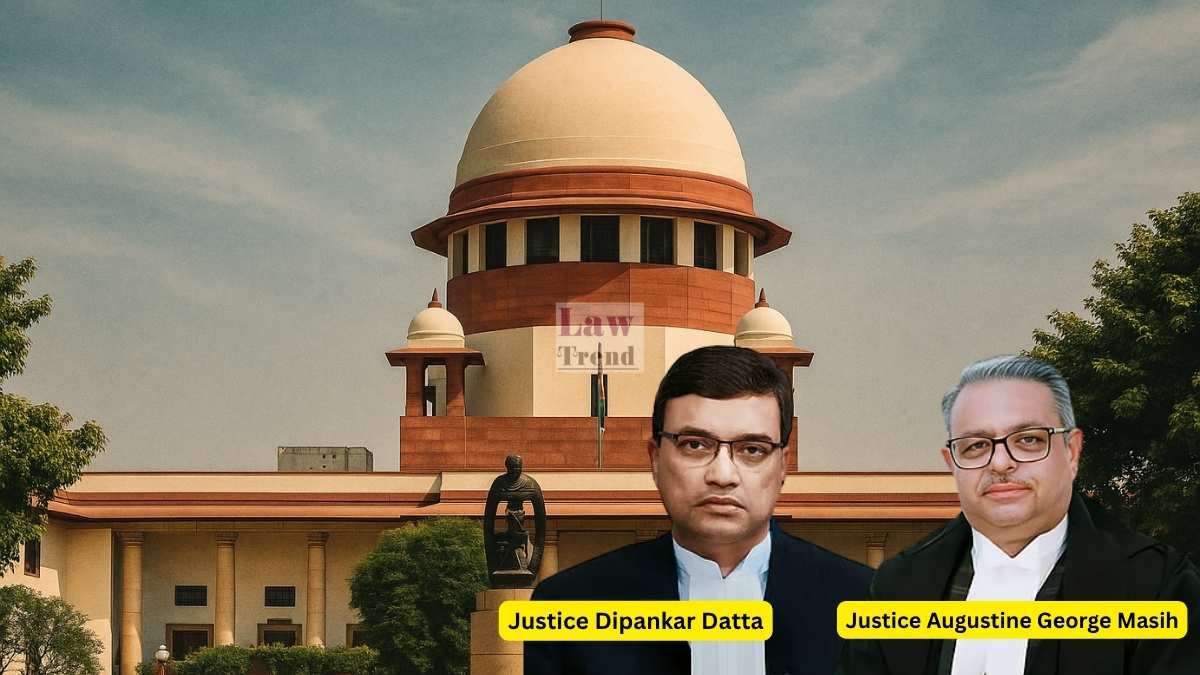
A Bench comprising Justice Dipankar Datta and Justice Augustine George Masih modified a judgement of the Calcutta High Court, striking a balance between the “clean slate” principle of the Insolvency and Bankruptcy Code (IBC) and the equitable right of a defendant to adjust dues against a claimant.
Background of the Case
The dispute originated from a 2017 contract between Ujaas Energy Ltd. (the Appellant), an MSME, and the West Bengal Power Development Corporation Ltd. (the Respondent), a public sector undertaking, for the installation of solar PV power plants.
In September 2020, Ujaas Energy was admitted into the Corporate Insolvency Resolution Process (CIRP). During this process, the Appellant, through its Resolution Professional (RP), invoked arbitration against the Respondent in December 2021. The Respondent subsequently filed a statement of defence and a counterclaim in the arbitral proceedings. Crucially, the Respondent did not file this claim before the Resolution Professional during the CIRP.
The National Company Law Tribunal (NCLT), Indore, approved a resolution plan for the Appellant on 13 October 2023. Following this approval, the Appellant sought the dismissal of the Respondent’s counterclaim, arguing it had been extinguished under Section 31 of the IBC. An Arbitral Tribunal allowed this application and rejected the counterclaim via an interim award.
While a Single Judge of the Calcutta High Court upheld the Tribunal’s decision, a Division Bench later set it aside, directing the Tribunal to continue proceedings on both the claim and counterclaim. This led the corporate debtor to appeal to the Supreme Court.
Arguments of the Parties
Mr. Abhijit Sinha, learned senior counsel for the Appellant, argued that the failure to raise the claim before the Resolution Professional within the prescribed time barred the Respondent from asserting it later. He emphasised the “clean slate” principle, stating that an approved resolution plan extinguishes all claims not included therein.
Mr. Jishnu Choudhury, learned senior counsel for the Respondent, initially defended the High Court’s order but later shifted to an alternative plea. He conceded that while the Respondent might not seek “affirmative relief” or enforcement of dues, it should be permitted to use the claim as a “set-off” to adjust against any amount the Tribunal might award to the Appellant.
Court’s Analysis
The Court first reaffirmed the binding nature of an approved resolution plan under Section 31(1) of the IBC. Citing Ghanashyam Mishra & Sons (P) Ltd. v. Edelweiss Asset Reconstruction Co. Ltd., the Court noted:
“On the date of approval of resolution plan by the adjudicating authority, all such claims, which are not a part of resolution plan, shall stand extinguished and no person will be entitled to initiate or continue any proceedings in respect to a claim, which is not part of the resolution plan.”
Consequently, the Court ruled that the Respondent could not seek any “affirmative relief” because the counterclaim was not part of the approved plan.
However, the Bench examined the specific language of the Appellant’s resolution plan (Paragraph 12.4.1), which barred “payments or settlements” regarding claims and counterclaims. The Court observed that the plan did not expressly or impliedly exclude the plea of set-off as a defence. Applying the legal maxim expressio unius est exclusio alterius, the Court inferred that since only “payment or settlement” was barred, defensive use remained permissible.
The Court distinguished the present case from Bharti Airtel Ltd. v. Aircel Ltd., noting that while the latter dealt with set-off during the CIRP, the present case concerned set-off in the light of a binding resolution plan.
The Decision
The Supreme Court partly allowed the appeal and modified the Division Bench’s order. The Court held:
“The respondent, although not entitled to independently pursue its claim by way of counterclaim post approval of the resolution plan, ought to be permitted to raise the plea of set-off at least by way of defence.”
The Court provided the following clarifications:
- The Respondent cannot derive “positive or affirmative relief” and can only use the defence to prevent the Appellant from succeeding entirely or in part.
- If the counterclaim amount exceeds the Appellant’s awarded amount, the surplus is not recoverable by the Respondent.
- If the Appellant withdraws its arbitration, the counterclaim (allowed only for defence) shall also fail.
Case Details Block
- Case Title: Ujaas Energy Ltd. vs. West Bengal Power Development Corporation Ltd.
- Case Number: Civil Appeal No. ___ of 2026 (Arising out of SLP (Civil) No. 29651 of 2024)
- Bench: Justice Dipankar Datta and Justice Augustine George Masih
- Date of Judgement: 20 March 2026




