

Exoneration in Disciplinary Inquiry No Bar to Criminal Prosecution: SC Clarified Distinction Between ‘Technical’ and ‘Merit-Based’ Exoneration
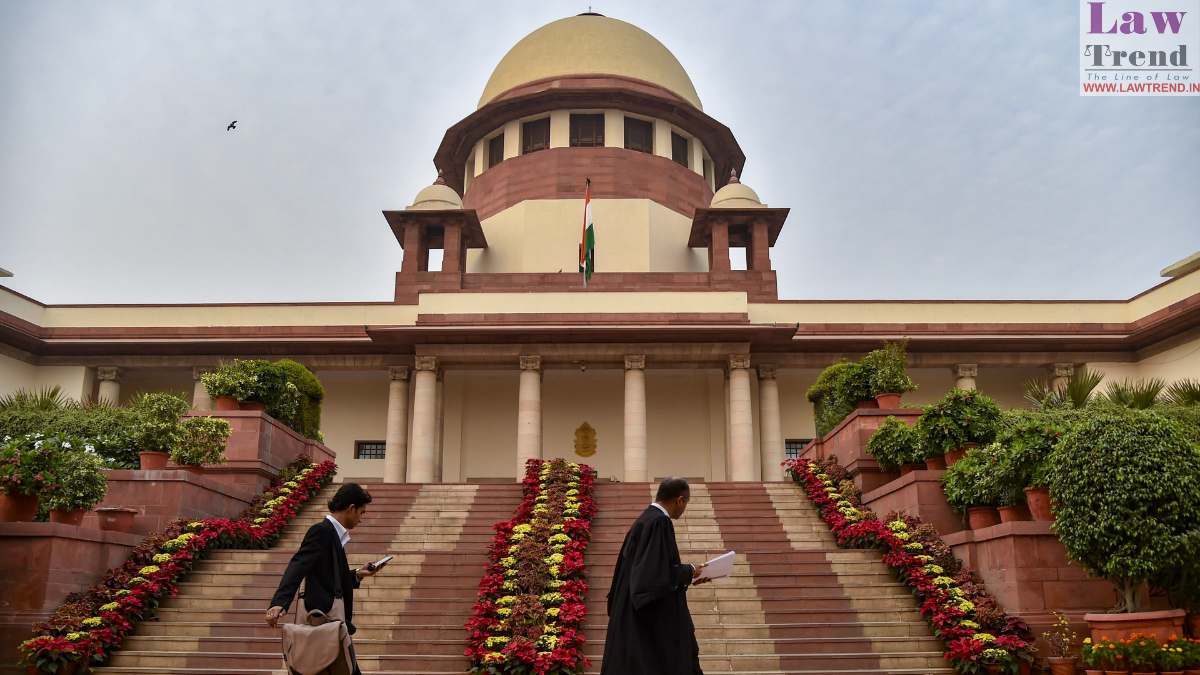

The Supreme Court has held that exoneration in departmental proceedings does not ipso facto result in the quashing of criminal prosecution on the same set of facts, particularly when the proceedings are conducted by different entities and the exoneration is not on the merits of the allegation.

A Bench comprising Justice Ahsanuddin Amanullah and Justice K. Vinod Chandran allowed the appeal filed by the Karnataka Lokayukta, setting aside the High Court’s order that had quashed criminal proceedings against an Executive Engineer solely based on his exoneration in a departmental enquiry.

The core legal issue before the Apex Court was whether a finding of exoneration in a disciplinary proceeding—where the standard of proof is the “preponderance of probabilities”—automatically mandates the termination of a criminal prosecution, which requires the higher standard of “proof beyond reasonable doubt.” The Court ruled that unless the exoneration is on the merits finding the allegation “not sustainable at all,” criminal proceedings must continue.

Background of the Case

The Respondent, Chandrashekar, served as an Executive Engineer (Electrical) with the Works and Maintenance Division, HESCOM, Bagalkot. He faced allegations of demanding a bribe of ₹2,000 each for clearing five bills (totaling ₹10,000) from an electrical contractor.

Acting on the contractor’s complaint, the Anti-Corruption Bureau (ACB) laid a trap. According to the prosecution, the trap was successful; powdered currency notes were recovered from the Respondent’s pocket, and his hands turned pink upon being dipped in a chemical solution, indicating contact with the tainted money.

READ ALSO  सुप्रीम कोर्ट के बाहर युवक और युवती द्वारा आत्मदाह का प्रयास, जाने वजह

Subsequently, two parallel proceedings were initiated:

  1. Disciplinary Proceedings: Conducted by the department (HESCOM).
  2. Criminal Prosecution: Launched by the Lokayukta (the Appellant).

The departmental enquiry concluded in the exoneration of the Respondent. Relying on this outcome, the Respondent approached the High Court seeking the quashing of the criminal case. The High Court, citing the Supreme Court’s three-judge bench decision in Radheshyam Kejriwal v. State of W.B. (2011), quashed the criminal proceedings. The High Court reasoned that if allegations could not be proved even on a preponderance of probabilities, they could not possibly be proved beyond reasonable doubt. The Karnataka Lokayukta challenged this decision in the Supreme Court.

Court’s Analysis

Distinguishing Radheshyam Kejriwal The Supreme Court distinguished the facts of the present case from Radheshyam Kejriwal. The Court noted that in Radheshyam Kejriwal, both the adjudication and criminal proceedings were initiated by the same entity (Enforcement Directorate) under the FERA Act. In that case, the adjudication found on merits that the alleged transaction had not occurred at all, thus destroying the substratum of the criminal charge.

However, in the present case, the Court observed that the Disciplinary Authority and the Prosecuting Agency were distinct entities. The Court stated:

“In Radheshyam Kejriwal, the adjudication proceedings and the prosecution were both by the very same entity… In the instant case… the ACB laid the trap, commenced and continued the criminal proceedings… while the department carried on with the enquiry.”

Reliance on Ajay Kumar Tyagi The Bench placed reliance on the decision in State (NCT of Delhi) v. Ajay Kumar Tyagi (2012), which held that exoneration in a departmental proceeding does not automatically lead to the quashing of a criminal trial. The Court quoted Ajay Kumar Tyagi:

“Truthfulness of the evidence in the criminal case can be judged only after the evidence is adduced therein and the criminal case cannot be rejected on the basis of the evidence in the departmental proceeding or the report of the inquiry officer based on those evidence.”

Analysis of the Enquiry Report The Court scrutinized the Enquiry Report which had exonerated the Respondent. It found that the exoneration was not on the merits of the allegation (i.e., finding the Respondent innocent) but was primarily because the Inspector who conducted the trap was not examined.

The Bench observed:

“The first ground of the Inspector not having been examined, according to us, based on the preponderance of probabilities, is not imperative, especially when the two independent witnesses were examined.”

READ ALSO  Working Wife’s Income Does Not Absolve Husband of Maintenance Liability; Father Cannot Hide Behind "Meagre Income" Plea: Delhi High Court

The Court noted that the complainant (PW-1) and two independent witnesses (PW-2 and PW-3) had categorically deposed about the demand, the handing over of the packet, the recovery from the Respondent’s pocket, and the positive phenolphthalein test. The Court remarked that the Enquiry Officer erred by requiring a higher standard of proof than necessary for disciplinary proceedings.

“In the instant case the Enquiry Report found that for reason of the Officer in charge of the trap having not been examined, the department was unable to establish the charge, not at all an exoneration on merits, but more a discharge for lack of diligence.”

READ ALSO  किसी अधीनस्थ विधान को चुनौती देने के क्या आधार हैं? सुप्रीम कोर्ट ने समझाया

Decision

The Supreme Court held that the ratio of Radheshyam Kejriwal could not be extended to every situation where a statute provides for civil and criminal liability. The Court emphasized that the failure of the department to examine the Inspector in the enquiry could not foreclose the criminal trial where the prosecuting agency (Lokayukta) might still produce the necessary evidence.

The Court allowed the appeal and directed the continuation of the criminal proceedings.

“We are not convinced that this is a fit case where the criminal proceedings can be quashed on the exoneration of the delinquent employee in a departmental enquiry. We find the decision in Ajay Kumar Tyagi to be squarely applicable.”

However, the Court clarified that since the Disciplinary Authority had already accepted the enquiry report, the disciplinary proceedings would not be reopened based on this judgment.

Case Details:

Case Title: The Karnataka Lokayuktha Bagalkote District, Bagalkot vs Chandrashekar & Anr.

Case No.: Criminal Appeal @ SLP (Crl.) No. 13057 of 2025 (2026 INSC 31)

Bench: Justice Ahsanuddin Amanullah and Justice K. Vinod Chandran

Law Trend
Law Trendhttps://lawtrend.in/
Legal News Website Providing Latest Judgments of Supreme Court and High Court

Related Articles

Latest Articles

