

Exclusion of Daughter From Will Not Suspicious; Bequest to Spouse Natural to Ensure Respect and Status: Delhi High Court

The Delhi High Court has held that the exclusion of a daughter from a Will is not by itself a suspicious circumstance, emphasizing that a testator’s decision to bequeath property to a spouse to the exclusion of children is a natural act often intended to ensure the surviving spouse’s status and care.

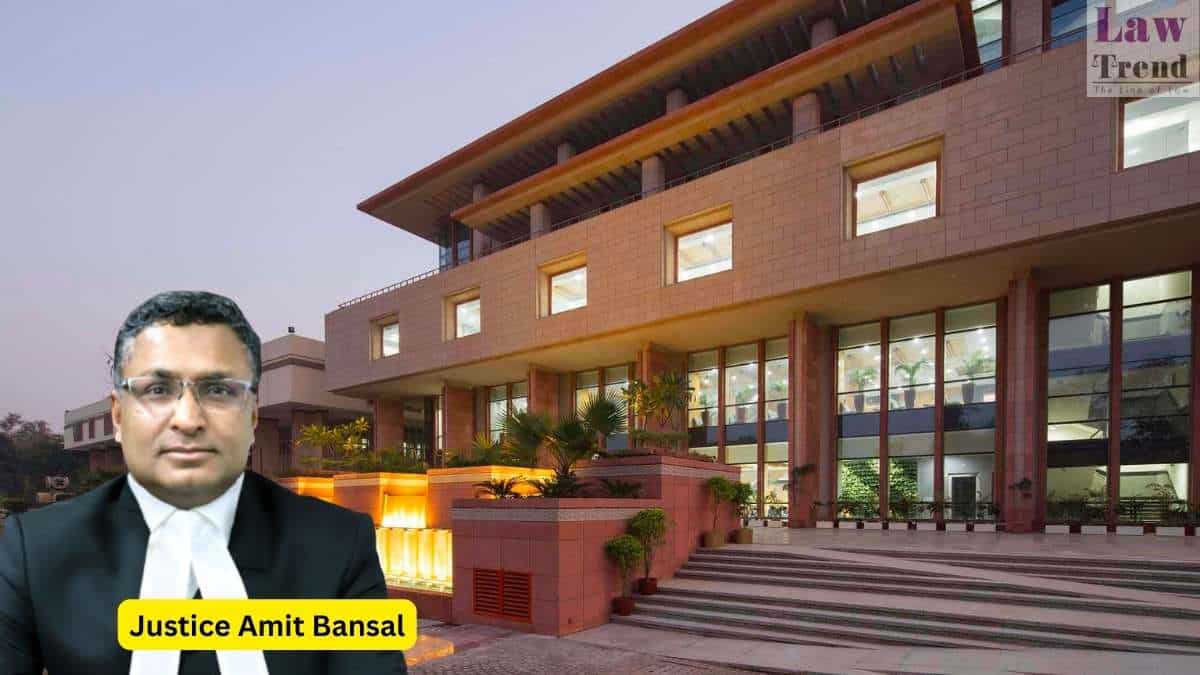
Justice Amit Bansal dismissed a suit for partition filed by a daughter against her father and brother and simultaneously granted probate of the father’s Will in favor of his son and grandson. The Court ruled that the plaintiff failed to prove any suspicious circumstances surrounding the Wills of her parents and that her suit was bad for non-joinder of necessary parties.

Background of the Case

The judgment dealt with two connected matters: a partition suit (CS(OS) 2159/2002) filed by Kanta Sethi and a probate petition (TEST.CAS. 90/2014) filed by Sudesh Gulati and Sanjay Gulati.

Kanta Sethi, the plaintiff, sought partition of properties belonging to her late parents, Smt. Krishna Wanti and Sh. Hans Raj Gulati. She claimed that her mother died intestate in 2002 and that she (the plaintiff) was entitled to a share in the property at Krishna Market, Kalkaji. Later, she amended her plaint to include a claim on her father’s property at H-61, Kalkaji, after his death in 2005. She alleged that she was harassed and threatened with dispossession by her brother, Sudesh Gulati (Defendant No. 2), and his family.

The defendants contested the suit, propounding two Wills:

  1. Will dated October 12, 2001: Executed by the mother, Smt. Krishna Wanti, bequeathing her entire estate to her husband, Sh. Hans Raj Gulati.
  2. Will dated May 30, 2003: Executed by the father, Sh. Hans Raj Gulati, bequeathing his estate to his son Sudesh Gulati and grandson Sanjay Gulati, explicitly excluding his daughters.
READ ALSO  केवल अति-तकनीकी मुद्दों के कारण निर्माण श्रमिकों के पेंशन के अधिकार से वंचित नहीं किया जा सकता है: दिल्ली हाईकोर्ट

Arguments of the Parties

The plaintiff challenged the genuineness of the mother’s 2001 Will, arguing there was an anomaly in the attestation. She contended that her mother, who was bedridden and 83-84 years old, used to affix thumb impressions, yet the Will bore signatures in Hindi. She also raised the issue that the second attesting witness was not examined. Regarding the father’s 2003 Will, the plaintiff and other objectors (sisters) alleged it was executed under suspicious circumstances due to his advanced age (92 years) and poor health. They also claimed that a subsequent Will, which divided the property equally, was torn by Sudesh Gulati during a family ceremony.

The defendants argued that both Wills were genuine. They submitted that the mother’s Will made the father the absolute owner, and subsequently, the father validly bequeathed the properties to his son and grandson. They denied the existence of any “torn Will” and argued the partition suit was non-maintainable as the plaintiff failed to implead her five other sisters.

Court’s Analysis and Observations

1. Non-Joinder of Necessary Parties The Court observed that the plaintiff failed to implead her five sisters, who were also legal heirs. Citing the Supreme Court in Kanakarathanammal v. V.S. Loganatha Mudaliar and Ors. and the Delhi High Court in Sheetal Suri v. Sukhdev Singh, the Bench held that in a suit for partition, all co-sharers are necessary parties.

“The plaintiff has failed to implead the other legal heirs… Therefore, the present suit is bad for the non-joinder of necessary parties.”

READ ALSO  Pension and Post Retirement Benefits are Property Under Article 300(A) of Constitution: Allahabad HC

2. Validity of Mother’s Will (2001) The Court rejected the plaintiff’s challenge to the mother’s Will. It noted that the testimony of the attesting witness (Sudesh Gulati) that the testatrix could read and write Hindi remained unrebutted. The Court held that the bequest to the husband was natural.

“In our society it is not unnatural or unusual for husband or wife to bequeath his/her whole property to each other to the exclusion of their progeny. It is often resorted to keep up amity in the family and sometimes to ensure proper care, status and respect to the living spouse after the demise of the other,” the Court observed, relying on Khazan Singh v. State.

3. Validity of Father’s Will (2003) & Exclusion of Daughters The Court found the father’s Will to be genuine, supported by the testimony of an independent attesting witness and the Sub-Registrar. Addressing the exclusion of daughters, the Court referred to the specific clause in the Will where the testator stated he had spent sufficiently on his daughters’ marriages. Relying on Hari Singh and Ors. v. The State and Ors., Justice Bansal held:

“In the matter of appreciating the genuineness of execution of a Will, there is no place for the Court to see whether the distribution made by the testator was fair and equitable to all of his children.”

4. The “Torn Will” Theory The Court dismissed the objectors’ claim that a subsequent Will was torn by the son. It noted that none of the objectors had seen or read the alleged torn Will, and their statements were based on hearsay.

5. Limitation in Probate The objectors argued the probate petition was time-barred as it was filed seven years after the testator’s death. The Court clarified that the right to apply for probate is a continuous right. Applying Article 137 of the Limitation Act, the Court held the right to apply accrued when the plaintiff amended her plaint in 2009 to claim a share in the father’s property. The probate petition filed in 2012 was thus within the three-year limitation period.

READ ALSO  Delhi High Court: Harassment in Insurance Claims a Ground for Compensation, Not Criminal Offence

Decision

The High Court dismissed the partition suit (CS (OS) 2159/2002) filed by Kanta Sethi and allowed the probate petition (TEST.CAS. 90/2014). The Court granted probate of the Will dated May 30, 2003, in favor of the petitioners, Sudesh Gulati and Sanjay Gulati.

Case Title: Kanta Sethi v. Hans Raj and Ors. (CS(OS) 2159/2002) and Sudesh Gulati & Anr v. State & Ors. (TEST.CAS. 90/2014) 

Law Trend
Law Trendhttps://lawtrend.in/
Legal News Website Providing Latest Judgments of Supreme Court and High Court

Related Articles

Latest Articles

