

Examiner Entitled to Revise Marks ‘At First Blush’ Before Final Submission: Delhi High Court Upholds DJS Evaluation
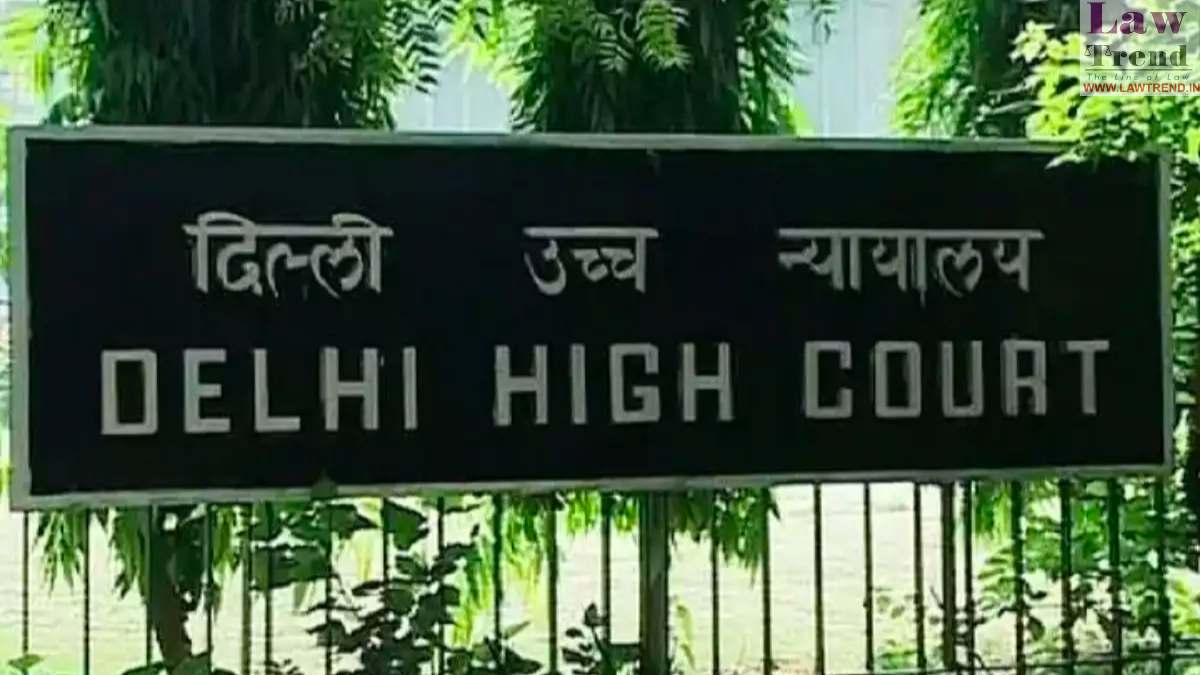

The Delhi High Court has dismissed a writ petition challenging the evaluation process of the Delhi Judicial Services (Mains) Examination, 2023, ruling that an examiner retains the authority to revise marks before the final submission of answer scripts. The Division Bench comprising Justice C. Hari Shankar and Justice Om Prakash Shukla held that the alteration of marks by an examiner does not constitute arbitrariness in the absence of mala fides, bias, or fraud.

Case Background

The petitioner, Prerna Gupta, a candidate in the Delhi Judicial Services (DJS) Examination 2023, approached the High Court alleging unlawful “interpolation” and reduction of her marks in Paper-I (Legal Knowledge and Language). The petitioner secured a total of 605 marks, placing her at Rank No. 45 (Waiting List Serial No. 12).

Upon obtaining copies of her answer scripts under the Right to Information Act, 2005, the petitioner discovered that marks awarded for two questions had been altered. Specifically:

  • In Question No. 5, marks were reduced from 25 to 15.
  • In Question No. 8, marks were reduced from 30 to 20.

Consequently, the total marks on the front sheet were altered from 191 to 171, and further corrected to 169 due to an arithmetic calculation. The petitioner contended that the reduction of 20 marks was arbitrary, unexplained, and materially affected her position in the merit list, arguing she would have secured Rank No. 13 had the original marks been retained.

Arguments Raised

The petitioner, appearing in person, argued that the examiner became functus officio once the aggregate marks were recorded. She submitted that the alteration was not a bona fide correction but an afterthought, violative of procedural fairness. Relying on the decision of the Allahabad High Court in K.K. Wadhwani v. Sunita Singh & Ors., she contended that such interpolation vitiated the evaluation process.

READ ALSO  Bank Cannot Withhold Passport, Even If Handed Over Voluntarily: Karnataka High Court

Per contra, the Registrar General of the Delhi High Court (Respondent No. 1) submitted that the evaluation of subjective answers lies within the exclusive domain of the examiner. It was argued that no rule prohibits the revision of marks before the answer scripts are handed over to the examining authority. The Respondent relied on the judgment in Nirmala Singh v. High Court of Delhi, asserting that an examiner is entitled to modify marks “at the first blush.”

Counsel for the selected candidates (Respondent Nos. 2 and 3) argued that appointments had already been made and the petitioner, having participated in the process, was estopped from challenging the result. They emphasized that judicial review in examination matters is narrow and does not extend to reassessment of marks absent mala fides.

Court’s Observations and Analysis

The Court rejected the petitioner’s contention that the revision of marks amounted to “interpolation,” observing that the term implies mala fides, which was neither pleaded nor established against the examiner.

1. Scope of Judicial Review in Academic Matters The Bench reiterated the settled principle that courts must exercise restraint in academic matters. Citing Maharashtra State Board of Secondary and Higher Secondary Education v. Paritosh Bhupeshkumar Sheth and Ran Vijay Singh v. State of Uttar Pradesh, the Court observed that the “right of an examinee to seek re-evaluation is not inherent; it is governed by the applicable statutory rules.”

READ ALSO  Merely Acquiring Ph.D Degree Doesn’t Entitle Technical Personnel to Same Financial Benefits as Scientists: Supreme Court

2. Examiner’s Discretion to Revise Marks Addressing the core issue of mark alteration, the Court relied on the coordinate Bench decision in Nirmala Singh v. High Court of Delhi. The Bench held:

“It is open to the examiner to change and/or modify the marks awarded at first blush to an examinee… To hold that marks become immutable merely upon being tabulated on the front page would impose an artificial and impractical constraint on academic evaluation, contrary to ground realities and settled law.”

The Court clarified that since the revisions were made while the answer scripts remained within the exclusive domain of the examiner—before communicating results to the examining authority—they were legally permissible.

3. Subjectivity of Evaluation The Court noted that the questions in issue were purely subjective, requiring academic judgment. The Bench stated:

“There exists no objective or infallible standard by which the Court can determine whether the initial or revised marks were correct. Any attempt by the Court to do so would amount to substituting its own opinion for that of the examiner, which is impermissible.”

4. Prohibition on Re-evaluation The Court highlighted that the Appendix to Rule 15 of the Delhi Judicial Services Rules expressly prohibits re-evaluation. The judgment noted that in the absence of “demonstrable material error or manifest arbitrariness,” the Court cannot direct re-evaluation.

READ ALSO  138 NI Act | Cheque Bounce Case Not Maintainable for Cash Loans Above ₹20,000 Without Valid Explanation: Kerala High Court

5. Impact on Selected Candidates The Bench adopted the reasoning from Anmol Kumar Tiwari v. State of Jharkhand, noting that unsettling appointments of candidates who were not guilty of fraud or misrepresentation would be inequitable. The Court observed:

“Directing re-evaluation in the absence of any substantiated allegation of mala fide or material illegality would risk causing manifest injustice to other candidates who have been duly selected.”

Decision

The High Court concluded that the petitioner failed to meet the threshold required for judicial intervention. The Court held that the reduction of marks from 191 to 171, followed by an arithmetic correction to 169, did not establish arbitrariness.

“Consequently, this Court finds no justification to restore the alleged original marks or to direct re-evaluation of the impugned answers, having due regard to the autonomy of the examiner and the settled limits of judicial review.”

The writ petition was dismissed without any order as to costs.

Case Details:

  • Case Title: Prerna Gupta v. Registrar General of Delhi High Court & Ors.
  • Case Number: W.P.(C) 10517/2025
  • Coram: Justice C. Hari Shankar and Justice Om Prakash Shukla

Law Trend
Law Trendhttps://lawtrend.in/
Legal News Website Providing Latest Judgments of Supreme Court and High Court

Related Articles

Latest Articles

