

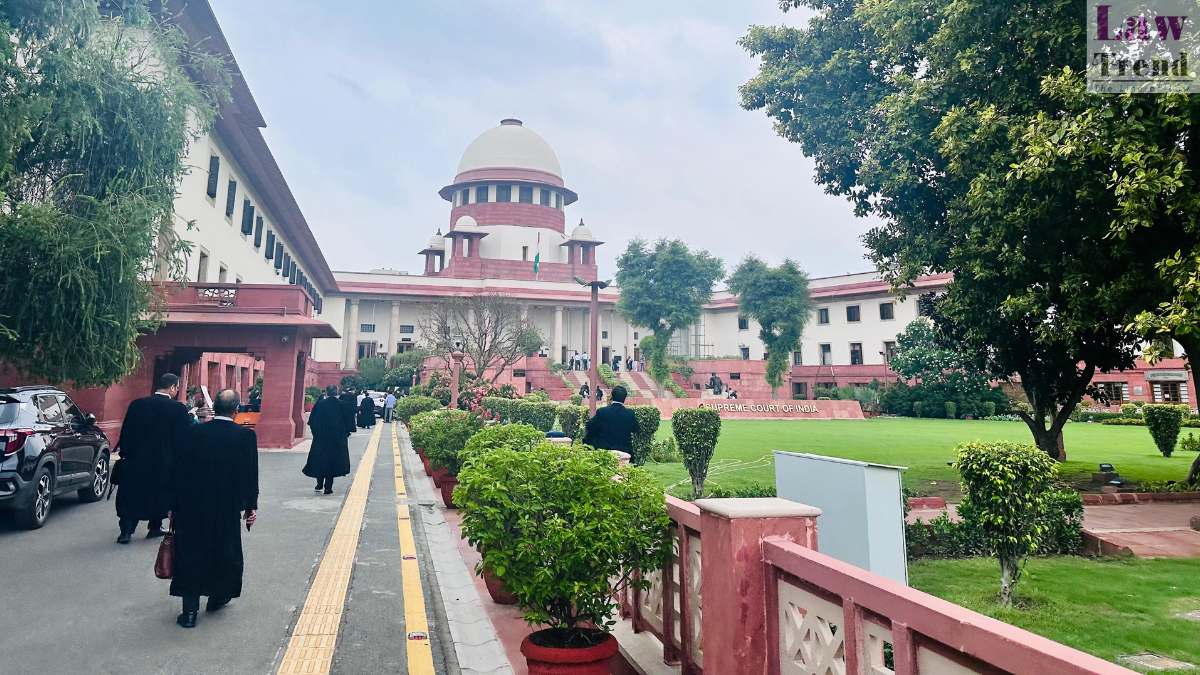
The Supreme Court of India, in a significant judgment delivered on March 24, 2026, has clarified that personnel serving in the Defence Security Corps (DSC) are entitled to seek condonation of deficiency in their qualifying service for the purpose of a second service pension. A Bench comprising Justice Manoj Misra and Justice Manmohan dismissed a batch of appeals filed by the Union of India, holding that administrative letters issued by the Ministry of Defence cannot override or amend statutory Pension Regulations.
The primary legal question before the Court was whether the Union of India is bound to apply the provisions for calculating the length of qualifying service and condoning deficiencies—specifically Paragraphs 9, 18, 44, and 125 of the Pension Regulations for the Army (1961 and 2008)—to DSC personnel.
The Court concluded that DSC personnel are an integral part of the “Armed Forces personnel” and are governed by the same pensionary rules as the Regular Army unless a specific inconsistency exists. Consequently, the Court held that if the personnel are otherwise eligible, a shortfall of up to one year in the second spell of service must be condoned.
Background of the Case
The respondents in this batch of appeals were former personnel of the Regular Army who, after completing their first spell of service and receiving a pension, re-enrolled in the DSC. Under the regulations, such personnel have two options: count former service for a single pension or continue drawing the first pension while earning a separate pension for DSC service.
The respondents opted for the latter. Under Paragraph 175 of the Pension Regulations, 2008, a second service pension is granted if the individual completes 15 years of service in the DSC. The dispute arose when the Union of India denied the second pension to personnel who fell short of the 15-year requirement by less than one year, refusing to apply condonation provisions that allow for a shortfall of up to 12 months.
Arguments of the Parties
Appellants (Union of India): Additional Solicitor General Ms. Archana Pathak Dave argued that condonation is a discretionary benefit intended only to ensure a soldier receives at least one pension. She contended that since the respondents were already receiving a pension from the Regular Army, they had “no merit” for a second condonation. The Union relied on executive letters dated June 20, 2017, and March 22, 2022, which explicitly barred condonation for a second service pension. They further argued that the term “Actual qualifying service” in the DSC-specific rules was inconsistent with the general condonation rules.
Respondents: The personnel argued that the DSC is a “Corps” of the Indian Army under the Army Act, 1950. They asserted that there is no express statutory prohibition against condoning a shortfall in the second spell of service. They highlighted that similar prohibitory letters issued by the government had been repeatedly read down or struck down by various High Courts and the Armed Forces Tribunal (AFT) in cases such as LNK DSC Mani Ram and Smt. Shama Kaur.
The Court’s Analysis
The Supreme Court rejected the Union’s plea of “inconsistency” between the DSC-specific chapters and the general Army regulations. The Court observed:
“The grant of pensionary awards to personnel of the Defence Security Corps shall be governed by the same Regulations as are applicable to Personnel Below Officer Rank of the Army, except where they are inconsistent…”
The Bench noted that inconsistency implies a state of contradiction where the operation of one provision negates the other. Finding no such conflict, the Court held that the principle of “incorporation by reference” ensures that condonation rules for the Regular Army extend to the DSC. Regarding the Ministry’s administrative letters, the Court held:
“As long as the Regulation remains valid and on the ‘statute-book’, it cannot be deemed to have been amended by letters such as those dated 20th June 2017 and 22nd March 2022.”
The Court further emphasized that the length of service must first be determined by giving effect to Note 5 of the letter dated October 30, 1987, where a fraction of a year equal to three months and above is treated as a completed half-year.
Final Decision
The Supreme Court reaffirmed its earlier position in Union of India v. Surender Singh Parmar (2015). It distinguished the current matter from the Ex Sep. Chhatar Pal case, noting that Chhatar Pal was discharged due to indiscipline, whereas the current respondents sought voluntary discharge.
The Court directed:
- The Union must determine the length of qualifying service by treating fractions of 3 months or more as a completed half-year.
- If a shortfall of one year or less remains thereafter, the personnel are entitled to condonation under Paragraph 125 of the 1961 Regulations or Paragraph 44 of the 2008 Regulations.
Dismissing the appeals, the Court concluded, “The issue is no longer open to doubt or reconsideration, having attained finality through repeated judicial pronouncements and consistent application.”
Case Details:
- Case Title: Union of India & Ors. v. Balakrishnan Mullikote (Ex Hav 256812 M) & Connected Matters
- Case Number: Civil Appeal arising out of Diary No. 27246/2023
- Bench: Justice Manoj Misra and Justice Manmohan
- Date of Judgment: March 24, 2026




