“Do You Want Us to Roll Out a Red Carpet for Intruders?”: Supreme Court on Rohingyas
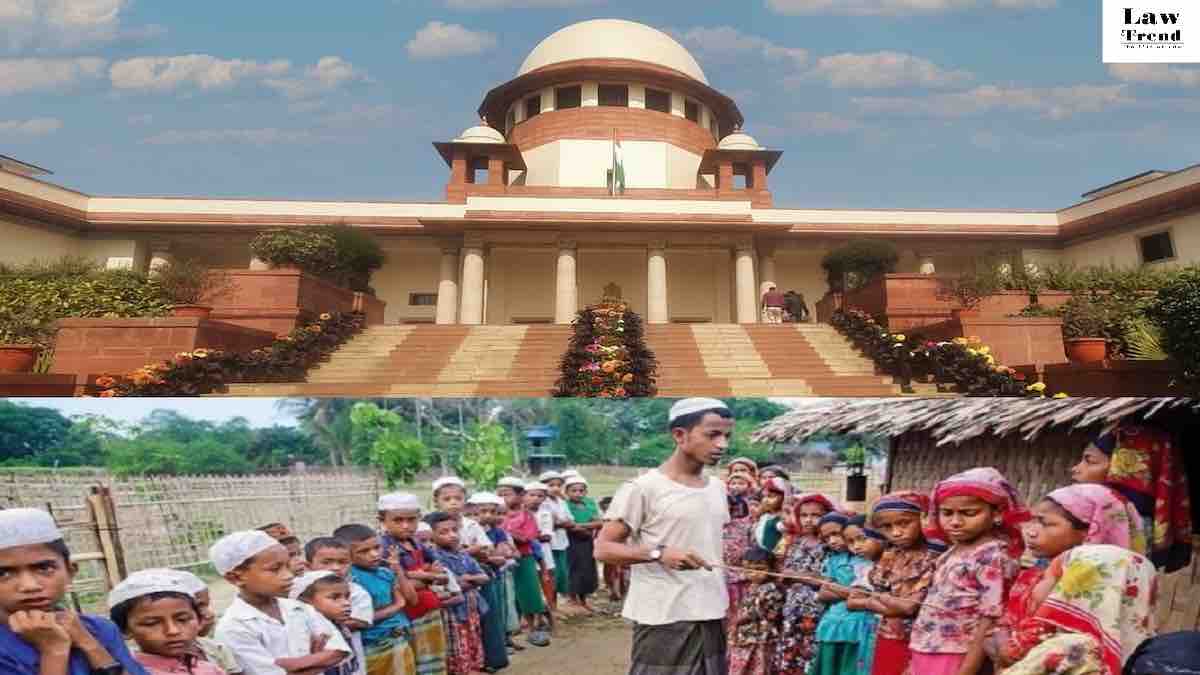
New Delhi: The Supreme Court of India, in a significant observation regarding the status of illegal immigrants, questioned whether the judiciary is expected to extend extraordinary privileges to those who enter the country illegally. While hearing a petition concerning Rohingya immigrants, a Bench headed by Chief Justice of India (CJI) Surya Kant remarked, “Do you want us to roll out a red carpet for them?”

The Court emphasized that in the absence of a formal declaration by the Government of India recognizing an individual as a refugee, such persons remain “intruders,” and the country has no obligation to retain them, especially given the security sensitivities of India’s borders.

Background of the Case

The observations were made during the hearing of a Habeas Corpus petition filed alleging the disappearance of certain Rohingya refugees. The petitioner claimed that the Delhi Police had detained several Rohingyas in May of this year, and their current whereabouts were unknown. The plea sought directions from the Court to trace these individuals and questioned the legality of their detention.

The issue of Rohingya immigrants has been a subject of prolonged judicial and political debate in India, with the Central Government consistently maintaining that India is not a signatory to the 1951 Refugee Convention and that national security concerns take precedence over the rights claimed by illegal immigrants.

READ ALSO  1984 anti-Sikh riots: HC refuses to condone nearly 28 yrs delay in filing appeal against acquittal

Court’s Observations and Analysis

The Bench, led by CJI Surya Kant, took a stern view of the claims made by the petitioner, focusing on the legal status of the individuals in question. The Court scrutinized the definition of a “refugee” under Indian law and the procedure for such recognition.

1. On Refugee Status vs. Intruder: Addressing the petitioner’s counsel, Justice Surya Kant asked for the specific government order granting refugee status to the individuals. “Where is the order of the Government of India declaring them as refugees? Refugee is a well-defined legal term and there is a prescribed authority by the Government to declare them,” the CJI observed.

The Court further clarified the distinction between a legally recognized refugee and an illegal entrant: “If there is no legal status of a refugee, and somebody is an intruder, and he enters illegally, do we have an obligation to keep that fellow here?”

2. The “Red Carpet” Remark: In response to the plea for judicial intervention to protect the individuals, the Bench made the critical oral observation that headlined the proceedings: “Do you want us to roll out a red carpet for them?” This remark underscored the Court’s hesitation to grant judicial protection to individuals who have not been vetted or recognized by the State’s competent authorities.

READ ALSO  वह अभी भी जस्टिस यशवंत वर्मा हैं, आपके दोस्त नहीं!: CJI गवई ने वकील द्वारा 'वर्मा' कहकर संबोधित करने पर आपत्ति जताई

3. National Security Concerns: The Bench highlighted the vulnerability of India’s borders, specifically referring to the situation in North India. The Court noted that allowing illegal immigrants to remain without checks poses a challenge to national security. “We have a very sensitive border in North India. If an intruder enters illegally, do we have the obligation to keep them here?” the Bench queried.

4. Resource Allocation: The Court also touched upon the issue of limited national resources, questioning whether the country’s resources should be prioritized for the welfare of Indian citizens or diverted to illegal immigrants. The CJI reportedly asked whether limited resources should be spent on “intruders” or on the welfare of Indian children.

READ ALSO  Calcutta HC orders Demolition of Trinamool offices Built Illegally on Govt land

The Supreme Court’s observations reinforce the position that the right to reside in India cannot be claimed as a matter of right by foreigners who enter without valid documentation or refugee status recognized by the Central Government. The Court reiterated that the power to declare someone a refugee lies within the executive domain, and without such a declaration, the judiciary cannot treat illegal entrants as refugees entitled to state protection.

Law Trend
Law Trendhttps://lawtrend.in/
Legal News Website Providing Latest Judgments of Supreme Court and High Court

Related Articles

Latest Articles