DM Can Correct Typographical Errors in Section 14 SARFAESI Orders; Such Correction Does Not Amount to ‘Review’: Allahabad HC
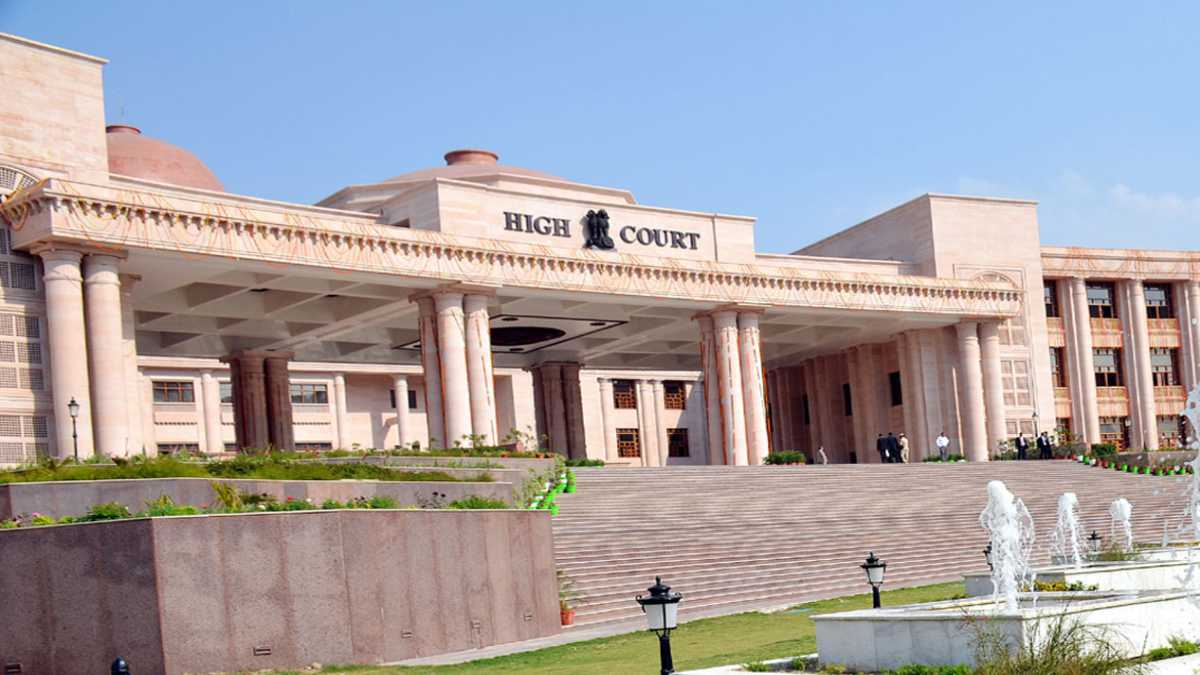

The Allahabad High Court (Lucknow Bench) has held that a District Magistrate (DM) possesses the power to correct ministerial and typographical errors in orders passed under Section 14 of the Securitisation and Reconstruction of Financial Assets and Enforcement of Security Interest Act, 2002 (SARFAESI Act). The Court clarified that such corrections do not amount to a “review” of the order, which is generally barred for authorities exercising non-adjudicatory powers.

In the case of M/S Tandon and Company Thru. Proprietor Ravi Tandon and others v. Debt Recovery Tribunal Lko. and another, Justice Subhash Vidyarthi dismissed a petition filed under Article 227 of the Constitution. The Court upheld the validity of a District Magistrate’s order correcting a wrong date of a possession notice in a previous order, ruling that the correction was ministerial in nature and did not legally constitute a review.

Background of the Case

The petitioners challenged an order dated November 10, 2025, passed by the Debts Recovery Tribunal (DRT), Lucknow. The DRT had rejected the petitioners’ contention regarding the illegality of an order dated June 28, 2025, passed by the District Magistrate, Lucknow.

The controversy began when the District Magistrate passed an order on May 8, 2025, under Section 14 of the SARFAESI Act, assisting the secured creditor (HDFC Bank Ltd.) in taking possession of secured assets. In this order, the date of the possession notice under Section 13(4) was correctly mentioned as November 14, 2024, in one paragraph, but incorrectly recorded as September 13, 2024, in another.

HDFC Bank filed an application for correction of this error. Consequently, the District Magistrate issued a corrective order on June 28, 2025, rectifying the date. The petitioners challenged this correction before the DRT, arguing that the DM had no power to “review” his own order. When the DRT rejected this challenge, the petitioners moved the High Court.

READ ALSO  Every Death in a Hospital Doesn’t Necessarily Amount to Medical Negligence: Supreme Court 

Arguments of the Parties

Counsel for the petitioners, Mr. Gautam Sadana and Mr. Devesh Srivastava, argued that the District Magistrate exercised the power of review, which is not conferred upon him by the statute. Relying on a Division Bench judgment of the Allahabad High Court in Kotak Mahindra Bank Ltd. v. State of U.P. (2016), they submitted that “the District Magistrate has absolutely no jurisdiction to review his order.” They contended that the alteration of the date substantially affected their rights.

Conversely, Mr. Manu Dixit, counsel for HDFC Bank, raised a preliminary objection regarding the maintainability of the petition. He argued that the petitioners had an alternative statutory remedy of appeal under Section 18 of the SARFAESI Act. He cited Supreme Court judgments, including Varimadugu Obi Reddy v. B. Sreenivasulu and PHR Invent Educational Society v. UCO Bank, to argue that High Courts should not entertain writ petitions when statutory remedies exist, except in cases of violation of natural justice or lack of jurisdiction.

Court’s Analysis and Observations

The Court first addressed the nature of the District Magistrate’s power under Section 14 of the SARFAESI Act. Referring to the Supreme Court’s decision in Balkrishna Rama Tarle v. Phoenix ARC (P) Ltd. (2023), Justice Vidyarthi observed that powers exercisable by the DM under Section 14 are “ministerial steps” and do not involve any adjudicatory process.

The Court observed:

READ ALSO  Awadh Bar Association Resolves to Approach Centre For Enlargement of Territorial Jurisdiction of All HC Lucknow

“As the order under Section 14 of the Act is passed in exercise of powers of ministerial nature and the order dated 28.06.2025 has not been passed by the District Magistrate in exercise judicial powers, the District Magistrate certainly has the power to correct ministerial and typographical errors in the order passed in exercise of ministerial powers and correction of such an error cannot be said to be a review of the order dated 08.05.2025 since it doesn’t change the substance of the order.”

Regarding the petitioner’s reliance on the Kotak Mahindra Bank case, the Court distinguished the facts, noting that in that specific case, the DM had recalled an order based on re-appreciation of contentions where fraud was alleged, which amounted to a review. The Court clarified that the ratio of Kotak Mahindra did not apply to mere typographical corrections.

The Court held:

“The correction of a typographical error regarding the date of possession notice under Section 13(4) of the SARFAESI Act is not a review, more particularly when at another place in the order dated 08.05.2025, the correct date of possession notice under Section 13(4) of the SARFAESI Act was mentioned as 14.11.2024.”

On the issue of maintainability and the availability of alternative remedy, the Court noted that while statutory remedies usually bar writ jurisdiction, it proceeded to decide the matter on merits to avoid relegating the petitioner to the appellate tribunal when no purpose would be served.

Regarding the petitioner’s claim that the DRT order was unreasoned, the Court referred to the Supreme Court’s decision in S.N. Mukherjee v. Union of India, which mandates recording reasons to exclude arbitrariness. The High Court found that the DRT had sufficiently recorded that the DM had merely rectified a typing error and had not reviewed the order.

READ ALSO  Absence of Prosecution Sanction Can Be Raised and Agitated at the Very Inception but Invalidity of Sanction Is to Be Raised During the Trial: Allahabad High Court

Decision

The High Court concluded that there was no error in the District Magistrate’s order correcting the typographical error, nor in the DRT’s refusal to interfere with it.

“Accordingly, I find no error in the order dated 28.06.2025, passed by the District Magistrate correcting the typographical error in the order dated 08.05.2025, passed under Section 14 of the SARFAESI Act.”

The petition was dismissed at the admission stage.

Case Details:

  • Case Title: M/S Tandon and Company Thru. Proprietor Ravi Tandon and others Vs. Debt. Recovery Tribunal Lko. Thru. Presiding Officer and another
  • Case No: Matters Under Article 227 No. 24 of 2026
  • Judge: Justice Subhash Vidyarthi
  • Counsel for Petitioner: Gautam Sadana, Devesh Srivastava
  • Counsel for Respondent: Manu Dixit

Law Trend
Law Trendhttps://lawtrend.in/
Legal News Website Providing Latest Judgments of Supreme Court and High Court

Related Articles

Latest Articles