

District Magistrate Cannot Reopen Closed Externment Proceedings Without Statutory Power Or Prior Hearing: Supreme Court
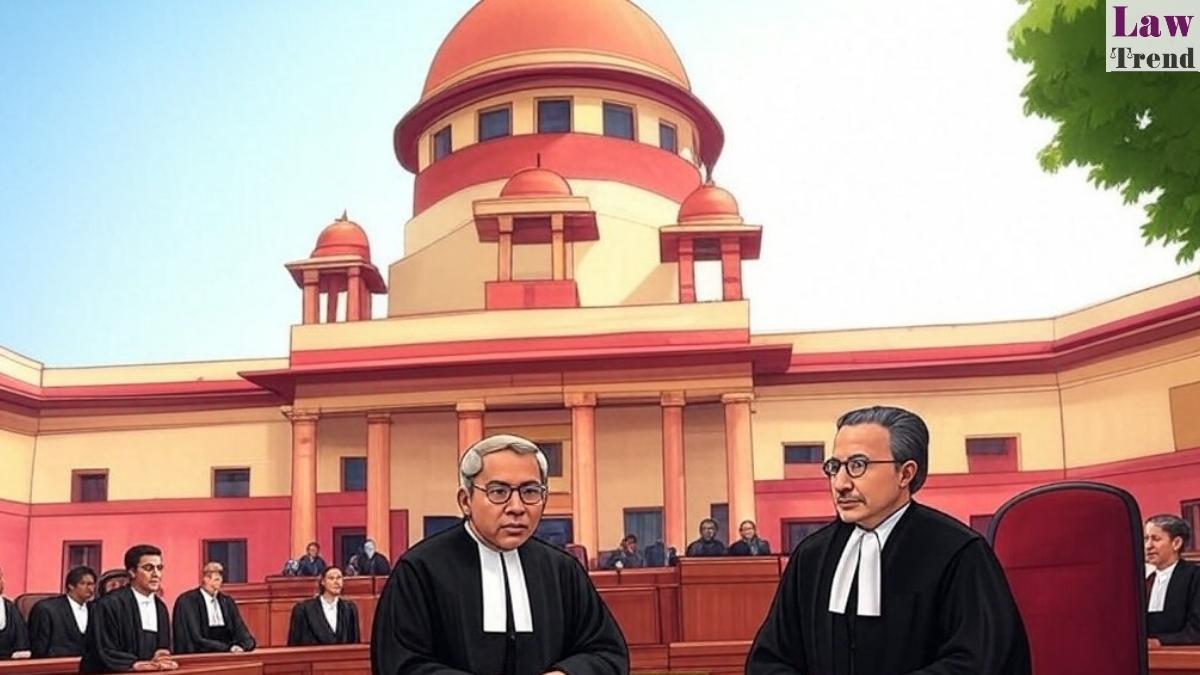

The Supreme Court of India has set aside an ex parte externment order passed against a man under the Chhattisgarh Rajya Suraksha Adhiniyam, 1990, holding that an administrative authority has no inherent power to review or reopen closed proceedings without statutory backing, and that dispensing with the mandatory requirement of prior notice and hearing renders an externment order void ab initio. A Bench comprising Justice Dipankar Datta and Justice Sheel Nagu held that the High Court of Chhattisgarh grossly erred in taking a hands-off approach and dismissing the appellant’s writ petition on the grounds of an alternative statutory appellate remedy, reiterating that a writ court must intervene when an order is passed in gross violation of natural justice and without jurisdiction.

Background of the Case

The genesis of the dispute arose from a memorandum dated April 3, 2019, submitted by the Superintendent of Police, Raigarh, recommending the externment of the appellant, Vijay Kumar Rajpoot alias Vijju, under Sections 5(a) and (b) of the Chhattisgarh Rajya Suraksha Adhiniyam, 1990, based on ten criminal cases registered against him between 2009 and 2019.

On October 6, 2025, the District Magistrate, Raigarh, closed the externment proceedings after recording that the appellant had been acquitted in the cited criminal cases and that no fresh police report had been submitted since 2019. The District Magistrate let off the appellant with a warning to refrain from criminal activities in the future.

Subsequently, two fresh First Information Reports (FIRs) came into picture. One was Crime No. 117/2023 under the Chhattisgarh Municipal Corporation Act, 1956, which was subsequently quashed by the High Court on September 4, 2024. The second was Crime No. 483/2025, registered on October 30, 2025, under Sections 296, 299, 302, 352, and 3(5) of the Bharatiya Nyaya Sanhita, 2023, along with Section 3(1)(v) of the Scheduled Castes and Scheduled Tribes (Prevention of Atrocities) Act, 1989, alleging that the appellant circulated a video containing abusive remarks against Baba Guru Ghasidas. The appellant was arrested and lodged in District Jail, Raigarh.

Following this, on November 3, 2025, the Superintendent of Police submitted a fresh report seeking reconsideration of the closure order. Acting on this report, the District Magistrate recalled the closure order and, on November 4, 2025, passed an ex parte externment order banishing the appellant from Raigarh and contiguous districts for one year, holding that he had violated the warning, proved to be a habitual offender, and posed a hazard to society.

READ ALSO  In Case of Conflict General Law Must Give Way to the Special Law: Supreme Court

The appellant challenged the externment order before the High Court of Chhattisgarh. However, on January 22, 2026, the High Court dismissed the writ petition, relegating him to pursue the alternative statutory remedy of appeal under Section 9 of the Adhiniyam. The appellant then approached the Supreme Court.

Arguments of the Parties

Counsel for the appellant, Mr. Pallav Mongia, contended that the externment order was passed ex parte while the appellant was in judicial custody, in flagrant violation of the mandatory statutory safeguards of notice and hearing under Section 8 of the Adhiniyam and principles of natural justice. He submitted that the District Magistrate possessed no statutory power to suo motu review or reopen a closed case. He further pointed out that Crime No. 117/2023 stood quashed, the appellant was granted bail in Crime No. 483/2025, and the availability of an alternative remedy could not bar writ jurisdiction against an order suffering from patent lack of jurisdiction and breach of natural justice.

Opposing the appeal, counsel for the State, Ms. Ankita Sharma, relied on the Supreme Court’s ruling in Jittu Yadav v. State of Chhattisgarh & Ors. to argue that the statutory appellate remedy under Section 9 is an integral procedural safeguard that should not ordinarily be bypassed. She argued that the order was not an impermissible review but a continuation of proceedings triggered by the appellant’s breach of the warning and involvement in fresh offences affecting public peace. She maintained that since hearing had been afforded prior to the closure order, a fresh hearing was not legally required, and alternatively requested an order of remand to the High Court.

Supreme Court’s Analysis and Observations

The Supreme Court rejected the State’s contentions on all fronts, addressing natural justice, statutory jurisdiction, writ maintainability, and the merits of the externment order.

1. Mandatory Nature of Hearing under Section 8

The Court emphasized that Section 8(1) of the Adhiniyam mandates informing the person in writing of material allegations and granting a reasonable opportunity of tendering an explanation before passing an order under Section 5. The bench observed that Section 8(5) permits an ex parte proceeding only if a person fails to execute a security bond or fails to appear during an inquiry—conditions that were absent here.

Citing the landmark judgment in Nawabkhan Abbaskhan v. State of Gujarat, the Court reiterated:

READ ALSO  Complainant’s Right to be Heard in a Revision Petition Challenging Framing of Charges in a Criminal Case Does Not Mean That They Also Have the Right of Impleadment in Such a Plea: Delhi HC

“Where hearing is obligated by a statute which affects the fundamental right of a citizen, the duty to give the hearing sounds in constitutional requirement and failure to comply with such a duty is fatal… the order of an administrative authority charged with the duty of complying with natural justice in the exercise of power before restricting the fundamental right of a citizen is void and ab initio of no legal efficacy. The duty to hear manacles his jurisdictional exercise and any act is, in its inception, void except when performed in accordance with the conditions laid down in regard to hearing.”

The Court ruled that the externment order was void ab initio for violating Section 8 and the audi alteram partem rule.

2. Lack of Inherent Review Jurisdiction

The Court held that administrative authorities have no power to review or reopen their earlier final orders unless expressly conferred by statute. The bench ruled:

“It is settled law that an administrative authority enjoys no power to review his earlier order, unless the statute empowers him to do so. We have not been shown any such empowering provision and, therefore, it has to be held that the third respondent exercised a jurisdiction not vested in him by law. We also hold that breach of the warning, if any, without anything more could not have clothed the third respondent with the power to reopen the closed case. Since a fresh report from the fourth respondent was received, the third respondent was statutorily obliged to repeat the procedure envisioned in Section 8 of the Adhiniyam.”

3. Error of the High Court on Alternative Remedy

Addressing the High Court’s refusal to entertain the writ petition, the Supreme Court referred to Godrej Sara Lee Ltd. v. The Excise and Taxation Officer-cum-Assessing Authority regarding the exceptions to the rule of alternative remedies. The bench observed:

“Relegation of the appellant to the statutory remedy under Section 9 of the Adhiniyam is plainly demonstrative of an abject failure to exercise a jurisdiction vested in the High Court.”

4. Invalidity on Merits

Examining the merits, the Court found the invocation of Section 5(b) wholly misconceived because the allegations against the appellant related to offences affecting religion (Chapter XV IPC / BNS equivalents) and municipal laws, rather than offences involving force, violence, or offences under Chapters XII, XVI, or XVII, or Sections 506 and 509 of the IPC.

Regarding Section 5(a), the Court relied on Deepak v. State of Maharashtra (which referenced Pandharinath Shridhar Rangnekar v. Commr. of Police) to emphasize that externment is an extraordinary measure impacting fundamental freedoms under Article 19(1)(d) of the Constitution and cannot be passed on mere ipse dixit. The bench noted:

READ ALSO  सुप्रीम कोर्ट ने चुनाव से पहले केजरीवाल की गिरफ्तारी के समय पर सवाल उठाया, ईडी से जवाब मांगा

“There cannot be any manner of doubt that an order of externment is an extraordinary measure. The effect of the order of externment is of depriving a citizen of his fundamental right of free movement throughout the territory of India… Considering the bare facts on record, the said order shows non-application of mind and smacks of arbitrariness. Therefore, it becomes vulnerable. The order cannot be sustained in law.”

The Court observed that the District Magistrate failed to disclose any objective material or cogent reasons demonstrating why the situation was grave enough to necessitate externment.

Final Decision

The Supreme Court allowed the appeal, quashed the High Court’s judgment dated January 22, 2026, and quashed the District Magistrate’s externment order dated November 4, 2025. The Court declared the appellant free to enter the districts from which his externment had been ordered, while clarifying that its observations would not constitute findings on the merits of pending criminal cases against him.

Case Details:

  • Case Title: Vijay Kumar Rajpoot alias Vijju vs. State of Chhattisgarh & Ors.
  • Case No.: Criminal Appeal No. 4083 of 2026 (Arising out of SLP (Crl.) No. 12330 of 2026)
  • Bench: Justice Dipankar Datta and Justice Sheel Nagu
  • Date: August 31, 2026

Law Trend
Law Trendhttps://lawtrend.in/
Legal News Website Providing Latest Judgments of Supreme Court and High Court

Related Articles

Latest Articles

