

Distance Education Degree Invalid for Librarian Post When Rules Mandate ‘Regular Course of Study’: Kerala High Court Set Asides Tribunal Order
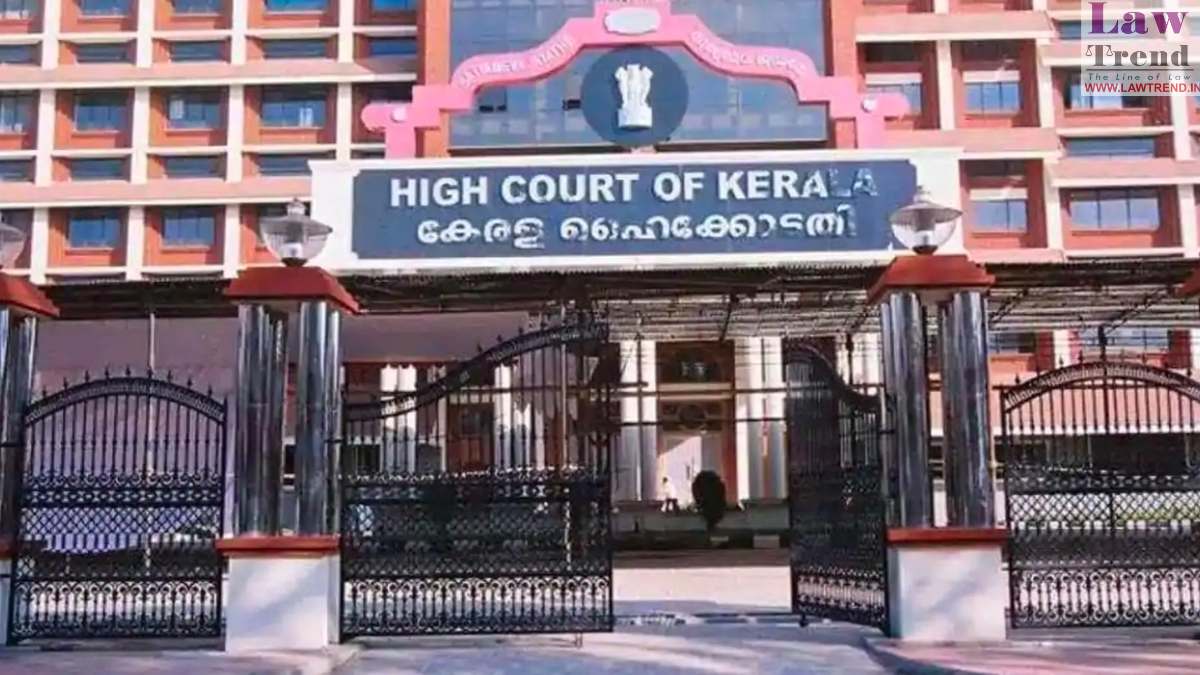

The High Court of Kerala has ruled that a degree obtained through distance education cannot be accepted as a valid qualification for the post of Librarian Grade-IV when the relevant notification and Special Rules expressly stipulate that the qualification must be acquired after undergoing a “regular course of study.”

The Division Bench comprising Justice Anil K. Narendran and Justice Muralee Krishna S. allowed a batch of Original Petitions filed by the Kerala Public Service Commission (KPSC), setting aside the order of the Kerala Administrative Tribunal (KAT) which had directed the inclusion of candidates with distance education degrees in the ranked list.

Background of the Case

The KPSC invited applications for the post of Librarian Grade-IV in the Department of Kerala Municipal Common Services (Notification dated 31.12.2020) and the Department of Kerala Common Pool Library (Notification dated 30.11.2022). The prescribed qualifications included a Bachelor’s Degree in Library and Information Science (BLISc).

Crucially, the notifications contained a Note appended to Clause (7), stipulating that:

“The qualification proposed for direct recruitment shall be one acquired after undergoing a regular course of study from any of the Universities in Kerala or recognised as equivalent thereto by any of the Universities in Kerala.”

Several applicants, who had acquired their BLISc degrees through Distance Education mode from universities such as the University of Kerala and IGNOU, were initially included in the shortlist. However, their candidature was subsequently rejected by the KPSC on the ground that they had not acquired the qualification through a “regular course of study.”

Aggrieved by the rejection, the candidates approached the Kerala Administrative Tribunal. They relied on equivalency certificates and a Government Order dated May 2, 2017 (G.O. (Ms) No.119/2017/H.Edn), which declared the one-year BLISc course offered through the School of Distance Education of the University of Kerala as equivalent to the regular BLISc course offered by the Department of Library and Information Science.

The Tribunal allowed the original applications, holding that the equivalency certificates and the Government Order made the applicants eligible. The KPSC challenged this order before the High Court, invoking Article 227 of the Constitution of India.

READ ALSO  Pendency of a Vigilance Inquiry Cannot Be an Impediment for an Individual to Travel Abroad: Delhi HC

Arguments

Sri. P.C. Sasidharan, the learned Standing Counsel for the KPSC, argued that the notification and the Special Rules specifically insisted on a “regular course of study.” He contended that the equivalency mentioned in the rules applies only to candidates who acquired the qualification by a regular course of study from universities outside Kerala. He submitted that the Tribunal failed to consider that the degree must satisfy not only the equivalency aspect but also the condition of “regular study.”

Sri. Kalam Pasha, appearing for the respondents (applicants), argued that the universities and the Government of Kerala had recognized the distance education degrees as equivalent to the regular degrees. He relied on the judgment of the Apex Court in Guru Nanak Dev University v. Sanjay Kumar Katwal and other cases to support the claim that the equivalency certificates were sufficient to qualify for the post.

The State of Kerala, represented by Smt. Princy Xavier, Senior Government Pleader, submitted that while the Government had issued orders regarding equivalency, the Special Rules prescribing the method of study would prevail.

Court’s Analysis and Observations

The High Court observed that the core issue depended on the interpretation of the Note appended to Clause (7) of the notifications and the Special Rules. The Bench emphasized that the State, as an employer, is entitled to prescribe qualifications based on the nature of the job, and the Commission cannot improve upon that.

READ ALSO  बीमारी के आधार पर दो पहिया वाहन चलाते समय हेलमेट पहनने से छूट का दावा नहीं किया जा सकता: केरल हाईकोर्ट

Referring to the Division Bench judgment in Shine Bose. B v. Kerala Public Service Commission [2015 (1) KHC 354], the Court noted that if a correspondence course were treated as equivalent to a regular course where the rules specifically demand a “regular course of study,” it would lead to a contradictory situation where candidates from Kerala universities are required to undergo regular study while those from outside could qualify without it.

Dissecting the specific Note in the notification, the Court summarised the requirement:

  1. Qualification acquired after undergoing a regular course of study: This implies the course must be completed in the regular mode, not via distance learning.
  2. From any of the Universities in Kerala OR Recognised as equivalent thereto: The Court interpreted this to mean that if a qualification is from outside Kerala, it must be “equivalent to the one declared by the University in Kerala” and must still be “by undergoing a regular course of study.”

The Court observed:

“In short, the qualification must be obtained through regular course of study either from a university in Kerala or from a university outside Kerala, but through a regular course of study officially recognised as equivalent by a university in Kerala. In no strength of imagination, the qualification obtained through distance learning can be said as equivalent to a degree obtained through a regular course.”

The Bench held that diluting the specific requirement of the Special Rules based on executive orders or general equivalency certificates would be fallacious.

“If the contention of the applicants is accepted, it will create a situation that a candidate qualifying from a University in Kerala should be by undergoing a regular course of study, and whereas a candidate who obtains the qualification from any University outside Kerala would be eligible without undergoing a regular course of study,” the Court stated.

READ ALSO  Judgment Takes Effect from Commencement of the Day, Not Time of Pronouncement: Kerala High Court

Decision

The High Court held that the applicants did not satisfy the qualifications stipulated in the notification. The Court concluded that the Tribunal “grossly erred” in its findings.

“We find that the applicants did not satisfy the qualifications stipulated in the Note appended to clause 7 of the notifications. The Tribunal grossly erred in arriving at the right finding in this regard, which led to the passing of the impugned order in favour of the applicants.”

Consequently, the High Court allowed the Original Petitions filed by the KPSC, set aside the common order dated July 1, 2025, passed by the Kerala Administrative Tribunal, and dismissed the original applications filed by the candidates.

Case Details:

  • Case Title: Kerala Public Service Commission & Anr. v. Masheeka Salam & Ors. (and connected cases)
  • Case Numbers: OP (KAT) Nos. 379, 400, 429, 434, 436, 439, 441, and 456 of 2025
  • Coram: Justice Anil K. Narendran and Justice Muralee Krishna S.
  • Counsel for Petitioner (KPSC): Sri. P.C. Sasidharan
  • Counsel for Respondents: Sri. Kalam Pasha B., Smt. Vishakha J., Smt. Hasna Ashraf T.A., Sri. Anandu U.R., Smt. Princy Xavier (Sr. G.P.)

Law Trend
Law Trendhttps://lawtrend.in/
Legal News Website Providing Latest Judgments of Supreme Court and High Court

Related Articles

Latest Articles

