

Delhi HC Rejects Conditional Withdrawal of Patent Suit, Imposes Costs on Plaintiff for “Unnecessary Litigation”
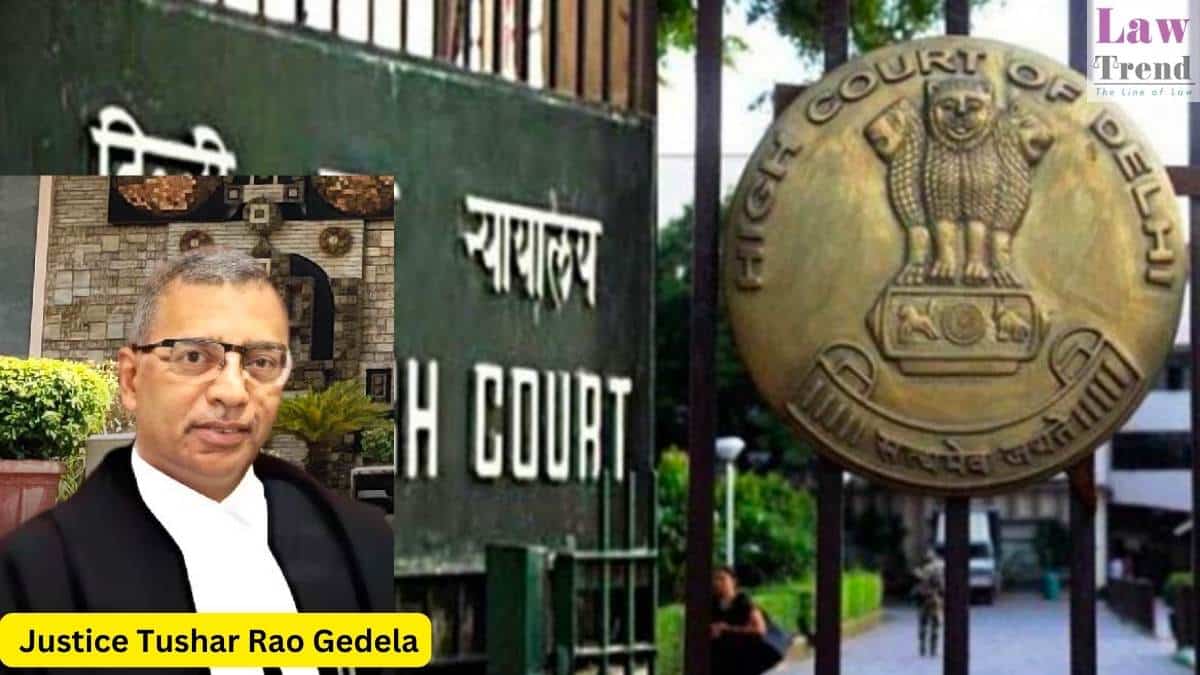

The Delhi High Court has rejected a plaintiff’s application to withdraw a patent infringement suit with liberty to institute a fresh suit under Order XXIII Rule 1(3)(b) of the Code of Civil Procedure (CPC), 1908. Justice Tushar Rao Gedela, while dismissing the conditional withdrawal request, imposed a cost of Rs 50,000 on the plaintiff for continuing with “unnecessary litigation” despite an adverse expert report.

Case Background

The plaintiff, Pawan Kumar Goel, had filed the suit (CS(COMM) 672/2022) seeking a permanent injunction against the defendants, Dr. Dhan Singh & Anr., alleging infringement of Indian Patent 369150. The suit patent related to a “Novel Process for Extracting Alpha Yohimbine (Rauwolscine) From Rauwolfia canescenes” with a purity greater than 90%.

During the proceedings, Mr. Nalin Kohli, Senior Advocate appearing for the plaintiff, expressed willingness to withdraw the suit based on an affidavit dated July 21, 2025. The plaintiff contended that the documents filed by the defendants indicated they were manufacturing Alpha Yohimbine using Rauwolfia Vomitoria, which would not infringe the plaintiff’s patent that involved Rauwolfia canescens/tetraphylla.

However, the plaintiff sought this withdrawal specifically under Order XXIII Rule 1(3)(b) of the CPC, requesting liberty to institute a fresh suit on the same cause of action should the defendants use Rauwolfia canescens/tetraphylla in the future.

Arguments of the Parties

The plaintiff argued that if the defendants utilized Rauwolfia canescens/tetraphylla, the registered patent would be infringed. Mr. Kohli submitted that without the liberty to file a fresh suit, the plaintiff would be rendered remediless against future infringement. He asserted that as dominus litus (master of the suit), the plaintiff had the right to withdraw the suit for reasons best suited to them.

READ ALSO  Bail Granted by One Bench of High Court Can’t be Cancelled by Other Bench: Supreme Court

Mr. Vaibhav Vutts, counsel for the defendants, vehemently opposed the conditional withdrawal. He submitted that while the defendants had no objection to a “withdrawal simpliciter,” they opposed any permission to file a fresh suit.

The defendants argued that the plaintiff’s premise—that the defendants only used Rauwolfia Vomitoria—was factually incorrect. Mr. Vutts pointed to the Batch Manufacturing Records (BMR) maintained by the defendants, which disclosed the use of Rauwolfia tetraphylla in their process for manufacturing goods for export.

Furthermore, the defense highlighted that an expert employed by the plaintiff (an examiner from IIT) had submitted a report on April 12, 2023, stating that the defendant’s process was “not same or similar” to the plaintiff’s patented process. The defendants contended that the plaintiff had continued the litigation despite this knowledge and sought exemplary costs.

Court’s Observations and Analysis

Justice Tushar Rao Gedela observed that the plaintiff’s request for conditional withdrawal did not meet the criteria of Order XXIII Rule 1(3)(b) of the CPC, which applies only in cases of a “formal defect” or “sufficient grounds.”

READ ALSO  Right To Run Educational Institutions Under Article 30 Is Not Absolute: Delhi HC Directs St Stephens to Withdraw Admission Prospectus

The Court found the plaintiff’s reasoning contradictory. The Bench noted that if the defendants were indeed using Rauwolfia tetraphylla—as demonstrated by the defendants’ own BMRs—the alleged cause of action for infringement would exist in the present, negating the need for a future suit.

The Court observed:

“This Court is unable to appreciate as to how the use of Rauwolfia Vomitoria would cease to be the cause of action, while use of Rauwolfia canescens/tetraphylla in the manufacture/extraction of Alpha Yohimbine with purity greater than 90% would be a cause of action which tantamount to infringement of the suit patent… Thus, the plaintiff cannot be permitted to approbate and reprobate.”

The Court placed significant reliance on the expert opinion filed by the plaintiff. The judgment noted:

“The plaintiff has not denied the report, which clearly indicates that the defendant is, in fact, using Rauwolfia tetraphylla in its process and simultaneously also declares that the suit patent process and that of the defendant are absolutely dissimilar.”

Regarding the plaintiff’s attempt to withdraw via affidavit, the Court remarked:

READ ALSO  Death Of Passenger Who Was Assaulted By Railway Police For Protesting Molestation Of His Wife Would Be Considered An ‘Untoward Incident’: Jharkhand HC

“Thus, what cannot be achieved directly, cannot be permitted to be achieved indirectly too.”

Decision

The High Court held that the plaintiff failed to furnish sufficient grounds for withdrawal with liberty to file afresh. Consequently, the prayer for withdrawal under Order XXIII Rule 1(3)(b) was denied.

Recognizing that the defendant was dragged into litigation despite the plaintiff’s own expert opining that the processes were dissimilar, the Court imposed costs on the plaintiff.

“Accordingly, the costs of Rs.50,000/- imposed upon the plaintiff shall be payable to the defendant within four (4) weeks from date against a written acknowledgement,” the Court ordered.

The matter has been listed for further proceedings on July 8, 2026.

  • Case Title: Pawan Kumar Goel v. Dr. Dhan Singh & Anr.
  • Case Number: CS(COMM) 672/2022

Law Trend
Law Trendhttps://lawtrend.in/
Legal News Website Providing Latest Judgments of Supreme Court and High Court

Related Articles

Latest Articles

