

Delhi HC Dismisses Petition Challenging Trial Court’s Refusal to Accept Belated Documents; Imposes Costs
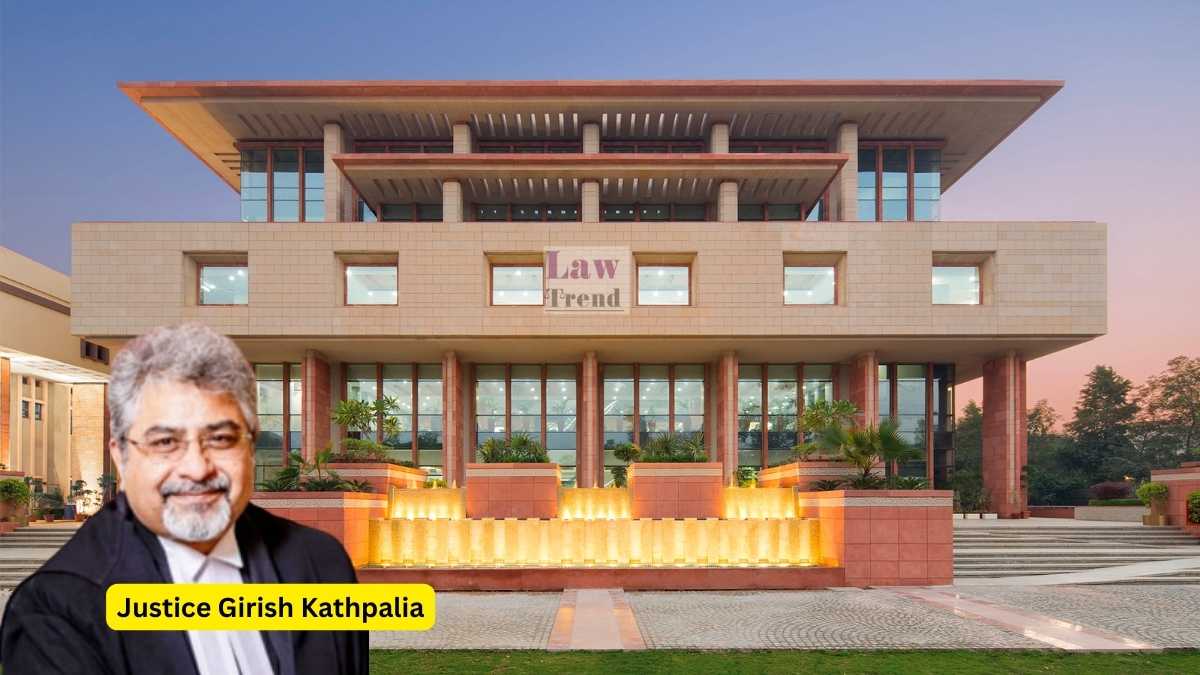

The Delhi High Court has dismissed a petition filed under Article 227 of the Constitution of India, challenging a trial court’s order that refused to take additional documents on record after the commencement of final arguments. Justice Girish Kathpalia upheld the trial court’s decision, observing that the plea was “completely frivolous” and filed to delay a suit pending since 2012. The Court imposed a cost of Rs. 20,000 on the petitioner.

The legal issue before the High Court was whether a plaintiff could be permitted to file additional documents and summon witnesses under Order VII Rule 14(3) and Order XVI Rule 1(3) of the Code of Civil Procedure (CPC) after the trial had concluded and final arguments were partly heard. The petitioner, Sanjiv Narula, assailed the trial court’s order dated September 17, 2025, which had dismissed his application for the same.

Justice Kathpalia dismissed the petition in limine, stating that the procedure, while being a handmaid of justice, cannot be invoked to fill lacunae in a case at the threshold of the final decision, especially when the suit is over a decade old.

Background of the Case

The underlying dispute involves a suit filed by the petitioner/plaintiff in 2012 for the recovery of possession of immovable property, damages, mesne profits, declaration, and permanent injunction against the respondents/defendants, Pargat Singh and Anr.

READ ALSO  दिल्ली हाईकोर्ट ने यातायात के आधार पर मस्जिद को हटाने के खिलाफ याचिका पर सुनवाई की

The respondents had filed a detailed written statement, issues were framed, and the suit underwent a “full dress trial.” It was only during the course of final arguments that the trial court raised certain queries. Following this, the petitioner moved an application under Order VII Rule 14(3) CPC and Order XVI Rule 1(3) CPC read with Section 151 CPC to place additional documents on record and summon witnesses. This application was dismissed by the trial court, leading the petitioner to approach the High Court.

Arguments of the Parties

Appearing for the petitioner, Senior Advocate Dr. Shashi Kiran contended that the impugned order was not sustainable. It was argued that the additional documents were in the custody of the Ramjas Foundation, a private trust, and thus could not be filed at the appropriate stage. The counsel asserted that the documents were relevant to the adjudication of the dispute.

The petitioner relied on the judicial precedents set in Sugandhi (Dead) by LRs & Anr. vs P. Rajkumar (2020) and Pradeep Bailey vs Gilma Daniel (2025), arguing that “procedure being handmaid of justice, the same cannot prevail over substantive justice.” The counsel further invoked the maxim that an “act of court shall not prejudice anyone.”

READ ALSO  State Government Bound by Policy: Supreme Court Quashes Notification Naming Revenue Villages After Individuals

The petitioner submitted that they had applied for certified copies of the documents on May 19, 2025, and received them on May 22, 2025.

Court’s Analysis and Observations

Justice Girish Kathpalia rejected the petitioner’s contentions, emphasizing the need for finality in litigation. The Court observed:

“Of course, procedure is handmaid of justice. But the question to be probed is whether it would be justice to start de novo trial of the suit pending since the year 2012; where we are at the threshold of the year 2026.”

The Court noted that permitting the petitioner to file documents and summon witnesses at this stage would force a “de novo trial,” necessitating further opportunities for the defendants to amend pleadings and lead evidence.

Prior Knowledge of Documents

The Court found that the petitioner was aware of the documents years prior to filing the application. It was noted that the same documents had been filed in another suit (CS DJ 13114/2016) involving the petitioner in 2016. The Court remarked:

“It is only thereafter that the petitioner/plaintiff woke up from the slumber and applied for certified copies of the subject additional documents on 19.05.2025.”

Attempt to Fill Lacunae

The Court observed that the application was filed only after the petitioner realized the “lacunae in his case” following queries raised by the trial court during final arguments. The Court stated:

READ ALSO  Delhi HC seeks report on medical condition of prison inmates over 75 years of age

“It also needs to be understood as to whether in the name of the expression ‘handmaid of justice’, a party can be allowed to fill in the lacunae in its case.”

The Court further pointed out that the documents—certified copies of a registered sale deed, lease deed, site plans, regularization letters, and release deed—could have been “conveniently proved by summoning records of the Sub-Registrar at the stage of plaintiff’s evidence.”

Decision

The High Court held that there was no infirmity or perversity in the trial court’s order that called for interference under Article 227 of the Constitution. Justice Kathpalia termed the petition “completely frivolous” and filed with “oblique purposes to somehow delay disposal of the subject suit.”

The petition was dismissed with the following direction:

“As such, the petition is dismissed with cost of Rs.20,000/- to be deposited online by petitioner with www.bharatkeveer.gov.in within one week.”

Case Details:

Case Title: Sanjiv Narula v. Pargat Singh and Anr

Case No: CM(M) 2448/2025

Coram: Justice Girish Kathpalia 

Law Trend
Law Trendhttps://lawtrend.in/
Legal News Website Providing Latest Judgments of Supreme Court and High Court

Related Articles

Latest Articles

