

Court Cannot Direct Legislature to Frame Rules for Pension to Aided School Employees in Absence of Statutory Provision: Chhattisgarh High Court
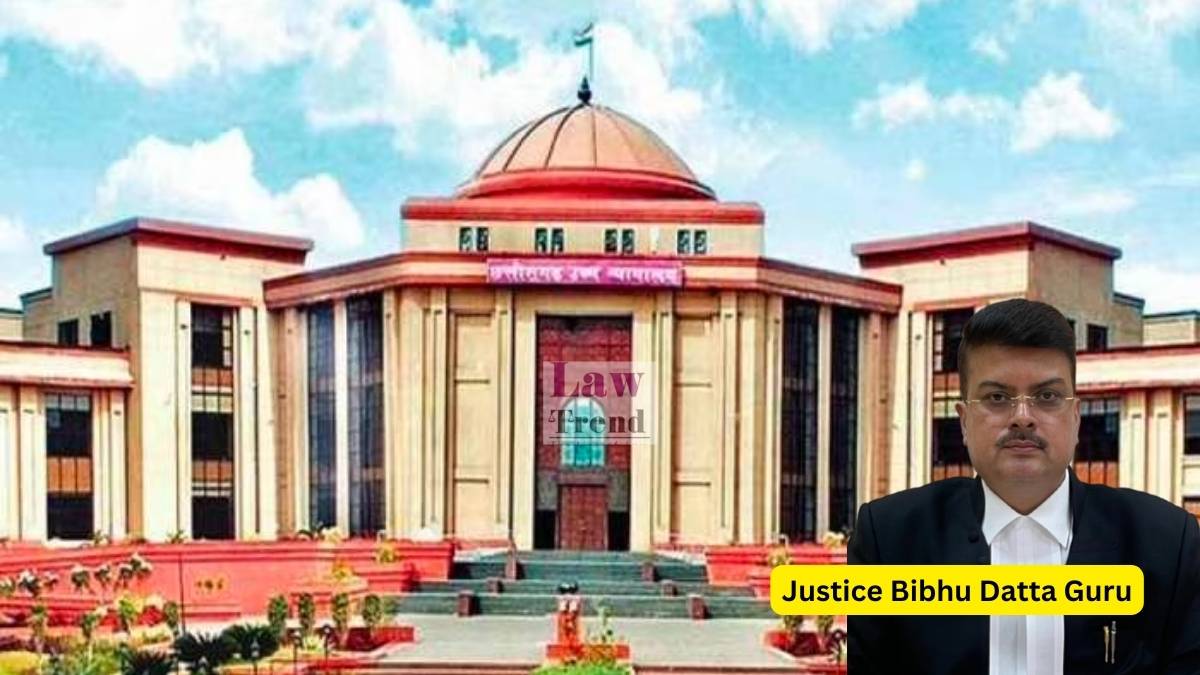

The High Court of Chhattisgarh has dismissed a batch of writ petitions filed by retired employees of government-aided private schools seeking pensionary benefits at par with government school teachers. The single-judge bench of Justice Bibhu Datta Guru held that in the absence of specific rules, the Court cannot direct the State to enact legislation or frame rules to extend pension benefits.

Background of the Case

The court was hearing a batch of petitions, with the lead case being Ashok Kumar Hazra & Ors. v. State of Chhattisgarh & Ors. The petitioners were retired Principals, Lecturers, and Upper Division Teachers (UDT) from various 100% grant-in-aid non-government schools.

The petitioners contended that their service conditions were governed by the Madhya Pradesh Sikshan Sanstha (Adhyapakon Tatha Anya Karmachariyon Ke Vetano Ka Sandaya) Adhiniyam, 1978 (Act of 1978) and the Revised Rules for Grant In Aid To Non-Government Educational Institutions, 1979 (Rules, 1979). They argued that under Rule 33 of the Rules, 1979, employees of aided institutions are entitled to salaries similar to those of State Government employees. Despite this, the State authorities had denied them pensionary benefits.

Arguments of the Petitioners

Learned counsel for the petitioners argued that the refusal to grant pension to them, while extending it to employees of government schools and other 100% aided private colleges, constituted “arbitrary and hostile discrimination.”

READ ALSO  Insurance Company Not Liable if a “Goods Vehicle” Ferried Passenger

The petitioners submitted that the State is bound by Article 14 of the Constitution to act fairly. They argued that when the statutory scheme mandates equivalence, the State cannot depart from uniform treatment. The counsel emphasized that the denial of pension to senior citizens who have devoted decades to public education violates their right to live with dignity under Article 21.

It was further argued that since the State assumes complete financial responsibility for these institutions, the employees must be given benefits identical to government employees. The counsel asserted that the petitioners and government employees form a homogeneous class, and the denial failed the “reasonable classification” test.

Arguments of the State

Per contra, the State counsel opposed the plea, submitting that while the schools receive 100% grant-in-aid, they remain private educational institutions, and the petitioners are not government employees.

The State argued that the grant-in-aid is provided for the “proper management and smooth functioning” of the schools and does not automatically entitle employees to government pension. The counsel highlighted that the Department of School Education had previously rejected similar demands on January 7, 2009, and February 5, 2009, due to the lack of any provision.

Furthermore, the State raised technical objections, stating that the petitioners had failed to implead their employers (the private management) as necessary parties and that the petitions suffered from delay and laches as they were filed years after retirement.

READ ALSO  [SARFAESI Act] Allahabad High Court Imposes Rs 25 Lakh Cost on Petitioners for Suppression of Facts, Dismisses Challenge to Property Auction

Court’s Analysis and Observations

Justice Bibhu Datta Guru examined the statutory provisions relied upon by the petitioners. The Court analyzed the definition of “Teacher” and “Salary” under the Act of 1978 and its subsequent amendment in 2000.

The Court observed:

“From bare perusal of the said provision, it is crystal clear that ‘salary’ means the salary and other allowances and there is no word of pensionary benefits.”

Regarding Rule 33 of the Revised Rules, the Court noted that while it mandates pay scales in accordance with government educational institutions, it specifies that conditions of service shall be governed by the Act of 1978.

The Court noted that the petitioners failed to establish the existence of any specific rules granting them pensionary benefits. The Bench distinguished the case from the recent Supreme Court judgment in Vikram Bhalchandra Ghongade vs. Headmistress Girls High School and Junior College (2025), noting that in that case, entitlements were based on specific rules brought out under Article 309 of the Constitution.

Justice Guru stated:

“It is noteworthy to mention here that in the aforesaid decision the Supreme Court held that the aided school teachers are entitled to some of the conditions to service as are applicable to the government teachers in accordance with the rules brought out under Article 309 of the Constitution of India whereas in the cases at hand there is no such rules which have been framed in the said provisions of the Constitution.”

READ ALSO  Karnataka HC Restrains Power TV from Broadcasting Pending Government Inquiry

Relying on the principle laid down by the Supreme Court in Supreme Court Employees’ Welfare Association v. Union of India (1989), the High Court reiterated that the judiciary cannot direct the legislature to enact a particular law.

Decision

The Court held that since the grant-in-aid is intended for management and funding, it does not imply parity in pension without specific rules.

Concluding the judgment, Justice Bibhu Datta Guru held:

“Having considered the entire facts and circumstances of the case, this Court is of the considered view that in absence of particular rules, the State cannot be directed to make rules by extending the pensionary benefits to the retired teachers/ employees of the aided schools at par with the teachers/ employees of the State Government.”

Consequently, all the writ petitions were dismissed.

Law Trend
Law Trendhttps://lawtrend.in/
Legal News Website Providing Latest Judgments of Supreme Court and High Court

Related Articles

Latest Articles

