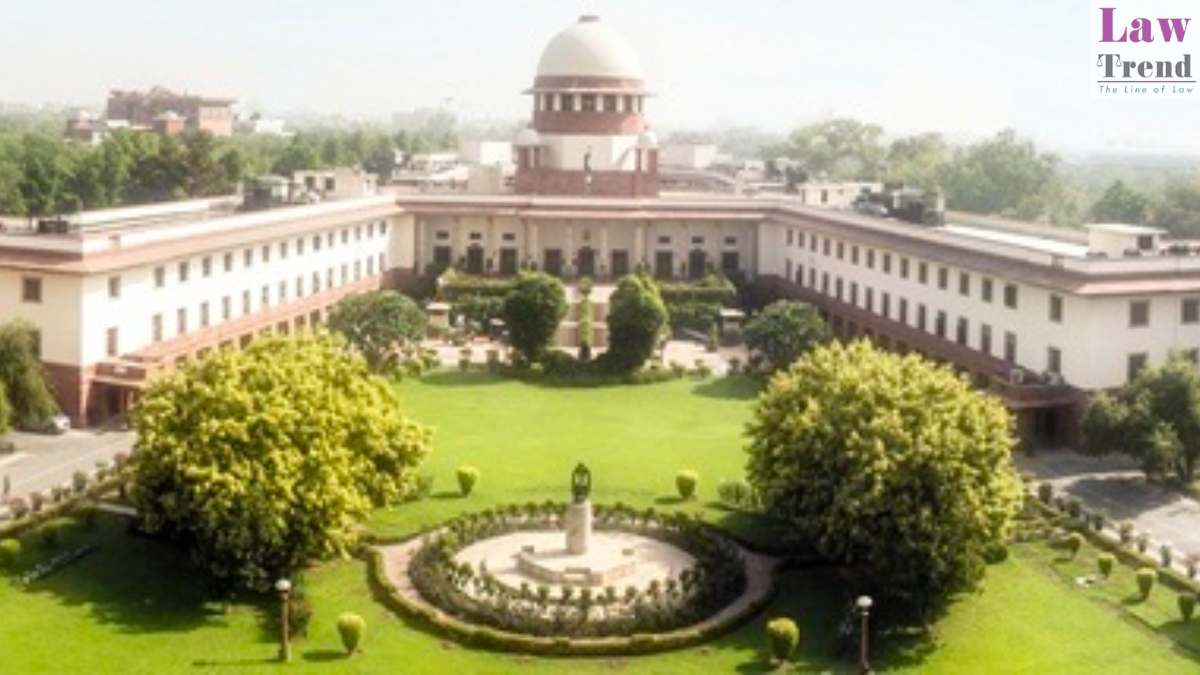
The Supreme Court has set aside an Allahabad High Court order granting bail to an accused in a gang-rape case involving a minor, observing that the High Court failed to consider the heinous nature of the offence and the statutory rigour of the Protection of Children from Sexual Offences (POCSO) Act. The Court emphasized that a plea regarding a “consensual relationship” is “wholly untenable in law” where allegations involve multiple perpetrators, coercion, and a minor victim.
Case Background
The appeal was filed by the victim, challenging the High Court’s judgment dated April 9, 2025, which granted bail to Respondent No. 2 (Arjun). The case originated from FIR No. 426/2024 registered at Police Station Kandhla, District Shamli, Uttar Pradesh.
According to the prosecution, the victim, aged about 14 years (DOB: 18.07.2010), alleged that the accused had established physical relations with her repeatedly by threatening her with a locally made firearm (katta) and recording the acts. The prosecution further alleged that on December 1, 2024, the accused and an associate abducted the victim, molested her, and abandoned her.
The police registered the FIR on December 2, 2024, under Sections 65(1), 74, 137(2), and 352 of the Bharatiya Nagarik Suraksha Sanhita (BNSS), 2023, and Sections 5(1), 6, 9(g), and 10 of the POCSO Act, 2012. A chargesheet was filed on February 19, 2025. The High Court subsequently granted bail to the accused, prompting the victim to approach the Supreme Court.
Arguments of the Parties
The counsel for the appellant (victim) argued that the High Court ignored the gravity of the offence, which involved the “gang-rape of a minor coupled with the recording of sexual assault and threats of circulation.” It was contended that the accused suppressed the fact that a chargesheet had been filed prior to the bail hearing. The counsel highlighted the victim’s statement recorded under Section 183 of the BNSS (corresponding to Section 164 CrPC), where she detailed the assault and threats.
The State of Uttar Pradesh supported the appeal, arguing that given the victim’s undisputed minority, “consent, if any, is legally irrelevant.” The State cited the Supreme Court’s decisions in State of U.P. v. Sonu Kushwaha and Ramji Lal Bairwa v. State of Rajasthan, asserting that POCSO offences cannot be treated as private disputes.
Conversely, the counsel for the accused claimed false implication due to the victim’s family disapproving of their relationship. The defence argued there was an unexplained delay in lodging the FIR and inconsistencies between the victim’s initial statement to the police and her statement before the Magistrate. It was submitted that the medical examination revealed no injuries, and the accused, being 18 years old, should not be subjected to incarceration that would harm his future.
Court’s Observations and Analysis
A Bench comprising Justice B.V. Nagarathna and Justice R. Mahadevan rejected the High Court’s reasoning. The Court observed that the case involved specific allegations of gang rape and intimidation.
Addressing the defence’s argument, the Court stated:
“The submission advanced on behalf of Respondent No. 2 regarding a consensual relationship is wholly untenable in law, particularly where the allegations extend beyond a single accused and involve coercion, intimidation and multiple perpetrators.”
The Bench noted that while the filing of a chargesheet does not automatically preclude bail, the High Court failed to account for the “nature and gravity of the offence and the material collected during investigation.” The Court remarked that the alleged conduct “has a devastating impact on the life of the victim and shakes the collective conscience of society.”
The Supreme Court criticised the High Court for placing reliance on the judgments in Satender Kumar Antil v. Central Bureau of Investigation and Manish Sisodia v. Directorate of Enforcement without factual correlation. The Bench clarified that Manish Sisodia turned on peculiar facts of prolonged incarceration and delay, whereas the accused in the present case had been in custody for only a few months.
Referencing Bhagwan Singh v. Dilip Kumar and State of Bihar v. Rajballav Prasad, the Court reiterated that in serious sexual offences, the safety of the victim and the likelihood of witness intimidation are paramount. The Court noted the victim’s proximity to the accused in the same village and reports of her psychological distress, stating:
“The post-release presence of Respondent No. 2 gives rise to a real and imminent apprehension of intimidation and further trauma to the victim.”
Decision
The Supreme Court allowed the appeal and set aside the High Court’s judgment.
“The grant of bail by the High Court is vitiated by material misdirection and non-consideration of relevant factors rendering the same manifestly perverse,” the Court held.
The Court cancelled the bail granted to Respondent No. 2 and directed him to surrender before the jurisdictional Court within two weeks. The Trial Court was directed to give priority to the case and conclude the trial expeditiously.
Case Details:
- Case Name: X v. State of Uttar Pradesh & Another
- Case No.: Criminal Appeal No. 164 of 2026
- Bench: Justice B.V. Nagarathna and Justice R. Mahadevan
- Date of Judgment: January 09, 2026