Concluded Partition Cannot Be Reopened on Mere Allegations of Fraud; Strict Proof and Prejudice to Minor’s Interest Required: Andhra Pradesh High Court
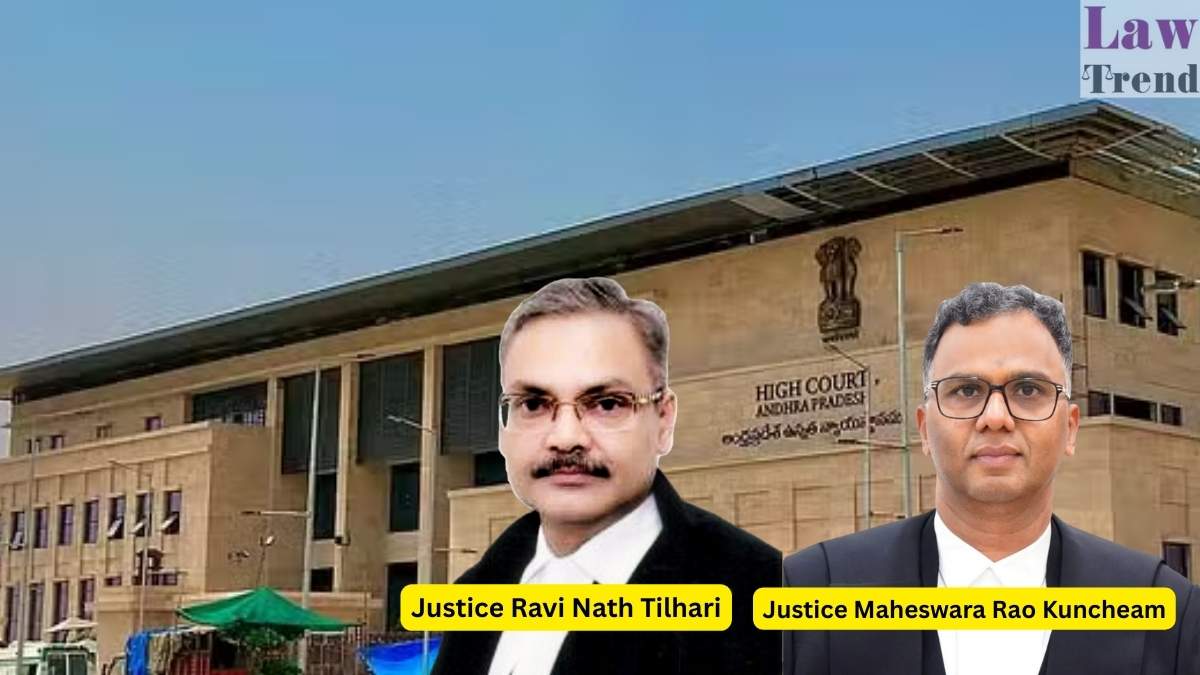

The Andhra Pradesh High Court has dismissed an appeal challenging the validity of registered partition and settlement deeds, ruling that a partition effected between members of a Hindu Undivided Family by their own free will cannot be reopened unless obtained by fraud, coercion, or misrepresentation, or if it is proven to be detrimental to the interests of minors.

The Division Bench comprising Justice Ravi Nath Tilhari and Justice Maheswara Rao Kuncheam confirmed the judgment of the Trial Court, observing that the appellants failed to provide cogent evidence to substantiate allegations that the registered documents were sham, nominal, or fraudulent.

Background of the Case

The appeal (A.S. No. 512 of 2019) was filed by the wife and children of the late Goriparthi Nageswara Rao against the judgment of the III Additional District Judge, Bhimavaram, dated June 11, 2019, which dismissed their suit (O.S. No. 12 of 2013) for partition.

The plaintiffs (appellants) are the legal heirs of the deceased G. Nageswara Rao. The defendants (respondents) are the brothers of the deceased. The dispute centered on the properties of the common ancestor, Goriparthi Venkanna. The plaintiffs sought a partition of the schedule properties into three equal shares, alleging that the registered Partition Deed and Settlement Deed dated June 27, 2008, and a subsequent Sale Deed dated April 25, 2015, were “sham, collusive, fraudulent and non-binding.” They argued that the deceased husband of the 1st plaintiff and the plaintiffs were entitled to a share in the properties.

The defendants contended that a partition had already taken place during the lifetime of G. Nageswara Rao. They submitted that under the registered Partition Deed (Ex.A.1), the 1st defendant received specific land, the 2nd defendant received other land, and the deceased, G. Nageswara Rao, was allotted joint family cash of Rs. 1,00,000/- at his own request for his business purposes. Additionally, the deceased and the 2nd defendant executed a registered Settlement Deed (Ex.A.2) in favor of the 1st defendant regarding the ‘B’ Schedule property.

Arguments of the Parties

READ ALSO  Once a Gift is Complete It Becomes Irrevocable and Cannot be Revoked Except on Grounds Under Sec 126 of TP Act: Andhra Pradesh HC

Counsel for the appellants, Sri Ch. Siva Reddy, argued that the registered deeds were nominal and not binding as the plaintiffs were not parties to them. He contended that the partition was inequitable and ignored the interests of the minor plaintiff (3rd plaintiff). Reliance was placed on several judgments to argue that the partition should be reopened.

Conversely, Sri A. Rajendra Babu and Sri S.S.R. Murthy, counsel for the 1st respondent, submitted that the deeds were executed by G. Nageswara Rao during his lifetime with his full consent. They argued that the plea of fraud was an afterthought raised by way of amendment without any foundational facts or evidence. They maintained that settled terms via registered documents could not be reopened merely on baseless allegations.

Court’s Analysis and Observations

The High Court framed the core issues around whether the plaintiffs were entitled to a partition and whether the registered deeds were fraudulent.

On Reopening of Partition

The Court referred to the ancient Manu Smruthi, noting the principle that “Once the partition of the inheritance is made… these acts of good men are done once for all and are irrevocable.” However, it acknowledged legal exceptions.

READ ALSO  Supreme Court Grants Bail to Detainee, Cites Police Negligence

Citing the Supreme Court’s decision in Ratnam Chettiar Vs. S.M. Kuppuswami Chettiar (1976), the Bench reiterated that a partition effected by volition and consent “cannot be reopened unless it is demonstrated that the same was obtained by fraud, coercion, misrepresentation, or undue influence.”

Regarding minors, the Court noted that a partition is binding on minors if done in good faith. It can be reopened only if proved to be “unjust and unfair and is detrimental to the interests of the minors.” The Court clarified that “mere inequality of shares, absent fraudulent procurement, does not justify reopening where partition resulted from voluntary agreement.”

On Allegations of Fraud

The Court emphasized that fraud must be specifically pleaded and proved as per Order VI Rule 4 of the Code of Civil Procedure (CPC). The Bench observed:

“It is well settled that in the absence of specific and material pleadings constituting fraud, any evidence sought to be adduced in support of such a plea is wholly inadmissible.”

Referring to the maxim fraus et jus nunquam cohabitant (fraud and justice never dwell together), the Court acknowledged that fraud vitiates all judicial acts. However, it held that “mere use of the word ‘fraud’ or general assertions is legally insufficient.”

Findings on Facts

The Court examined the evidence, noting that the deceased, G. Nageswara Rao, was a highly educated Government Deputy Executive Engineer who later entered the construction business. The evidence indicated he voluntarily executed the deeds in 2008, three years prior to his death in 2011, and accepted cash of Rs. 1,00,000/- for his business needs.

READ ALSO  आंध्र प्रदेश हाईकोर्ट ने स्पष्ट किया, नीलामी में यदि खरीदार बोली की राशि का 1/4 जमा नहीं करता तो क्या कार्रवाई की जा सकती है

The Court observed:

“The entire oral and documentary evidence adduced by the plaintiffs does not venture to state in respect of fraud in connection with the execution of registered documents and how it was played against the plaintiff’s husband or the plaintiffs by the defendants.”

The Court also took note of revenue records (Ex.B.3 to Ex.B.5) issued under the A.P. Rights in Lands and Pattadar Passbooks Act, 1971, which carry a statutory presumption of correctness under Section 6.

Decision

The High Court held that the plaintiffs failed to demonstrate any fraud, undue influence, or prejudice to the minor’s interest. The Court found no infirmity in the Trial Court’s findings.

“We find no infirmity and error in the detailed and well-reasoned findings arrived by the Trial Court about fraud and the finality of partition. Therefore, the impugned judgment does not warrant any interference of this Court in the present appeal,” the Bench ruled.

Accordingly, the appeal was dismissed, and the judgment and decree of the III Additional District Judge, Bhimavaram, were confirmed. No order as to costs was made.

Case Details:

  • Case Title: Goriparthi Jhansi & Ors. Vs. Goriparthi Sriram Murthy & Anr.
  • Case Number: Appeal Suit No. 512 of 2019
  • Coram: Justice Ravi Nath Tilhari and Justice Maheswara Rao Kuncheam

Law Trend
Law Trendhttps://lawtrend.in/
Legal News Website Providing Latest Judgments of Supreme Court and High Court

Related Articles

Latest Articles