Compassionate Appointment Not a Right if Co-dependent is Employed: Chhattisgarh High Court
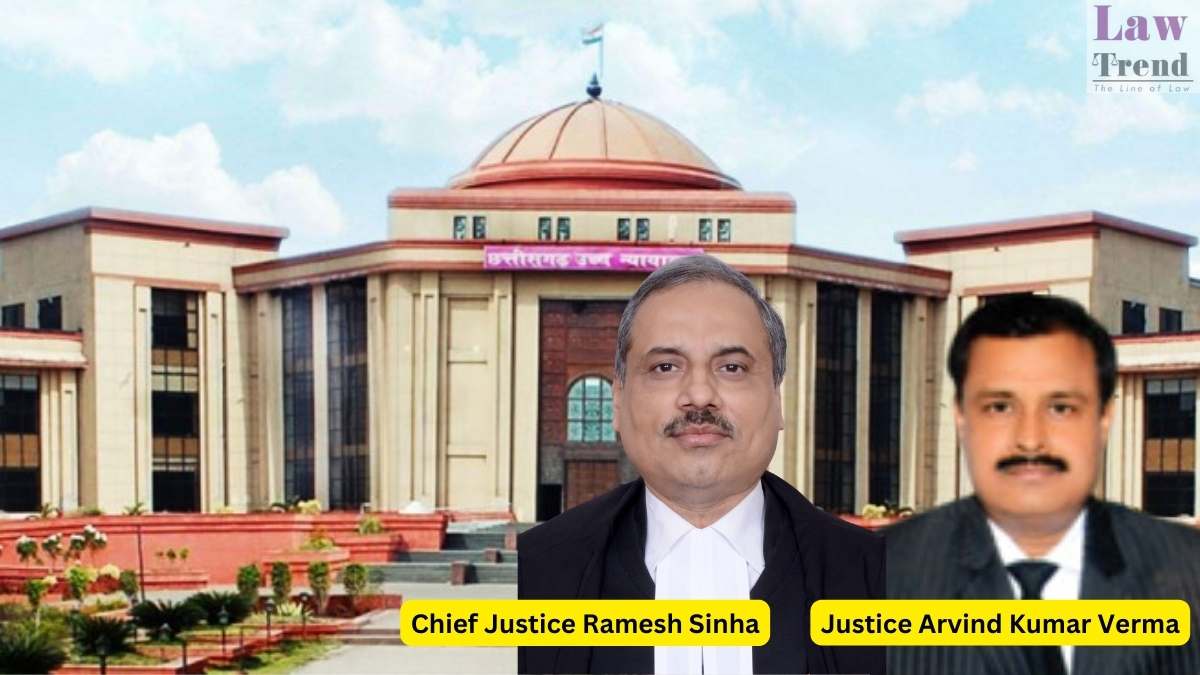
The High Court of Chhattisgarh has dismissed a writ appeal seeking compassionate appointment, ruling that the policy in force on the date of the employee’s death governs the claim. The Division Bench held that a subsequent circular cannot be applied retrospectively and that the existence of an earning member in the family disentitles a claimant from compassionate appointment under the applicable executive policy.

The Division Bench, comprising Chief Justice Ramesh Sinha and Justice Arvind Kumar Verma, dismissed the appeal filed by the son and wife of a deceased South Eastern Coalfields Limited (SECL) employee. The Court upheld the Single Judge’s decision, affirming that the appellants were ineligible for compassionate appointment because one of the dependents (the mother) was already employed as a teacher. The Court rejected the reliance on a 2024 amended circular, stating it could not be applied retrospectively to a death that occurred in 2018.

Background of the Case

The appeal challenged the order dated October 9, 2025, passed by the Single Judge in WPS No. 4746/2020. The facts, as detailed in the judgment, are that Late Lakhan Lal Chandra, who was working as a Subordinate Engineer at SECL, died due to sudden illness on December 26, 2018.

Following his death, his son, Minketan Chandra (Appellant No. 1), sought compassionate appointment. However, the claim was rejected by SECL vide communication dated August 20, 2020. The rejection was based on the ground that the deceased employee’s wife, Neelam Chandra (Appellant No. 2), was already in service as a teacher in Vidyut Gruh Higher Secondary School No. 1, Korba.

READ ALSO  Chhattisgarh HC Takes Suo Motu Cognizance of Party in Railway Boxing Ring During Holiday Sitting, Directs SECR GM to File Personal Affidavit

Arguments of the Appellants

The appellants, represented by Advocate Mr. Yogesh Kumar Chandra, argued that the learned Single Judge failed to appreciate the amended Circular/Memorandum dated June 25, 2024. They contended that Clause 1.6 (vii) of this circular expressly provides for compassionate appointment to an additional dependent even if another dependent is already in service.

The appellants further submitted:

  • The mother’s employment is temporary and not under SECL.
  • The deceased was initially appointed in the non-executive cadre and was governed by the National Coal Wage Agreement (NCWA), which does not prohibit such appointments.
  • The family is facing “acute financial hardship,” citing the Division Bench judgment in Supram Prasad v. State of Chhattisgarh and others.

Arguments of the Respondents

Representing SECL, Advocate Mr. Vaibhav Shukla opposed the appeal, arguing:

  • The Circular dated June 25, 2024, has no retrospective application. The cause of action crystallized on the date of death (2018), and the policy then in force must apply.
  • The deceased was an Executive employee at the time of death, governed by the Circular dated March 13, 1981.
  • Clause (vii) of the 1981 Circular clearly bars compassionate appointment if a dependent is already employed.
  • The nature of the mother’s employment—whether temporary or permanent—is irrelevant under the policy.

Court’s Analysis and Observations

READ ALSO  [D.V. Act] Wife Who Acquired Own Flat Not Entitled to Continue Receiving Rent as Maintenance: Delhi High Court

The Division Bench examined the records and concurred with the Single Judge’s findings.

1. Policy on Date of Death Prevails: The Court observed that the foundational principle is that compassionate appointment is an exception to the general rule of recruitment, intended to mitigate immediate financial hardship. The Bench stated:

“The policy in force on the date of death of the employee alone governs the claim, and subsequent amendments or circulars cannot be applied retrospectively unless expressly so provided.”

Consequently, the Court held that the reliance on the Circular dated June 25, 2024, was “misconceived” as it was issued much after the employee’s death.

2. Applicability of Executive Policy: The Court rejected the argument that the deceased was governed by the NCWA. The judgment noted that the deceased was treated as an executive employee for service benefits. The Court held:

“The mere fact that the deceased was initially appointed in the non-executive cadre or that he was subsequently reverted does not, by itself, invalidate the application of the executive policy, particularly when the respondents have consistently treated the case as one governed by the executive circular.”

3. Bar Due to Existing Employment: The Court relied on the Circular/Memorandum dated March 13, 1981, specifically Clause (vii), which stipulates that compassionate appointment cannot be granted where one dependent is already in employment. Regarding the mother’s employment, the Court observed:

“The policy does not draw any distinction between temporary or permanent employment, nor does it restrict the embargo only to employment under SECL. The existence of an earning member in the family disentitles the claimant from consideration under the compassionate appointment scheme.”

READ ALSO  If Any Attempt Is Made by Anyone to Stop a Widow from Entering the Temple, Action Must Be Taken Against Them: Madras HC

4. Financial Hardship and Citations: The Bench found the plea of financial hardship to be raised in a “general manner without any cogent material.” Addressing the citations provided by the appellants, including Supram Prasad v. State of Chhattisgarh and others and South Eastern Coalfields Limited and others v. Gulshan Prakash, the Court ruled them “misplaced.” The Court clarified that those decisions were rendered in the context of cases governed by the NCWA, whereas the present case was rightly considered under the executive policy.

The Court emphasized:

“Sympathy or hardship, howsoever genuine, cannot be a ground to direct compassionate appointment in contravention of the governing circular.”

Decision Finding no perversity or illegality in the Single Judge’s order, the Division Bench dismissed the appeal, stating it was “devoid of merit.”

Case Details:

  • Case Title: Minketan Chandra & Anr. v. South Eastern Coalfields Limited & Ors.
  • Case Number: WA No. 964 of 2025
  • Coram: Chief Justice Ramesh Sinha and Justice Arvind Kumar Verma
  • Counsel for Appellants: Mr. Yogesh Kumar Chandra
  • Counsel for Respondents: Mr. Vaibhav Shukla

Law Trend
Law Trendhttps://lawtrend.in/
Legal News Website Providing Latest Judgments of Supreme Court and High Court

Related Articles

Latest Articles