

Communal Rotation Applies to Vacancy Arising from Resignation Even During Rank List Validity; SC Dismisses Plea of Waitlisted Candidate

The Supreme Court has held that the rule of communal rotation under the Cochin University of Science and Technology Act, 1986 (the University Act) applies immediately to a vacancy arising from the resignation of an appointee, even if a valid rank list exists. The Court dismissed the appeal filed by a waitlisted candidate, ruling that Section 31(10) regarding the validity of the rank list and Section 31(11) regarding communal rotation must be construed harmoniously.

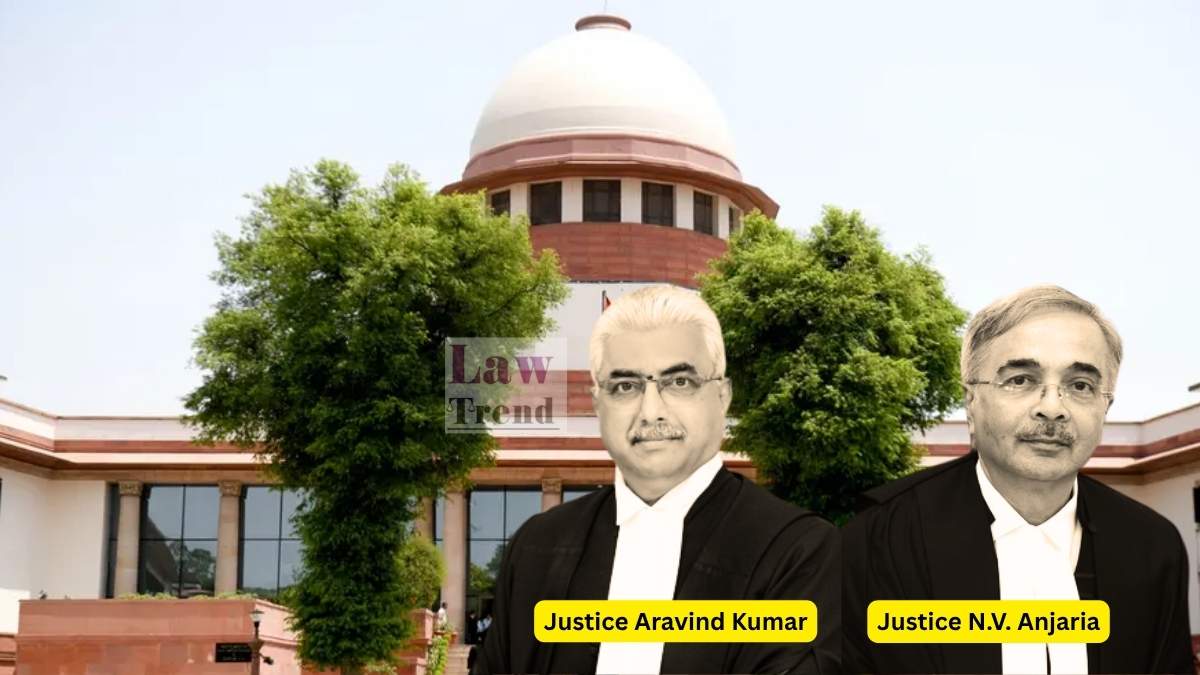
The Bench, comprising Justice N.V. Anjaria and Justice Aravind Kumar, affirmed the judgment of the Kerala High Court which had rejected the appellant’s claim for appointment to the post of Associate Professor.

Background of the Case

The appellant, Radhika T., belonging to the Scheduled Caste category, applied for the post of Associate Professor, Inorganic Chemistry, pursuant to a notification dated October 22, 2019. The post was reserved for the Scheduled Caste category. The appellant was placed at rank No. 2 in the rank list published by the University, which came into force on February 15, 2021.

The candidate at rank No. 1, Dr. Anitha C. Kumar, was appointed to the post. However, she resigned on March 30, 2022, to join Mahatma Gandhi University. Following this, the appellant requested to be appointed against the vacancy, arguing that the rank list was valid for two years under Section 31(10) of the University Act.

The University rejected her request on April 20, 2022, initially claiming the previous appointee held a lien on the post. After the High Court directed reconsideration, the University again rejected the request on September 16, 2022, stating that the vacancy arising from resignation must be filled by communal rotation under Section 31(11), which earmarked the turn for a Latin Catholic/Anglo Indian candidate.

READ ALSO  Mere Issuance Of S. 41A Notice Will Not Act As Bar Against Application For Anticipatory Bail: Andhra Pradesh HC

The appellant challenged this decision, but the Single Judge and subsequently the Division Bench of the Kerala High Court dismissed her plea.

Arguments

Contentions of the Appellant: Senior Advocate Mr. Mohan Gopal, appearing for the appellant, argued that since the appellant was ranked second, she was entitled to the appointment upon the departure of the first rank holder. He contended that Section 31(11) regarding communal rotation should not “interject the currency of Rank List.” He submitted that the rule of rotation should remain in abeyance until the expiry of the two-year validity period of the rank list to allow for a cohesive operation of both sections. Reliance was placed on the decision in Gujarat State Dy. Engineers’ Assn. v. State of Gujarat & Ors. and the Kerala High Court decision in Narayanan v. State of Kerala.

Contentions of the Respondents: Mr. Pranjal Kishore, counsel for the University, argued that a candidate in the wait list has no indefeasible right to appointment. He submitted that upon Dr. Anitha’s resignation, a fresh vacancy arose which had to be filled by applying communal rotation. Citing Surender Singh & Ors. v. State of Punjab and Rakhi Ray & Ors. v. High Court of Delhi, the respondents maintained that the wait list could not override the statutory mandate of rotation.

Court’s Analysis

1. Rejection of the “Lien” Argument The Court first addressed the University’s initial ground for rejection—that Dr. Anitha had a lien on the post. Referring to Ramlal Khurana (Dead) by Lrs. v. State of Punjab and State of Rajasthan v. S.N. Tiwari, the Bench observed that “lien is not a word of art” and stands automatically terminated when an employee is appointed substantively to another post. The Court termed the University’s earlier reliance on the lien argument as “entirely erroneous in law.”

READ ALSO  आपराधिक मामले में बरी होने से कोई पुलिस की नौकरी का हकदार नही हो जाताः सुप्रीम कोर्ट

2. Harmonious Construction of Section 31(10) and 31(11) The central issue was the interplay between Section 31(10), which mandates that the rank list remains in force for two years, and Section 31(11), which requires communal rotation.

Applying the doctrine of harmonious construction, the Court observed:

“A conjoint reading of the Section 31(10) and 31(11) of the University Act indicates that both sub-sections operate in distinct spheres, yet they are not mutually exclusive. The provision declaring that the Rank List shall remain in force for a period of two years, merely prescribes the life span of the select list, whereas the mandate to follow communal rotation governs the method and manner of appointment to vacancies arising during this period.”

The Court rejected the appellant’s interpretation that rotation should wait until the rank list expires. Justice Anjaria, writing for the Bench, noted:

“An interpretation that communal rotation could be applied only after expiry of currency of rank list would result in rendering the reservation/rotation requirement prescribed under sub-section (11) entirely otiose during the operational period of the said list… Asking sub section (11) to wait during two years period mentioned in sub section (10) would mean obliterating entirely the operation of said subsection of Section 31 for that period.”

READ ALSO  अभियुक्त द्वारा दिए गए एक स्वैच्छिक बयान के अनुसरण में, एक तथ्य का पता लगाया जाना चाहिए जो केवल अभियुक्त के ज्ञान में था: सुप्रीम कोर्ट

3. Satisfaction of Reservation Distinguishing the Narayanan case, the Court noted that in the present case, the reservation for the Scheduled Caste category was “satisfied in form and substance” when Dr. Anitha joined the post and had her probation declared. Her subsequent resignation created a fresh vacancy.

“As the vacancy arise upon Dr. Anitha’s resignation, same had to be necessarily filled up on communal rotation basis. It would be the tenet of harmonious construction,” the Court stated.

4. Operation of Wait List While acknowledging that a wait list must be acted upon for contingencies, the Court held this is subject to the rules of rotation. The Bench cited Gujarat State Dy. Executive Engineers’ Association, noting that a wait list operates for contingencies like non-joining, but once a candidate joins and later resigns, the vacancy must follow the statutory rules of rotation.

Decision

The Supreme Court concluded that the University correctly applied the communal rotation, assigning the vacancy to the Latin Catholic/Anglo Indian category. Since the appellant did not belong to that category, her claim was rejected.

“As the petitioner did not belong to the said category she has not been selected or for that matter none from the wait list belonged to the said category,” the Court held.

The appeals were dismissed, and the orders of the High Court were affirmed.

Law Trend
Law Trendhttps://lawtrend.in/
Legal News Website Providing Latest Judgments of Supreme Court and High Court

Related Articles

Latest Articles

