

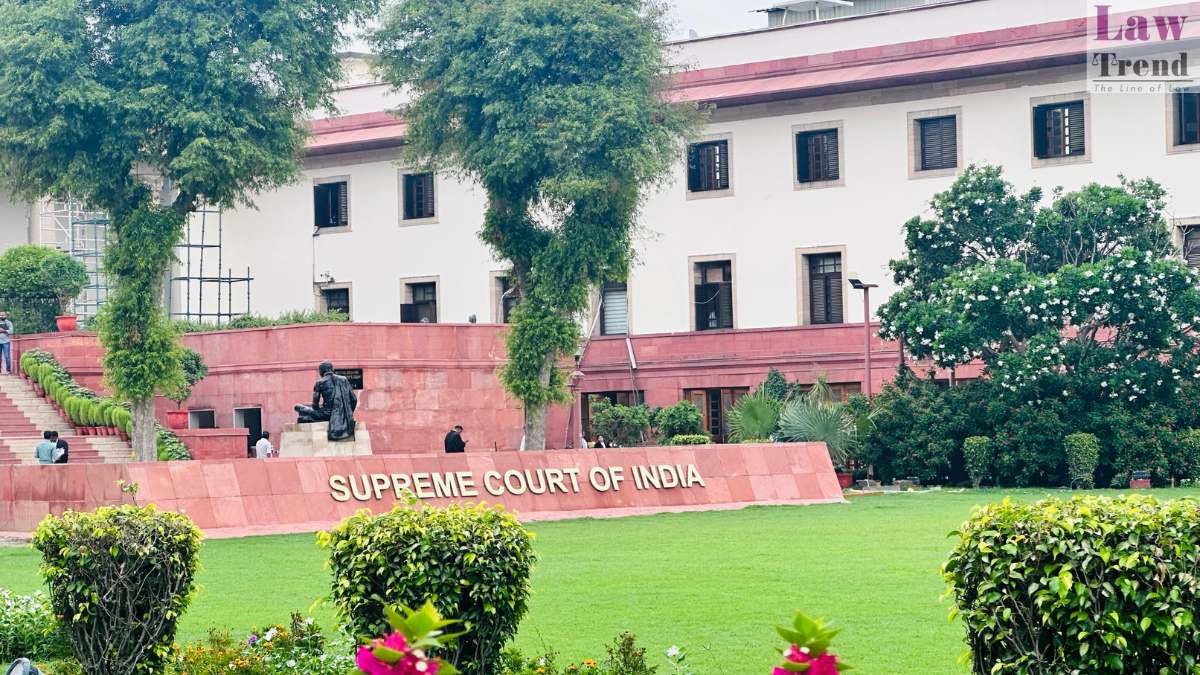
The Supreme Court of India on Monday agreed to hear the explanations of three prominent academics who were recently barred from government-funded educational projects following a controversy over “offending” content regarding judicial corruption in an NCERT textbook. The scholars contend that the drafting of the curriculum was a “collective process” and that no single individual held the sole authority over the final text.
A bench comprising Chief Justice Surya Kant and Justice Joymalya Bagchi took the applications on record and scheduled a detailed hearing for two weeks from now.
The matter originated from a suo motu case initiated by the apex court regarding a chapter in the NCERT Class 8 Social Science textbook. On February 26, the court imposed a “complete blanket ban” on the publication and dissemination of the book, observing that the contents regarding corruption in the judiciary had caused the institution to “bleed.”
Subsequently, on March 11, the court directed the Centre and all State governments to “disassociate” from Professor Michel Danino and his associates, Suparna Diwakar and Alok Prasanna Kumar. The court had previously noted it had “no reason to doubt” that the trio either lacked informed knowledge of the Indian judiciary or “deliberately and knowingly misrepresented facts” to project a negative image to students.
Appearing for the academics on Monday, senior advocates argued that the court’s earlier observations had caused “great prejudice” to their clients’ professional reputations.
Senior advocate Gopal Sankaranarayanan, representing Alok Prasanna Kumar, emphasized that the experts involved are “not some fly-by-night persons” but possess “a lot of credibility.” He noted that Kumar himself is an advocate who has practiced before the Supreme Court.
“The academicians are trying to give a context and the endeavour is to show the court the new pedagogy that has come as per the National Education Policy,” Sankaranarayanan submitted. He further argued that the curriculum did not “single out” the judiciary, as textbooks for Classes 6 and 7 also address challenges faced by the legislature, the executive, and the Election Commission.
Senior advocate J Sai Deepak, representing Suparna Diwakar, stated: “The sum and substance of the application is that this was a collective process and no individual had the sole say or authority.” Senior advocate Arvind Datar also appeared for Professor Michel Danino, confirming that an explanation had been filed on his behalf.
During the proceedings, Additional Solicitor General KM Nataraj, appearing for the Centre, informed the bench that a high-level committee has been constituted to review the revised chapter.
The committee includes:
- Justice Indu Malhotra (Former Supreme Court Judge)
- KK Venugopal (Former Attorney General)
- Prakash Singh (Vice Chancellor, Garhwal University)
This committee will work in collaboration with the National Judicial Academy at Bhopal, led by former apex court judge Justice Aniruddha Bose.
Additionally, the court noted that the NCERT issued a notification on April 2 reconstituting the National Syllabus and Teaching Learning Material Committee (NSTC). This 20-member committee, chaired by MC Pant, is now tasked with overseeing the preparation of national syllabus materials.
While the court had previously accepted an “unconditional and unqualified apology” from Professor Dinesh Prasad Saklani, Director of NCERT, it had left a window open for the three experts to approach the court for a modification of the disassociation order.
The bench will now examine their formal explanations to determine if the order barring them from public-funded academic responsibilities should be modified.




