

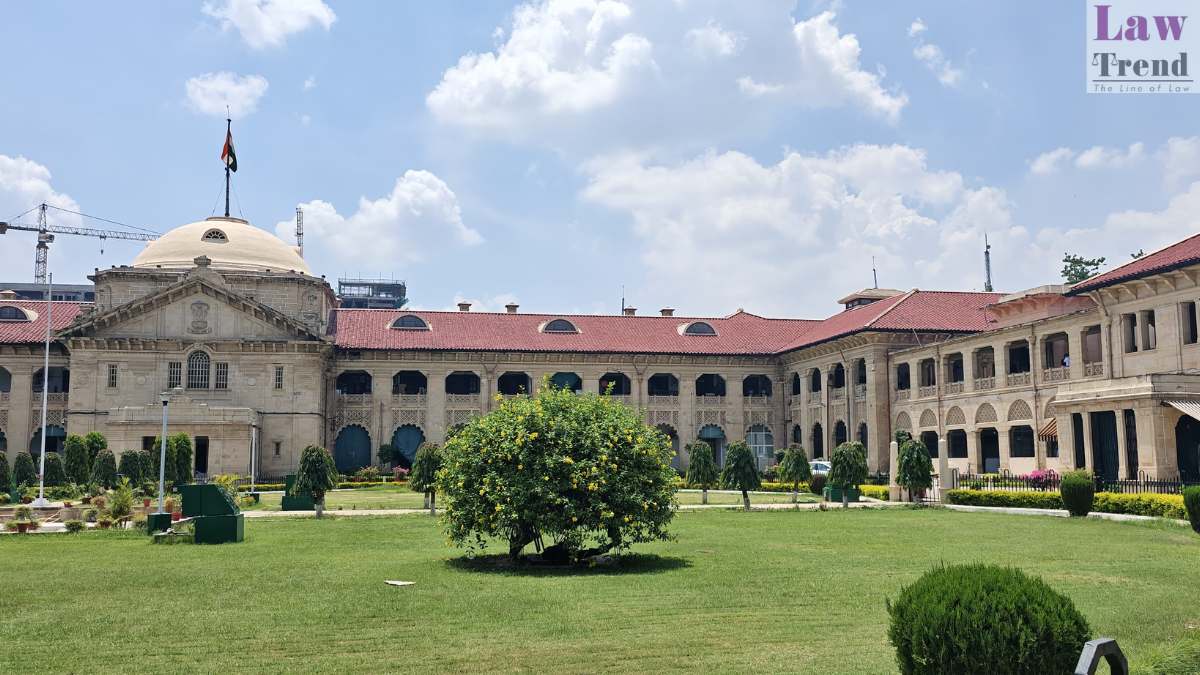
The Allahabad High Court has refused bail to two accused in an alleged codeine-based cough syrup racket, holding that possession of preparations beyond the permissible limits under the exemption notification would attract the rigours of the Narcotic Drugs and Psychotropic Substances (NDPS) Act.
Justice Ashutosh Srivastava, in an order dated February 3, rejected the bail pleas of Abdul Qadir and another accused, observing that a huge quantity of illegally diverted codeine-based cough syrup had been recovered from them and that the statutory exemption for therapeutic use was not available in such circumstances.
The accused were booked under Sections 8/21 of the NDPS Act and Sections 318(4), 338, 336(3) and 340 of the Bharatiya Nyaya Sanhita at Kotwali police station in Rampur district.
According to the prosecution, 119 boxes containing 11,885 bottles of codeine-based cough syrup were recovered from the applicants while they were allegedly loading the contraband into a car.
The applicants contended that they were licensed medicine dealers and had purchased the cough syrup through valid invoices. It was also argued that they had no criminal antecedents and that the drug inspector lacked authority to collect and seal samples.
The court noted that codeine (methylmorphine) and its salts are notified as a “manufactured drug” under Item No. 35 of the Central Government notification dated November 14, 1985.
It further observed that an exception is available only when codeine is used in therapeutic practice in doses not exceeding 100 mg per dosage unit and with a concentration of not more than 2.5% in undivided preparations.
Justice Srivastava held that the exemption provisions must be “strictly and literally complied with” and that any violation of the prescribed conditions would disentitle an accused from claiming the benefit.
“In the instant case the possession of huge quantity of illegally diverted codeine-based cough syrup has been recovered and thus the condition ‘established in therapeutic practice’ is flagrantly violated denying the applicants of the exemption,” the court said.
Taking note of the large recovery, the court found no material to suggest false implication and held that the arguments raised by the defence pertained to the merits of the case, which could not be examined at the stage of bail.
“No reason is found to falsely implicate the applicant/accused persons. Therefore, there is no good ground to release the applicant-accused persons on bail at this stage,” the court observed, adding that it was unable to form an opinion that no offence had been committed.
The bail applications were accordingly rejected.




