

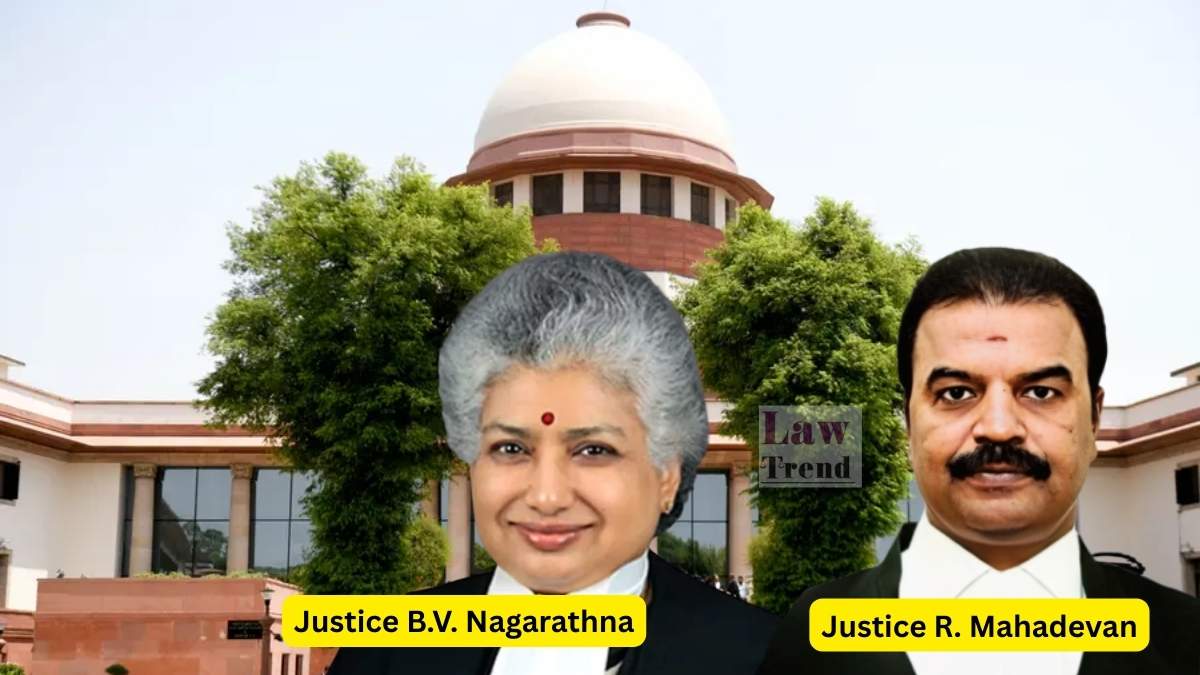
The Supreme Court has ruled that District Milk Producers’ Co-operative Unions do not fall within the definition of “State” or its instrumentalities under Article 12 of the Constitution. A Bench comprising Justice B.V. Nagarathna and Justice R. Mahadevan held that writ petitions challenging the internal electoral bye-laws of such societies are not maintainable under Article 226, particularly when a self-contained statutory dispute-resolution mechanism is provided under the Rajasthan Co-operative Societies Act, 2001.
Background
The appeal arose from a 2015 judgment of the Rajasthan High Court which had struck down Bye-laws 20.1(2), 20.1(4), 20.2(7), and 20.2(9) framed by various District Milk Producers’ Co-operative Unions. These bye-laws introduced specific eligibility criteria for representatives of Primary Milk Unions contesting elections to the Unions’ Board of Directors.
The criteria required that the primary society represented by a candidate must not have been closed for more than 90 days, must have supplied milk for at least 270 days in a year, and must meet minimum quantity requirements. The High Court had declared these provisions ultra vires, viewing them as additional “disqualifications” not authorized by the parent Act. The appellants, Chairpersons of five affected Unions, challenged this invalidation on the grounds that they were not impleaded in the original writ proceedings and that the bye-laws were valid regulatory measures.
Arguments of the Parties
Senior Advocate Kapil Sibal, appearing for the appellants, argued that the District Milk Unions are autonomous private bodies and not “State” under Article 12. He contended that the High Court erred in entertaining the writ petitions as the dispute involved no “public law element” and the Act of 2001 provided an efficacious alternative remedy through the Registrar. On merits, he emphasized the distinction between the “right to vote” and the “right to contest,” arguing that the latter is a statutory right that can be subject to reasonable eligibility conditions aimed at ensuring active participation.
The State of Rajasthan supported the appellants, asserting that the bye-laws were framed under the authority of Section 8 read with Schedule B of the Act. They argued that requiring a minimum level of service utilization (milk supply) is essential to ensure that the management of the Unions is entrusted to active and genuine participants in the dairy co-operative structure.
Court’s Analysis
The Supreme Court first addressed the maintainability of the writ petitions, finding that the High Court had bypassed foundational jurisdictional questions.
1. Amenability to Writ Jurisdiction The Court held that the Unions are not instrumentalities of the State. Referring to the tests in Ajay Hasia and Thalappalam Service Co-operative Bank Ltd. v. State of Kerala, the Bench observed:
“The supervisory or general regulation under the statute over the cooperative societies, which are body corporate does not render activities of the body so regulated as subject to such control of the State so as to bring it within the meaning of the ‘State’ or instrumentality of the State.”
The Court further noted that disputes pertaining to internal governance and electoral processes do not attract writ jurisdiction unless there is a breach of a statutory duty of a public character.
2. Right to Vote vs. Right to Contest The Bench identified a “manifest error” in the High Court’s conflation of voting rights with the right to contest. Citing Jyoti Basu v. Debi Ghosal, the Court clarified that neither is a fundamental right.
“The High Court, by equating regulation of eligibility to contest elections with a restriction on the right to vote, conflated two distinct statutory rights and consequently applied an erroneous standard of scrutiny.”
3. Eligibility vs. Disqualification The Court distinguished between ‘disqualifications’ (statutory disabilities under Section 28) and ‘eligibility’ (threshold participation conditions). It held that conditions regarding milk supply and operational continuity are positive, performance-related thresholds that ensure accountable governance.
“The absence of eligibility does not attract any penal or stigmatic consequence; it merely postpones the right to contest until the prescribed conditions are fulfilled.”
4. Source of Power The Court traced the authority for the bye-laws to Section 8 read with Schedule B (Clauses da and v) of the Act of 2001, which empowers societies to set norms for the “minimum essential utilisation of services.” The Court held that these bye-laws supplement, rather than supplant, the statutory framework.
Decision
The Supreme Court set aside the High Court’s judgments, finding them unsustainable in law. The Bench also noted a procedural infirmity in the High Court’s decision to strike down bye-laws in rem without impleading all affected District Milk Unions.
“The said bye-laws neither curtail any fundamental or statutory right nor do they introduce any disqualification dehors the statute.”
The appeal was allowed, and the validity of the participation-linked eligibility criteria was upheld.
Case Details:
- Case Title: Ram Chandra Choudhary & Ors v. Roop Nagar Dugdh Utpadak Sahakari Samiti Limited and Others
- Case No.: Civil Appeal No. 4352 of 2026
- Bench: Justice B.V. Nagarathna and Justice R. Mahadevan
- Date: April 10, 2026




