

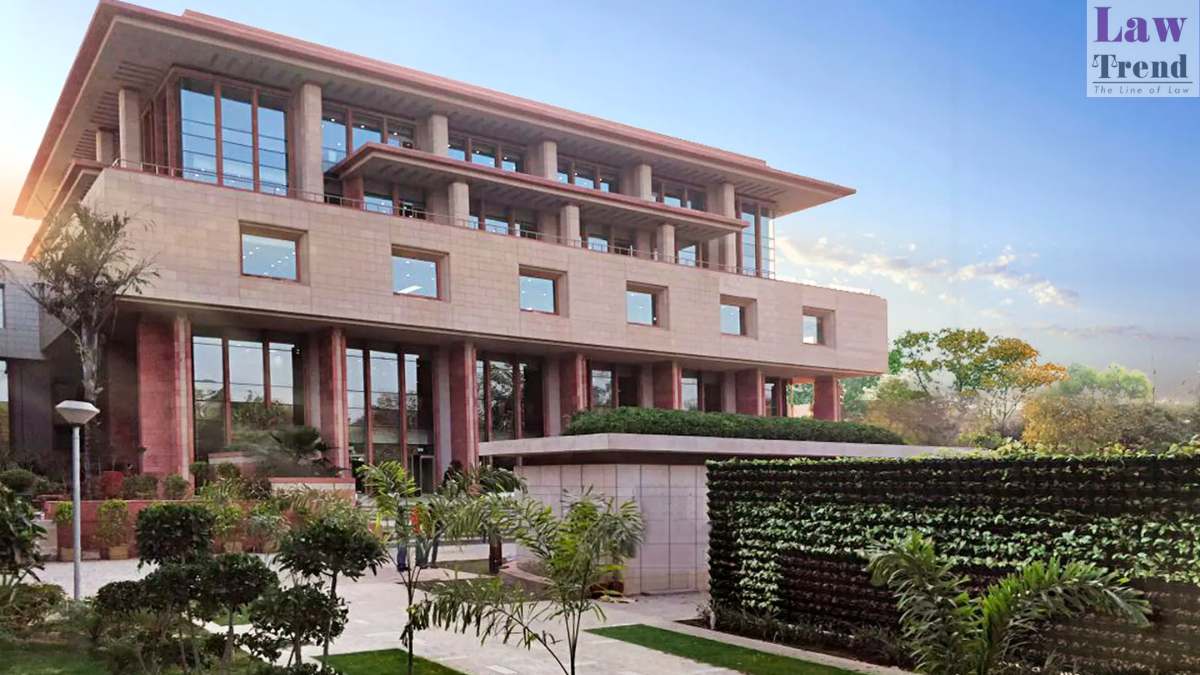
The Delhi Waqf Board has told the Delhi High Court that the proposed redevelopment of the Central Vista complex should not automatically lead to the demolition of the century-old Qadeemi Masjid located within the Krishi Bhawan premises. The Board has urged the authorities to examine whether the mosque can be retained without affecting the essential requirements of the redevelopment project.
In its reply filed before Justice Anish Dayal, the Board acknowledged the public importance of the Central Vista Redevelopment Project but maintained that feasible alternatives must be considered to protect the mosque and its continued religious use.
The Qadeemi Masjid, also known as Masjid Krishi Bhawan, is a notified waqf property more than 100 years old. It faces possible demolition to facilitate the construction of Common Central Secretariat Buildings 4 and 5.
Waqf Board Seeks Examination of Alternatives
The Board submitted that preserving the existing mosque should be the primary consideration while examining the redevelopment plans. It said any decision must balance the requirements of the public project with the religious needs of worshippers.
According to the Board, the feasibility of retaining the mosque within the revised layout should be assessed through approved plans and relevant technical material.
It also argued that treating the mosque’s removal as necessary at this stage would be premature, particularly when questions concerning its historical records, notified waqf status and applicable legal protections remain unresolved.
The Board maintained that the construction of new government buildings cannot, by itself, justify disregarding the mosque’s recognised religious character.
High Court Asks Centre to Explore Possible Solution
During Monday’s hearing, Justice Anish Dayal asked Additional Solicitor General Chetan Sharma, representing the Centre, to examine whether a practical arrangement could be worked out.
The Court noted that the mosque has existed for several years and is primarily used by central government employees. It raised the broader issue of providing facilities for prayers to employees belonging to different religions.
The ASG submitted that government-controlled office complexes presently do not provide facilities for offering prayers. He suggested that the Delhi Waqf Board could make a representation to the Centre on behalf of the employees.
Senior advocate Salman Khurshid, appearing for the mosque’s caretaking committee, requested that access to the mosque should not be obstructed while the proceedings remain pending.
The Court granted the committee time to respond to the Waqf Board’s submissions and listed the matter for further hearing in January.
It also directed the Delhi Waqf Board and the Land and Development Office (L&DO) to respond within four weeks to representations submitted by another petitioner seeking preservation of the mosque.
Advocate Tushar Sannu represented the Delhi Waqf Board.
Centre Maintains Mosque Must Be Removed
The Central Government has previously defended the proposed removal of the mosque, arguing that a permanent religious structure within a government office complex is incompatible with the secular character of government property.
According to the Centre, the Central Vista Redevelopment Master Plan involves reconstructing government buildings on plots currently occupied by Shastri Bhawan and Krishi Bhawan to modernise infrastructure required for central administration.
It has maintained that removal of Qadeemi Masjid is necessary for implementing the project.
The dispute reached the High Court through a petition filed by the mosque’s caretaking committee, seeking protection against demolition, dismantling or removal without a fair, transparent and reasoned examination of the possibility of retaining the structure.
Another petitioner, Mohd Yasir, has also sought protection against the mosque’s proposed demolition. He has argued that the constitutional principle of secularism does not independently authorise the executive to demolish religious institutions.
Advocate M Sufian Siddiqui has relied on a 1945 agreement between the authorities of that period and the predecessor of the Delhi Waqf Board concerning the mosque’s use, contending that legal protections make its demolition arbitrary and impermissible.
The High Court will further examine the dispute in January, with the competing claims concerning the mosque’s preservation and the redevelopment project remaining unresolved.


