

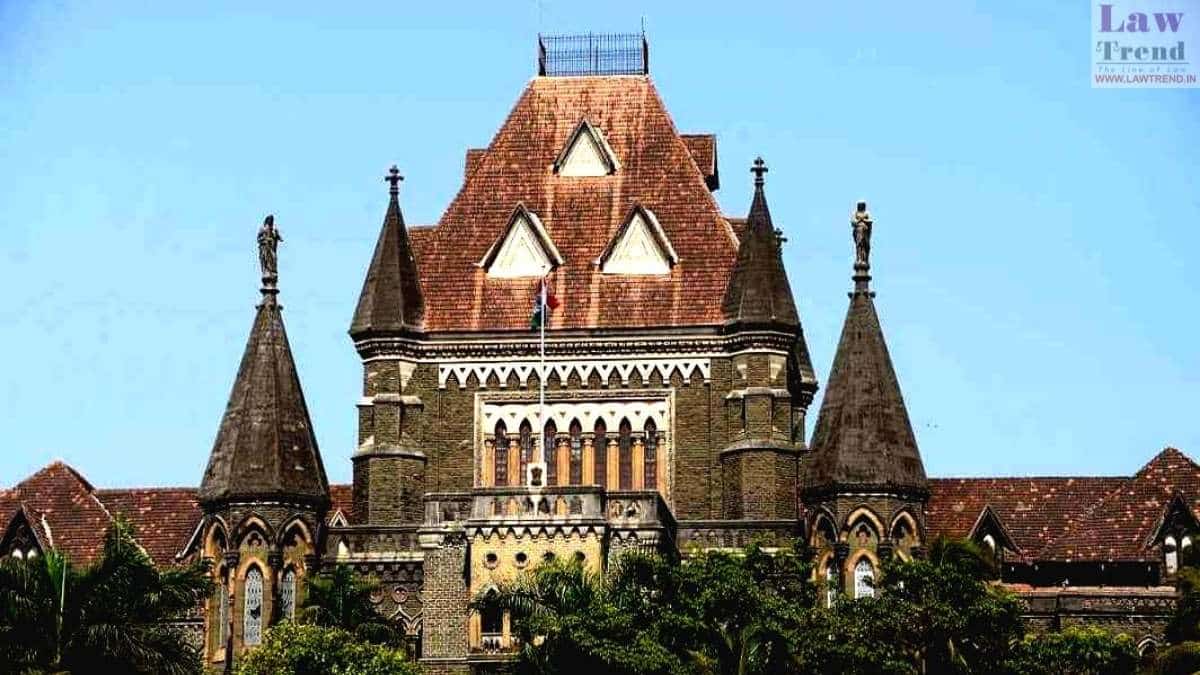
The Bombay High Court has quashed orders issued by the former Pune Municipal Commissioner that had previously blocked an Anti-Corruption Bureau (ACB) inquiry into allegations of disproportionate assets worth approximately ₹2,000 crore against a retired civic official. The ruling effectively paves the way for a full-scale “open inquiry” into the wealth of former Chief City Engineer Prashant Waghmare.
The matter centers on Prashant Waghmare, who served as the Chief City Engineer for the Pune Municipal Corporation (PMC) for over 22 years before his retirement earlier this year. In 2016, a complaint was filed by Pune-based activist Tanaji Gambhire, alleging that Waghmare had amassed assets worth nearly ₹2,000 crore—wealth significantly disproportionate to his known sources of income.
The complaint further alleged that these assets were routed through various family members and multiple associated companies. Following the complaint, the ACB conducted a discreet inquiry. During this preliminary phase, the investigating officer noted that Waghmare was non-cooperative and failed to provide essential details regarding his investments, foreign travel, financial transactions, and his son’s education expenses. Consequently, the ACB recommended an “open inquiry” to thoroughly investigate the matter.
Despite the ACB’s recommendation, then-PMC Commissioner Saurabh Rao issued two orders on April 16 and April 25, 2019, refusing to grant the necessary prior approval under Section 17A of the Prevention of Corruption Act. The Commissioner had instead relied on documents and explanations provided by Waghmare himself to conclude that no case of disproportionate assets was made out, leading to the closure of the ACB’s confidential probe.
A division bench of Justices A S Gadkari and Ranjitsinha Raja Bhonsale on Thursday set aside the Commissioner’s orders, labeling the approach as “legally untenable.” The Court held that the competent authority had exceeded its jurisdiction by conducting a “parallel assessment” of the allegations instead of merely checking for a prima facie case.
The bench emphasized that Section 17A, which requires prior approval for inquiries into acts committed by public servants in the discharge of official duties, does not apply to disproportionate assets cases. The judges noted:
“A public servant’s integrity must be beyond suspicion. Where the authorised enquiry officer has material casting doubt on such integrity, an enquiry must follow in the interest of the individual, the institution and society.”
The Court further criticized the then-Commissioner’s actions, stating that the authority cannot block the investigative process by exceeding its limited powers. “It appears that the then municipal commissioner, in an overzealous attempt to protect its officer, has taken upon himself the role of the enquiry officer,” the bench remarked.
Highlighting the gravity of corruption, the Court stated that it “corrodes the moral fabric of society” and is “harmful to the national economy and national interest.” The judges asserted that tracking down and punishing corrupt public servants, regardless of their rank, is a “necessary mandate” under the law.
The High Court quashed the 2019 orders, ruling that the Commissioner’s refusal amounted to a “misuse of power and abuse of the legal process.” With these orders set aside, the ACB is now legally cleared to proceed with the open inquiry into Waghmare’s alleged ₹2,000 crore asset portfolio.




