

Belated Reporting and Lack of Corroboration Justify Acquittal in POCSO Case: Bombay High Court Rejects State’s Appeal
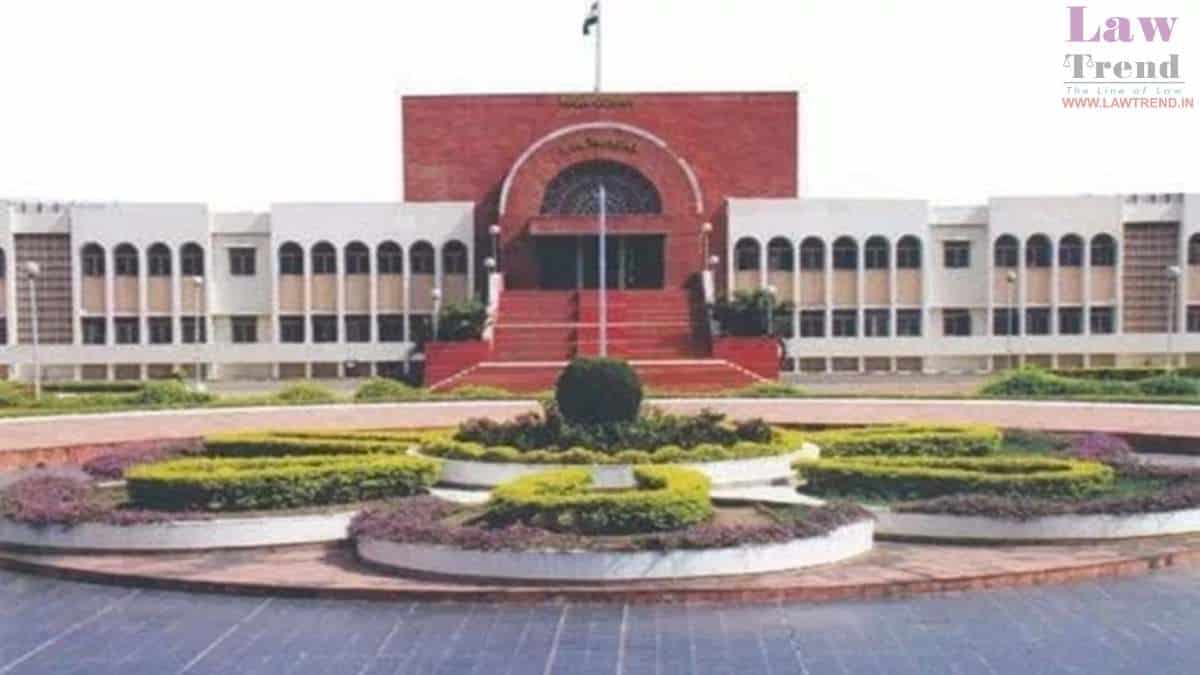

The Bombay High Court, Aurangabad Bench, has rejected an application filed by the State of Maharashtra seeking leave to appeal against the acquittal of an accused charged under the Protection of Children from Sexual Offences (POCSO) Act. Justice Abhay S. Waghwase upheld the trial court’s judgment, citing material improvements in the prosecution’s evidence and a probable defence of false implication arising from a monetary dispute.

Case Background

The case arose from a report lodged by the informant (PW2) at Shivoor Police Station, District Aurangabad. The informant alleged that her 7-year-old daughter, who was studying in the 1st standard, was sexually harassed by the respondent, Balan Raghvan. The respondent is the husband of the victim’s tuition teacher.

According to the prosecution, the victim disclosed to her mother on March 3, 2013, that the accused used to “unbutton his pant, display his private part while sleeping on the cot” at the tuition center. The complaint further alleged that when the tutor was not attentive, the accused made the victim touch his private part and also touched her inappropriately while she was alighting from the school van.

Based on these allegations, a crime was registered, and the accused was tried in Special Case No. 15 of 2016 for offences punishable under Section 354-A of the Indian Penal Code (IPC) and Sections 8 and 12 of the POCSO Act. On July 3, 2018, the learned Additional Sessions Judge, Vaijapur, acquitted the accused. The State subsequently filed an application under Section 378(1)(b) of the Code of Criminal Procedure seeking leave to appeal this acquittal.

READ ALSO  Borrowing Department Can Repatriate Deputationist Before Fixed Term: Allahabad High Court

Arguments of the Parties

Learned APP Mr. S.G. Sangle, appearing for the State, argued that the trial court had incorrectly appreciated the evidence of the victim (PW5) and her mother (PW2). He contended that “minor omissions are given undue importance” and asserted that the defence theory of false implication was weak given the serious nature of the crime.

Conversely, Advocate Mr. Amol S. Gandhi, representing the respondent, supported the acquittal. He highlighted a significant procedural lapse, pointing out that the victim’s statement was never recorded by the police under Section 161 or Section 164 of the CrPC; instead, she was directly examined in court. He argued that the evidence of the mother and victim contained material omissions and improvements. Furthermore, the defence contended that the case was a result of a quarrel over damages sought from the victim’s parents after the victim broke the front glass of the school bus.

Court’s Observations and Analysis

READ ALSO  Bombay High Court Upholds ECI's Ban on Mobile Phones at Polling Booths

Justice Waghwase examined the evidence of the five prosecution witnesses and two defence witnesses. The Court noted significant inconsistencies in the testimony of the informant (mother). Regarding the specific allegations of the accused displaying his private part, the Court observed that the mother admitted in cross-examination that she could not explain why such text did not appear in her original complaint, terming it a “material omission.”

Regarding the victim’s testimony, the Court acknowledged the defence’s objection about the non-recording of her statement during the investigation. While noting that this failure is not “automatically fatal,” the Court scrutinized her deposition. The victim testified that the accused made her touch his private part when the tutor was not paying attention. However, the Court observed:

“However, here, there is no corroboration to her such testimony even when she has admitted that there were other 10-15 students in the class. She has also not stated when such instances took place and she stated that it happened somewhere between Diwali 2012 to March 2013 period.”

The Court found the defence version—that the complaint was motivated by a dispute over payment for a broken school van glass—to be credible. The defence examined the Tutor (DW1) and the school van driver, Digambar Jadhav (DW2). DW2 testified that “victim had broken front glass of school bus… and as such there was dispute.”

READ ALSO  Consider the Woman Found to be Man in Medical Test For Appointment in Police Department- Directs Bombay HC

Justice Waghwase noted:

“This such defence has been probabilized by examining witness DW2 Digambar Jadhav.”

Decision

The High Court concluded that the prosecution failed to prove the guilt beyond reasonable doubt due to belated reporting, material improvements in the informant’s testimony, and the uncorroborated nature of the victim’s evidence. The Court held that the trial court had rightly extended the benefit of doubt to the accused.

“There is no illegality or error in adopting above view with such quality of evidence wherein case has not been proved beyond reasonable doubt and defence succeeding in probabilizing defence.”

Consequently, the application for leave to appeal was rejected.

Case Details:

  • Case Title: The State of Maharashtra vs. Balan Raghvan
  • Case No.: Application for Leave to Appeal by State No. 220 of 2018
  • Coram: Justice Abhay S. Waghwase
  • Counsel for Applicant (State): Mr. S.G. Sangle, APP
  • Counsel for Respondent: Mr. Amol S. Gandhi

Law Trend
Law Trendhttps://lawtrend.in/
Legal News Website Providing Latest Judgments of Supreme Court and High Court

Related Articles

Latest Articles

