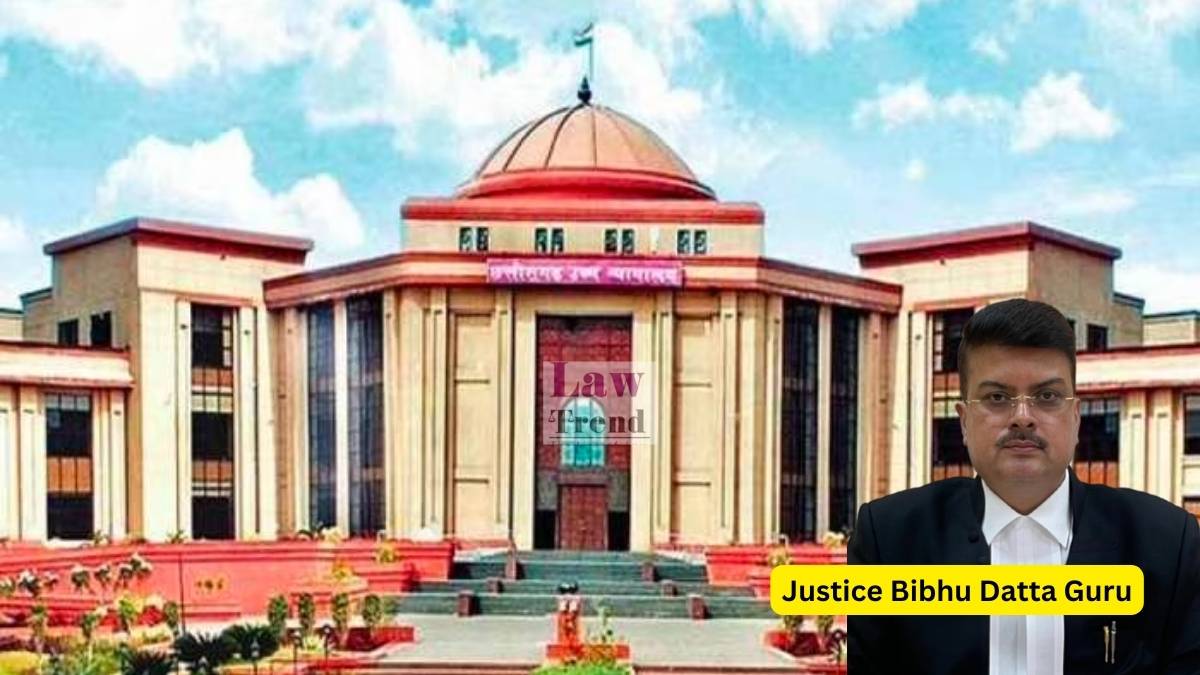
The High Court of Chhattisgarh has ruled that when a property is sold in an e-auction on an ‘as is where is’ basis, the liability to pay outstanding electricity dues of the previous owner stands transferred to the auction purchaser.
The Single Bench of Justice Bibhu Datta Guru dismissed a writ petition filed by an auction purchaser seeking a refund of electricity dues paid to the Chhattisgarh State Power Distribution Company Limited (CSPDCL). The Court held that a prudent purchaser is expected to make reasonable inquiries regarding encumbrances, including electricity disconnection, before participating in an auction.
Background of the Case
The case involved M/s Polybond Rock Fibre Pvt. Ltd., which purchased a property previously owned by Arihant Rock Wool Fibre Pvt. Ltd. The original owner, Arihant, had defaulted on a loan from the Bank of India, leading to proceedings under the Securitisation and Reconstruction of Financial Assets and Enforcement of Security Interest Act, 2002 (SARFAESI Act). The bank took possession of the property and auctioned it on April 19, 2012.
The petitioner, having been declared the successful bidder, paid the sale consideration of Rs. 2,62,18,000/- and received the sale certificate. The petitioner claimed that the sale certificate stated the property was “free from all encumbrances known to the secured creditor.”
However, when the petitioner applied for an electricity connection, the CSPDCL informed them of outstanding dues amounting to Rs. 17,67,873/- pending against the previous owner since 2008. To secure the connection, the petitioner paid the amount under protest but subsequently filed the writ petition seeking a refund, arguing they were not liable for the previous owner’s debts.
Arguments Raised
The Counsel for the petitioner argued that the recovery of dues from the auction purchaser was “illegal, arbitrary and not at all sustainable in the eyes of law.” They contended that the debt was time-barred and that the respondents’ action violated the petitioner’s fundamental rights under Articles 14, 19, 21, and 300A of the Constitution of India. The petitioner relied on the Supreme Court judgment in Ahmedabad Electricity Co. Ltd. vs. Gujarat Inns Pvt. Ltd. to argue that previous dues could not be recovered from an auction purchaser.
Conversely, the Counsel for the CSPDCL submitted that the petitioner had voluntarily undertaken to pay the dues in installments and could not now demand a refund. They emphasized that the Electricity Supply Code allows for the recoupment of dues from a new owner.
The Counsel for the Bank of India argued that the auction notice specifically mentioned the sale was on an “as is where is basis.” They submitted that it was the duty of the bidder to inquire about details regarding unknown dues, such as excise duty, property tax, and other liabilities, before participating in the auction.
Court’s Analysis and Observations
Justice Guru observed that the auction notice clearly stated the sale was on an “as is where is basis” (जहाँ है, जैसी है, जो है).
The Court relied extensively on the recent Supreme Court decision in K.C. Ninan vs. Kerala State Electricity Board & Ors. (2023) 14 SCC 431, which settled the law on this issue. Referring to the precedent, the High Court noted:
“A sale on ‘as-is-where-is basis’ postulates that the purchaser would be acquiring the asset with all its existing rights, obligations and liabilities. When a property is sold on an ‘as-is-where-is’ basis, encumbrances on the property stand transferred to the purchaser upon the sale.”
The Court further held that a condition of supply under Section 49 of the Electricity (Supply) Act, 1948, requiring a new owner to clear previous arrears, has a “statutory character.”
Addressing the petitioner’s claim of ignorance regarding the dues, the Court observed:
“In fact, information about the disconnection of power is easily discoverable with due diligence which puts a prudent auction purchaser on a reasonable enquiry about the reasons for the disconnection. When electricity supply to a premises has been disconnected, it would be implausible for the purchaser to assert that they were oblivious of the existence of outstanding electricity dues.”
Decision
The High Court concluded that in cases of e-auction where the sale is on an “as is where is basis,” the liability to pay electricity dues exists on the auction purchaser. The Court dismissed the writ petition, stating the petitioner was not entitled to any relief.
Case Details:
Case Title: Polybond Rock Fibre Pvt. Ltd. & Anr. vs. Chhattisgarh State Power Distribution Company Limited & Ors.
Case No: WPC No. 2752 of 2016
Bench: Justice Bibhu Datta Guru
Counsel for Petitioner: Mr. Raza Ali, Advocate alongwith Mr. Karunendra Narayan Singh, Advocate
Counsel for Respondents: Ms. Meena Shastri (for CSERC), Mr. U.K.S. Chandel (Dy. Advocate General for State), Mr. Anand Shukla (for Bank of India)