

AP High Court Quashes Land Acquisition Award and Section 6 Declaration for Bhimavaram Compost Yard
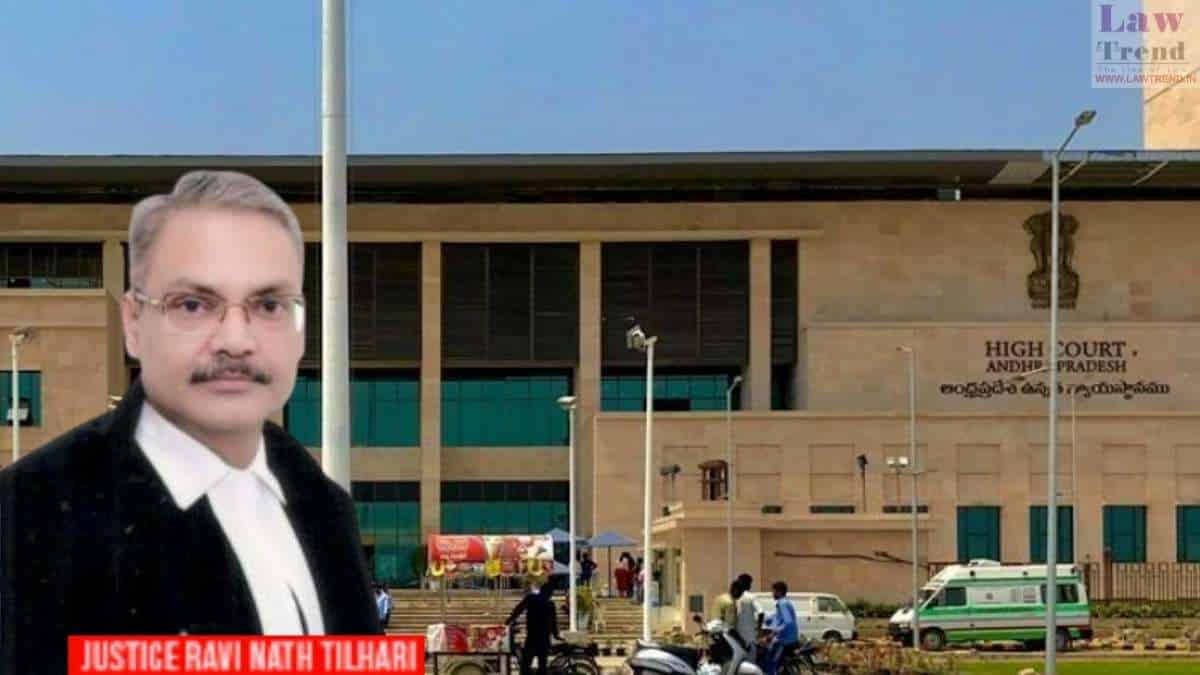

The High Court of Andhra Pradesh has quashed the declaration under Section 6 of the Land Acquisition Act, 1894, and the subsequent Award dated April 27, 2007, regarding the acquisition of land for a Municipal Solid Waste Compost Yard in Bhimavaram.

Justice Ravi Nath Tilhari ruled that since the Supreme Court had previously directed that an inquiry under Section 5A of the Act must be conducted, the earlier proceedings which had dispensed with such an inquiry by invoking the urgency clause could not be sustained. The Court held that the declaration under Section 6 and the Award passed pursuant to the dispensation of the inquiry were of “no legal effect and would fall to the ground.”

Background of the Case

The dispute centers on the acquisition of land admeasuring Ac. 14.56 cents in Sy.No.318, Yenamuduru Village, Bhimavaram Mandal, West Godavari District. The Bhimavaram Municipality initiated the acquisition to establish a compost yard under the Municipal Solid Waste (Management & Handling) Rules, 2000.

A notification under Section 4(1) of the Land Acquisition Act was issued on February 20, 2007, invoking the urgency clause under Section 17(4) to dispense with the inquiry under Section 5A. Consequently, a declaration under Section 6 was issued, and an Award (No. 2/2007-08) was passed on April 27, 2007.

The landowners, S. Pichappan (since deceased) and others, challenged the invocation of the urgency clause. In earlier litigation (W.P. No. 5905 of 2007), the High Court declared the dispensation of the Section 5A inquiry irrational. The matter eventually reached the Supreme Court in Civil Appeal No. 3634 of 2012, which, on April 17, 2012, directed the authorities to proceed with the inquiry under Section 5A pursuant to a notice dated August 28, 2009.

Following the Supreme Court’s direction, the District Collector conducted an inquiry and issued proceedings dated July 4, 2012, recommending the rejection of the petitioners’ objections. The petitioners then filed two writ petitions:

  1. W.P. No. 19806 of 2009: Challenging the original Section 4(1) notification, the Section 6 declaration, the Award, and the Section 5A notice.
  2. W.P. No. 24126 of 2012: Challenging the District Collector’s proceedings dated July 4, 2012.
READ ALSO  Horizontal Reservation Cannot Override Merit: AP High Court Slams APPSC for Flawed Selection Process

Arguments of the Parties

The counsel for the petitioners, Sri Varun Byreddy, argued that the Yenamuduru village lies outside the municipal limits of Bhimavaram Municipality. Relying on Rule 4 of the Municipal Solid Waste (Management and Handling) Rules, 2000, which states that every municipal authority shall be responsible for implementation “within the territorial area of the municipality,” the petitioners contended that land outside the municipal area could not be acquired for the municipality’s purposes.

The petitioners further alleged violations of Schedule III of the Rules, stating that the landfill site was impermissibly close to habitation clusters, water bodies, and cattle sheds. They also argued that the statutory period for making a declaration under Section 6 had expired, citing the Supreme Court judgments in Padma Sundara Rao v. State of T.N. and Vijay Narayan Thatte v. State of Maharashtra.

On behalf of the respondents, the Government Pleader and Standing Counsel argued that the objections were duly considered and rejected for valid reasons. They submitted that the land was 1.1 km away from habitation and caused no pollution to water bodies. They emphasized the “imperative need” for the compost yard in the public interest and asserted that Rule 4 does not prohibit acquiring land outside municipal limits for waste disposal.

Court’s Analysis

On Rule 4 of MSW Rules, 2000 Justice Tilhari rejected the petitioners’ contention that land outside the municipality could not be acquired. The Court observed:

“Rule 4 therefore provides for the responsibility of the Municipal authority inter-alia for collection, storage, segregation, transportation, processing and disposal of municipal solid wastes within the territorial area of the municipality. That, does not mean that, the municipal solid waste of the area of the municipality, has to be disposed of within the area of the municipality… Acceptance of such an argument would be limiting or restricting the State Government’s power under the Land Acquisition Act.”

On the Validity of Section 6 Declaration and Award The Court held that the challenge to the Section 4(1) notification and the Section 5A notice failed because the Supreme Court had already directed the inquiry to proceed based on them. However, regarding the Section 6 declaration and the Award passed in 2007, the Court ruled they must be set aside.

The Court reasoned that once the dispensation of the Section 5A inquiry was held invalid and a fresh inquiry was ordered, the subsequent steps taken based on that dispensation could not survive.

READ ALSO  आंध्र प्रदेश हाईकोर्ट ने माओवादी नेताओं के शवों की मांग वाली याचिकाएं निस्तारित कीं; परिजनों को छत्तीसगढ़ पुलिस से संपर्क करने की दी छूट

“This Court is of the view that once the enquiry under Section 5A was directed to be held, the consequence flowing from such direction would be that the previous action taken pursuant to the notification under Section 4(1) which invoked the urgency clause and dispensed with the enquiry, i.e., issuance of Section 6 notification and passing of the award dated 27.04.2007, would be of no legal affect and would fall to the ground.”

On Limitation Addressing the issue of limitation for a fresh Section 6 declaration, the Court cited the Constitution Bench judgment in Padma Sundara Rao (2002). The Court reiterated that a declaration under Section 6 must be made within one year of the Section 4(1) notification, excluding any period of stay granted by a court.

“The stipulation regarding the urgency in terms of Section 5A of the Act has no role to play when the period of limitation under Section 6 is reckoned.”

The Court clarified that if the Government decides in favor of acquisition after considering the Section 5A report, a fresh declaration under Section 6 can only be issued if it falls within the statutory limitation period (excluding stay periods).

READ ALSO  दावा याचिका में चालक को पक्षकार ना बनाना कार्यवाही को अमान्य नहीं करती: आंध्र प्रदेश हाईकोर्ट ने मोटर दुर्घटना दावा कानून को स्पष्ट किया

Decision

The High Court passed the following orders:

  1. W.P. No. 24126 of 2012: Disposed of with a direction to the State Government to take an appropriate decision under Section 5A of the Land Acquisition Act, considering the Collector’s recommendations and the record, within three months.
  2. W.P. No. 19806 of 2009:
    • Partly Allowed: The notification under Section 6 and the Award No. 2 of 2007-2008 dated April 27, 2007, were set aside.
    • Partly Dismissed: The challenge to the Section 4(1) notification dated February 20, 2007, and the Section 5A notice dated August 28, 2009, was rejected.

The Court further directed that:

  • If the Government decides in favor of acquisition, a fresh declaration under Section 6 shall be made strictly within the period of limitation as provided by Section 6(1) proviso (ii) read with Explanation 1.
  • If such limitation has expired, no declaration shall be made.
  • If the decision is against acquisition or if the limitation has expired, the possession of the petitioners’ land shall be restored to them within a reasonable period.
  • In such a case, it remains open for the State to initiate fresh proceedings for acquisition in accordance with the law.

Case Details

  • Case Title: S. Pichappan (died) & 3 others vs. The District Collector & 3 others
  • Case Numbers: Writ Petition Nos. 19806 of 2009 & 24126 of 2012
  • Bench: Justice Ravi Nath Tilhari

Law Trend
Law Trendhttps://lawtrend.in/
Legal News Website Providing Latest Judgments of Supreme Court and High Court

Related Articles

Latest Articles

